
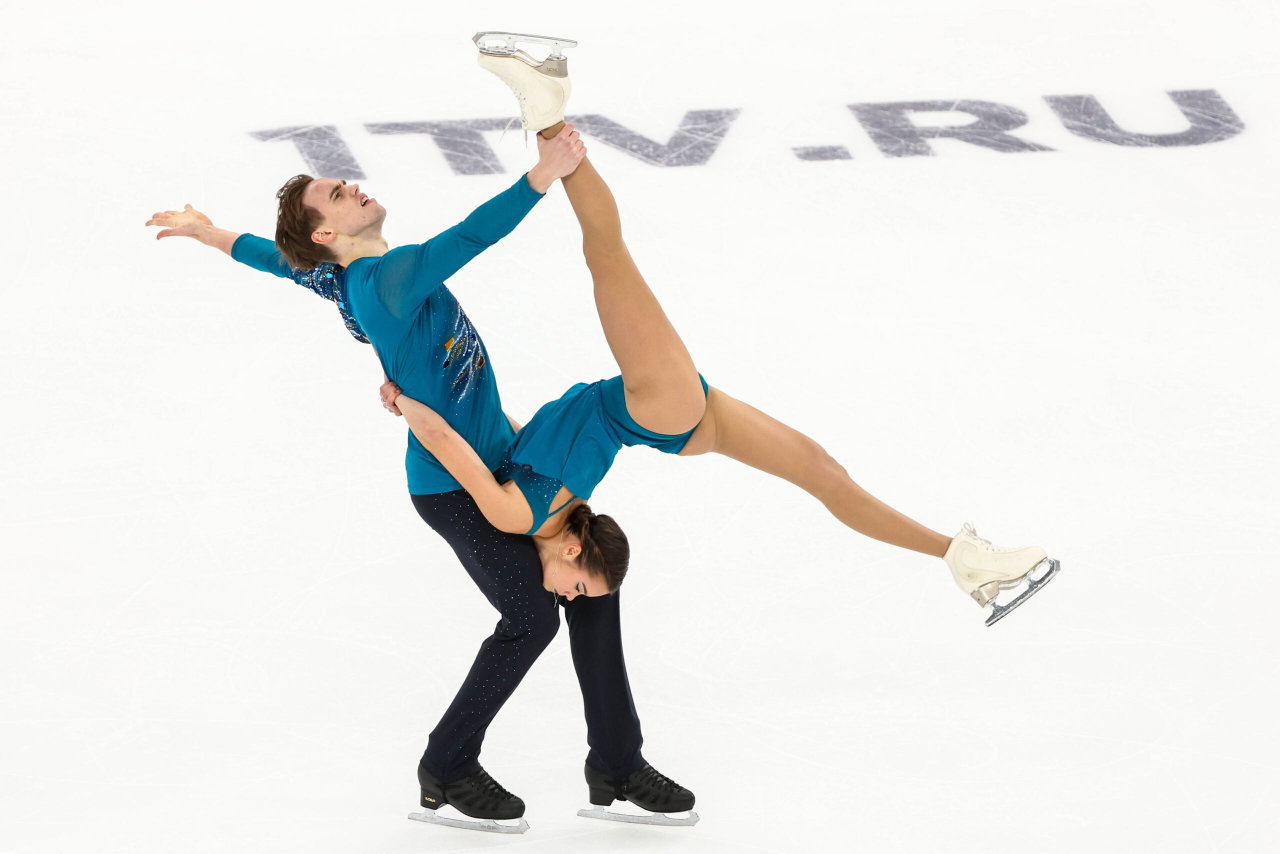
After four years away from international sports, Russian athletes were finally beginning to see hope of competing again as restrictions on their participation started to ease. However, that hope has been met with fresh obstacles, as Russia’s junior ice hockey team was ruled out of the upcoming World Junior Championship in Canada. And if that was not enough, Russian figure skaters are now facing a similar setback, affecting even Olympic medalists such as 2022 Olympic pairs bronze medalists Anastasia Mishina and Aleksandr Galliamov. The pair had made a strong start to their comeback season by winning the pairs event at the Cup of China. But just as they hoped to build on that success at the Finlandia Trophy, another restriction has disrupted their plans.
Watch What’s Trending Now!
On November 17, the Figure Skating Federation of Russia announced that seven of its athletes would be unable to compete at the upcoming Finlandia Trophy in Helsinki. The competition, scheduled for November 20 and 21, is the fifth event of the 2026-27 ISU Senior Grand Prix series. The federation said it had received an official response from the ISU after repeatedly seeking clarification over reports of possible entry restrictions.
According to the response, Finnish authorities had tightened entry rules for Russian citizens, preventing Russian athletes from entering the country even if they were competing under neutral status. The ISU reportedly informed the federation: “Russian athletes, including those competing under neutral status, do not meet the entry requirements for Finland. This also applies to Russian athletes travelling on Schengen visas to participate in the Finlandia Trophy.”
And this decision affects three Russian pairs teams and one men’s singles skater. Mishina and Galliamov are among those who will miss the event. Former European champions Aleksandra Boikova and Dmitrii Kozlovskii, as well as Ekaterina Chikmareva and Matvei Ianchenkov, are also affected. Two-time Russian men’s champion Evgeni Semenenko completes the list of seven athletes. The ISU has begun inviting reserve competitors from other countries to fill their places.
For Mishina and Galliamov, the timing is particularly disappointing. The pair had already shown what they could achieve after returning to international competition, winning the Cup of China in Shenzhen on November 7. Their victory had given Russian figure skating fans reason to look forward to the rest of the Grand Prix series. The Finlandia Trophy was another opportunity to collect points towards qualification for the Grand Prix Final. But missing the event could now seriously affect their chances of reaching the season-ending competition.
The Russian federation has expressed strong disappointment over the decision and accused Finland of targeting its athletes. In its official statement, the FSFR said, “The Russian Figure Skating Federation is extremely disappointed by Finland’s politicized decision regarding our athletes and will continue to work with the ISU to ensure Russian figure skaters’ participation in all possible competitions.” It also described the restrictions as “ill-considered and unlawful political decisions” and argued that they contradicted the Olympic Charter and the provisions of the ISU Constitution.
However, Finland has also made its position clear. The restrictions apply to Russian citizens holding Schengen visas, who are now permitted to enter the country only for work considered essential to Finland’s national interests. Sporting participation does not qualify. Finnish Foreign Minister Elina Valtonen also addressed the issue last week, saying, “As Russia’s war of aggression continues, Russian athletes have no business coming to Finland.” The restrictions are part of a wider series of measures affecting Russian athletes in Nordic countries, with Norway and Sweden also introducing entry restrictions.
The latest development has also raised concerns about another major competition on the calendar. Finland is scheduled to host the 2027 World Figure Skating Championships in March, where Russian skaters could be among the medal contenders if they are allowed to participate. The ISU had already warned that Finland’s entry restrictions could have a “consequential impact” on its ability to host the championships. With the Finlandia Trophy now affected, questions remain over whether Russian athletes will face the same problem when the World Championships arrive.
But this is not the first time Russian athletes have encountered such an obstacle while trying to return to international competition.
CAS ruling raises hopes of Russia’s hockey return before Canada blocks World Juniors entry
Russian ice hockey had also faced uncertainty over its return to international competition. The International Ice Hockey Federation suspended Russian and Belarusian national teams from its competitions, which kept them out of major tournaments, including the World Championships and Olympic hockey events. However, Russia’s hopes of returning received a boost on October 30, 2026, when the Court of Arbitration for Sport overturned the IIHF’s decision to keep Russian teams out of its 2026-27 competitions.
The ruling ordered the governing body to allow Russia to enter teams in five upcoming championships, including the 2027 Men’s World Championship, the World Junior Championship, the Women’s World Championship and both Under-18 World Championships. Although the IIHF disagreed with the decision, it confirmed that it would comply with the ruling.
The first major test came ahead of the 2027 World Junior Championship in Canada. Following the CAS decision, Canada made it clear that they would not allow Russian and Belarusian athletes and officials to enter the country to compete. Canada’s Secretary of State for Sport, Adam van Koeverden, said the government opposed their participation while Russia’s war against Ukraine continued. He also clarified that immigration officials would individually assess and prevent their entry, even if they already held valid visas. Canada’s position meant that the Russian Under-20 team could not travel to Alberta for the tournament.
Russia’s hockey federation then sought to have the competition moved to another country or cancelled if its team could not participate. The IIHF considered alternative arrangements but ultimately decided to keep Canada as the host. On November 15, it officially confirmed that Russia would miss the World Junior Championship, which will take place in Edmonton and Red Deer from December 26, 2026, to January 5, 2027.
In its announcement, the IIHF stated, “The IIHF confirms that due to the position and restrictions formally communicated by the Canadian Government, the Russian U20 national team is unable to participate in the World Junior Championship.”
The decision also meant that Norway would retain its place in the tournament. The country had faced losing its spot to make room for Russia following the CAS ruling, but it will now compete as originally planned. Russia’s return to international ice hockey had appeared possible after the court decision, but Canada’s refusal to admit the team ultimately prevented it from happening.