
Some places bring back memories of victories. Others remind athletes of how quickly everything can go wrong. For Mikaela Shiffrin, Killington holds both. Two years after a horrific crash nearly changed the course of her career, the American skiing superstar is preparing to race there again, hoping to create a different memory.
Watch What’s Trending Now!
The timing makes her return even more significant. Shiffrin will be back on the Vermont slopes just two days before the second anniversary of the November 30, 2024, accident that left her with serious abdominal injuries and months of physical and mental recovery. What was once a familiar hunting ground for victories became a place she had to learn to face again.
Killington had always felt like home to Shiffrin. Growing up, she looked forward to racing there, surrounded by familiar faces and enthusiastic supporters. Her connection to Vermont also runs through Burke Mountain Academy, where she developed into one of the sport’s brightest prospects. Over the years, she collected six of her record 73 World Cup slalom victories at Killington. But her last appearance there brought a memory she would rather forget.
During the second run of the giant slalom in 2024, Shiffrin lost control on a turn and slid into a gate. Something pierced her abdomen as she tumbled across the snow, leaving her with a puncture wound, severe oblique muscle trauma, and other injuries. The object narrowly missed her internal organs. She needed surgery and spent the next two months away from competition.
The physical damage was only part of the battle. Returning to the slopes meant confronting the fear that had followed her since the accident. Shiffrin struggled with the speed of giant slalom and sometimes experienced mental fog at the top of the course. Her therapist eventually identified symptoms of post-traumatic stress disorder (PTSD), helping her understand why an activity she had practiced since childhood suddenly felt unfamiliar.
Recovery required more than simply getting back on skis. Shiffrin had to rebuild her confidence one run at a time, beginning with easier courses, gentler slopes, and wider turns before gradually increasing the difficulty. Her coach, Karin Harjo, explained that the process involved carefully introducing steeper terrain and harder snow while monitoring how Shiffrin responded.
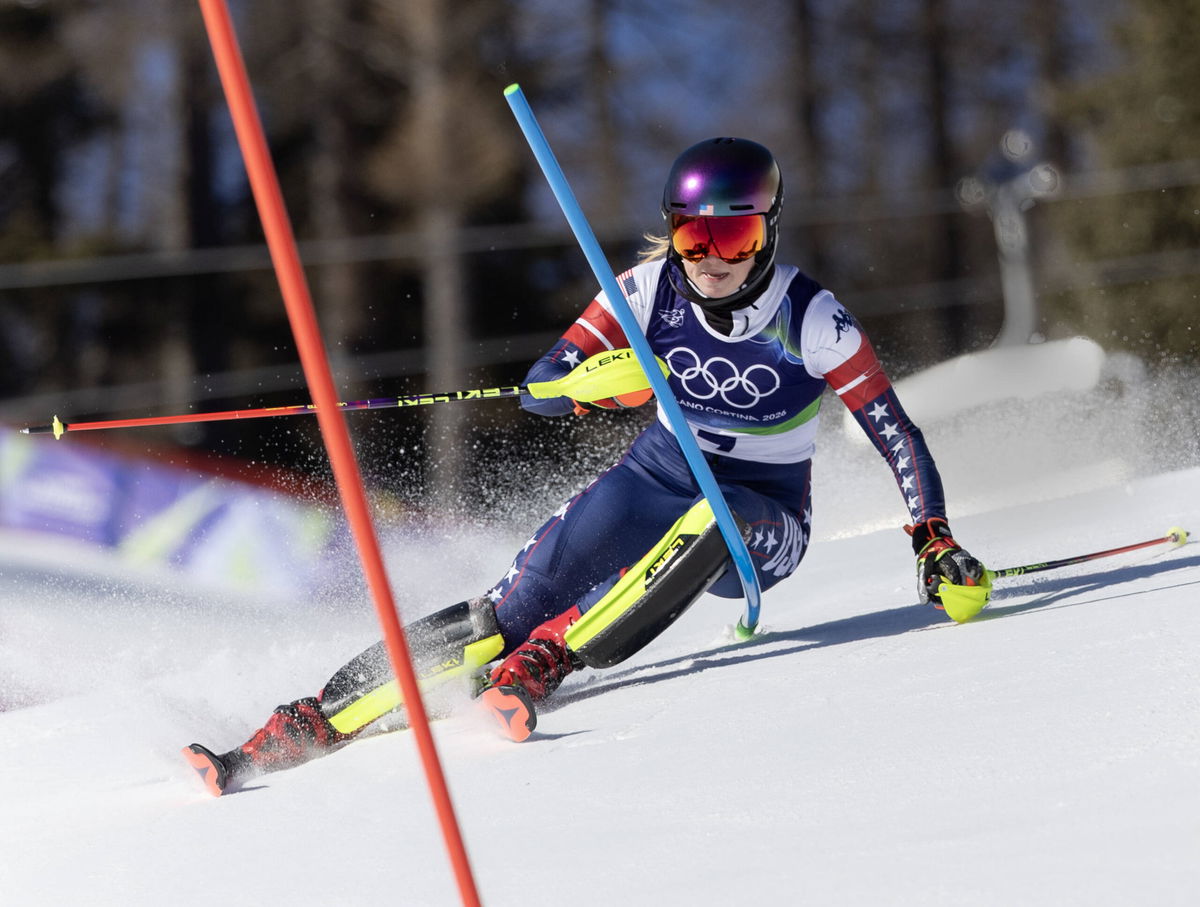
That patience shaped her return last season. Rather than immediately chasing the dominance she once enjoyed in giant slalom, Shiffrin focused on regaining her rhythm and securing a place among the discipline’s top 30. Even an 11th-place finish at the Winter Olympics in Cortina carried considerable meaning. She finished just three-tenths of a second outside the podium, a result that showed how much progress she had made.
A new chapter begins with a season of exploration
Now, however, the 31-year-old is ready to challenge herself further. She has called the 2026-27 campaign a season of “exploration,” choosing to spend more time in giant slalom and super-G instead of following her usual heavy early-season slalom schedule. That decision also gives her room to rediscover the parts of skiing that excite her.
The signs have already appeared. At the season-opening giant slalom in Soelden, Austria, last month, Shiffrin finished the opening run in first place. Changing weather and falling snow made the second run considerably more difficult, eventually dropping her to seventh. Yet the final position mattered less than how she approached the challenge.
“I had a mentality that felt really different than what I had felt in the past in those conditions,” she said, reflecting on her performance. For someone who had spent months rebuilding her relationship with speed, that shift in mindset was an important step forward.
And now comes Killington. Shiffrin recently described her feelings about returning with one word: “Anticipation.” She also acknowledged that the mountain carries a mixture of memories, some pleasant and others far more difficult. After all, she watched footage of the 2024 accident repeatedly, trying to understand exactly what happened during those frightening moments.
This weekend will give her an opportunity to confront that memory on the same slopes. Saturday’s giant slalom will bring her back to the discipline where she suffered the accident, while Sunday’s slalom offers another chance to compete in front of the home crowd. It will also mark her first slalom appearance since the World Cup Finals last March. She enters the weekend with five consecutive slalom victories, including her Olympic triumph.
But Shiffrin’s return is about more than another opportunity to add to her remarkable record of 110 World Cup wins. She has made it clear that her latest decisions come from wanting to ski for herself rather than constantly meeting expectations.
“I’m not trying to do less because I care less. I’m trying to do something different because I still care so much,” she explained while discussing her new approach to the season.
That perspective makes this return particularly meaningful. Two years ago, Killington tested her in ways she could never have anticipated. This time, she arrives with a different understanding of her limits, her ambitions, and what it means to enjoy the sport again. The mountain has not changed, but Shiffrin has. And as she prepares to pass the spot where her career took an unexpected turn, she gets another chance to decide what comes next.