
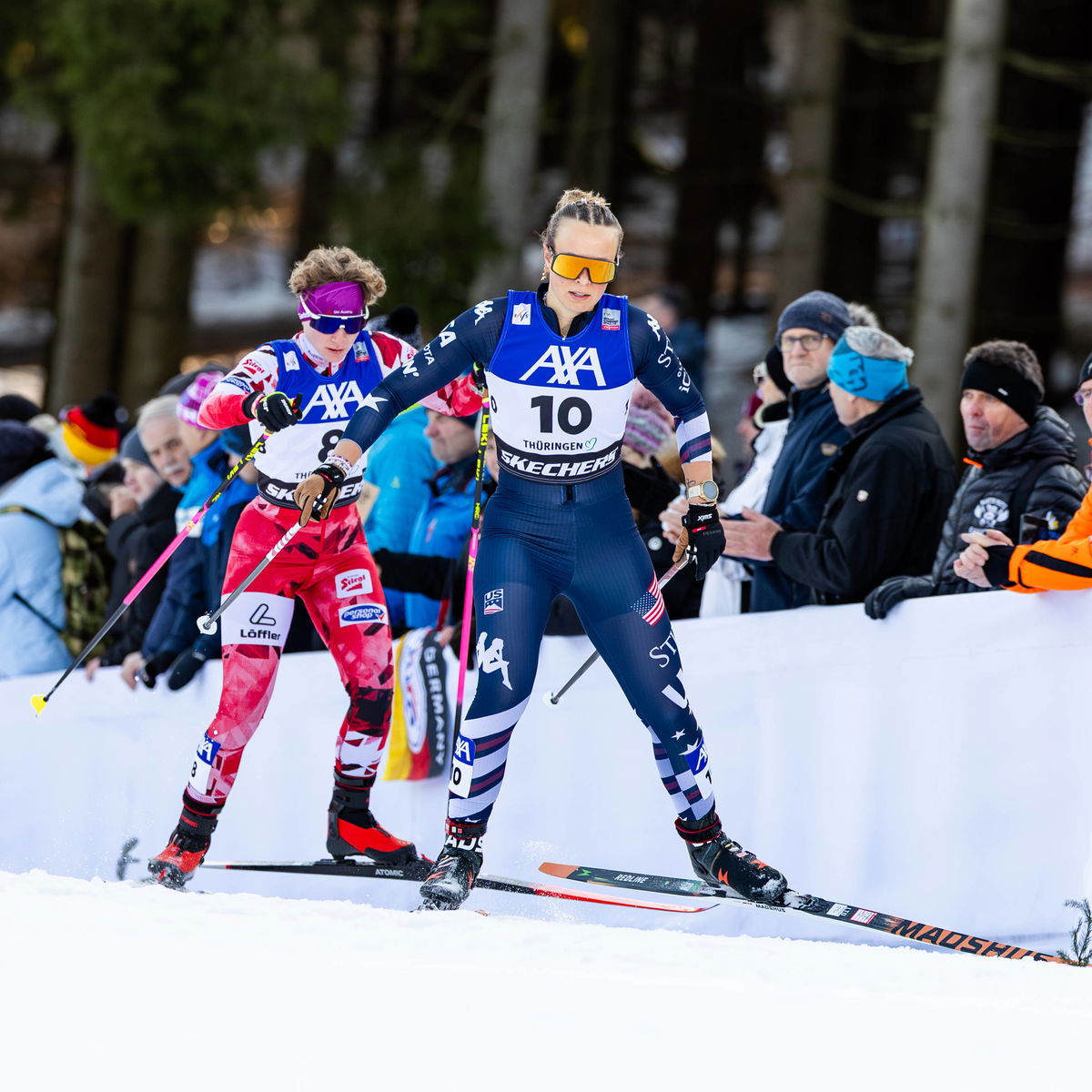
Nordic combined, a sport that combines ski jumping and cross-country skiing, has been part of every Winter Olympic Games since 1924. But only men have ever been allowed to compete in the event. Before the 2026 Winter Olympics in Milano Cortina, women athletes protested against that, hoping for a change before the Games head to the French Alps in 2030. Much to their disappointment, however, the International Olympic Committee made a decision that went against not only them, but the sport as a whole.
Watch What’s Trending Now!
On Tuesday, July 7, the IOC decided to remove Nordic Combined from the Olympics, drawing in reactions of shock from athletes across the sport.
“Today the biggest defeat didn’t happen on the field,” French Nordic combined athlete Romane Baud wrote on Instagram on July 9. “It happened in the IOC meeting room. Congratulations @iocofficial, you broke a thousand hearts and dreams.”
The IOC chose not to retain Nordic combined in the Olympic program, ending its 102-year run at the Winter Games. Instead, it added freeride skiing, freeride snowboarding, and synchronized figure skating to the 2030 Olympic program. The committee said the decision was not just about gender balance, but about the future of Nordic combined as a whole. However, one of the biggest reasons appears to have been the sport’s lack of popularity.
According to the IOC’s popularity polls, Nordic combined ranked as the least popular event at the 2014, 2018, 2022, and 2026 Winter Olympics. For athletes who were dreaming of a landmark moment for women, however, that offers little consolation.
“I’m at a lack of words right now, so many emotions, utterly devastated and so angry at the same time,” German athlete Nathalie Armbruster said. “Gone is a dream we have put so much effort into.”
Armbruster, who won the overall women’s Nordic combined World Cup title in 2025 and finished fourth in 2026, had spent years pushing for Olympic inclusion. For her and many other female athletes, the IOC decision meant losing the chance to compete on the biggest stage before ever getting there. The decision also affected men’s Nordic combined athletes, who lost the Olympic platform they had competed on since the first Winter Games, which, interestingly, also took place in the French Alps.
Imago
Ski jumping, Skispringen, Ski, nordisch – Milano Cortina 2026 Winter Olympics Day 8 Olympic rings seen at Predazzo Ski Jumping Stadium in Predazzo on February 14, 2026 Predazzo Italy PUBLICATIONxNOTxINxFRA Copyright: xFotoxOlimpikx originalFilename:jastrzebowski-skijumpi260214_npRAw.jpg
Norway’s Jens Luras Oftebro said, “For all of us who love combined, this feels like the end of an era,” on Instagram. “I still hope that this will not be the last chapter. Combined, it means far too much to far too many people for the story to end here.”
For smaller sports, losing Olympic status can have a major impact on funding, sponsorships, and athlete development. Jill Brabec, president of Nordic Combined USA, admitted, “I think we’re going to have to have some serious conversations with our supporters, with our athletes, and I’m hoping that our donors will still be behind the athletes in this sport, because this doesn’t change who they are or what they do,” Brabec said. “But yeah, the reality is it just made my job 100 times harder.”
The IOC has said Nordic combined could still return to the Olympics in 2034 in Salt Lake City. But for now, the decision brings an end to the sport’s Olympic history and leaves both male and female athletes facing an uncertain future. For the women, the disappointment is even deeper.
Women fought for an Olympic debut, but the door never opened
From the very beginning, Nordic combined was a men-only event. Over the years, men’s Nordic combined became one of the traditional Winter Olympic events, with countries such as Norway, Germany, Austria, Finland, and Japan becoming major powers in the sport. However, women’s Nordic combined developed much later.
The IOC repeatedly insisted that the women’s side needed more time to grow before receiving an Olympic spot whenever athletes pushed for inclusion. One of the main reasons was that women’s Nordic combined was still considered a young discipline. The women’s World Cup circuit only began in the 2020-21 season. Officials also said the sport needed greater participation from countries outside the traditional skiing nations before it could be added to the Olympic program.
Despite those concerns, women’s Nordic combined athletes believed they had done enough to earn their Olympic chance. The International Ski and Snowboard Federation (FIS) pushed for the women’s event to be added to the 2022 Beijing Winter Olympics, but the IOC rejected the request. The same happened ahead of the 2026 Milano Cortina Winter Olympics.
Athletes argued that the IOC was putting them in an impossible position. They were being asked to grow the sport, but without Olympic inclusion, they had fewer opportunities for global exposure, sponsorship, funding, and attracting younger athletes.
Before the 2026 Winter Olympics, women’s Nordic combined athletes made their voices heard through a protest at a World Cup event in Seefeld, Austria. They crossed their ski poles into an “X” shape to symbolize their exclusion from the Olympic program. Many hoped their efforts would finally lead to a women’s Nordic combined event at the 2030 Winter Olympics. Instead, the IOC ended the Olympic hopes of both men and women.