
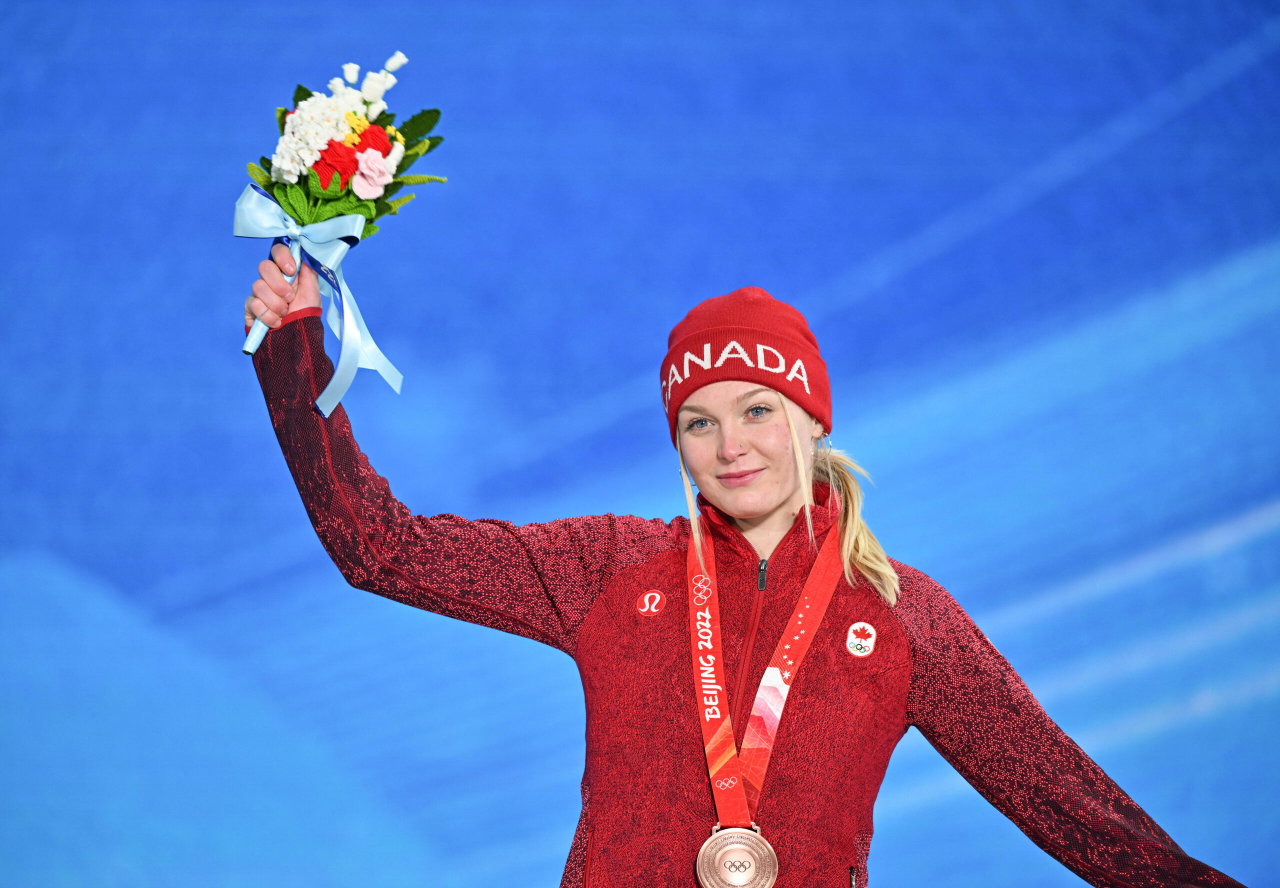
For Meryeta O’Dine, the fight to return to snowboarding has become about more than rehabilitation. The two-time Olympic bronze medalist is now trying to save her career from financial strain, turning to GoFundMe after a serious ankle injury left her without competition opportunities, income, and a growing pile of bills.
Watch What’s Trending Now!
The 29-year-old Canadian snowboard cross racer fractured her ankle in a training accident in Italy ahead of the Milano Cortina 2026 Winter Olympics. The injury ruled her out of the Games and left her physically unable to work for nearly five months. While she has been working towards a return, the financial consequences have continued to mount.
O’Dine says the setback prevented her from fulfilling contracts and pursuing future sponsorship opportunities. Meanwhile, travel, training, and rehabilitation expenses did not stop. The situation has left her struggling to meet her immediate financial commitments.
“I’m essentially kind of in crisis mode right now,” she said. “It’s more than what I currently have in my bank account, and the bills I have coming up.”
For athletes outside major professional leagues, Olympic success does not always translate into financial security. Much of their support depends on results, sponsorships, and personal networks. O’Dine explained that injuries can make this even harder because athletes lose the performances that might otherwise help them secure funding.
“Within situations like mine, unfortunately, where you’re on the national team, but you don’t have the results essentially to help get that extra support from the Federation, it needs to be coming from us, our personal sponsors, and however else we find the means to make the money to pay for our season,” she said.
She also believes people often underestimate how much athletes have to manage themselves financially. Many assume government bodies or sporting organizations cover most expenses. However, O’Dine said private sponsorships often go towards basic necessities such as insurance and rent, leaving athletes to find other ways to fund their seasons.
The setback was particularly painful given what she had already achieved. At Beijing 2022, O’Dine won bronze in the women’s snowboard cross before securing another medal in the mixed team event alongside Éliot Grondin. Those performances made her a two-time Olympic medalist and gave her another opportunity to build on that success at Milano Cortina.
Instead, the injury forced her to watch the competition from home. “I was home by the time my event was happening,” she said. “It was horribly upsetting.”
O’Dine had already spoken about the determination it took to recover after fracturing her ankle. In a statement following her withdrawal, she admitted she was heartbroken but proud of the work she had put in to reach the Games. She also said the challenges had revealed a new level of dedication and passion within her. Missing the Olympics was a major blow, but it did not take away her desire to compete.
A wider funding problem for Canadian athletes
O’Dine’s GoFundMe campaign has also highlighted the financial difficulties faced by athletes across Canada. Can Fund, a charity that supports Canadian competitors, says almost two-thirds of its applicants work part-time jobs alongside training. Three in five are in debt and have negative net incomes. Founder Jane Roos estimates, “The average athlete goes $30,000 to $80,000 in debt.”
Roos, a former athlete who started the organization after experiencing an injury herself, believes competitors need meaningful support rather than handouts. She has pointed out that Canadians celebrate athletes when they win medals, but reaching the podium requires backing long before that moment.
The federal government has announced fresh investment, including a $3 million boost to the Athlete Assistance Program. That increase will raise monthly support for senior athletes by 5.5% to $2,300. Ottawa has also announced around $60 million in supplementary funding for 62 national sports organizations, including $2.86 million for the Canadian Snowboard Federation.
O’Dine welcomed the increase to the assistance program, saying the funding she receives is essential. However, she believes it still does not cover the costs of international travel and training outside Canada. The issue has drawn criticism from other athletes too. Canadian luger Caitlin Nash warned that competitors were shouldering more expenses to qualify for the Olympics, while Milano Cortina chef de mission Jennifer Heil described the system as “pay-to-play.”
For now, O’Dine is determined to keep moving forward. She is training in Austria and says the experience has renewed her excitement for the season. Her fundraising campaign is an attempt to bridge the gap between that ambition and the cost of pursuing it. After two Olympic medals and a difficult recovery, she is not ready to leave snowboarding behind.