Imago
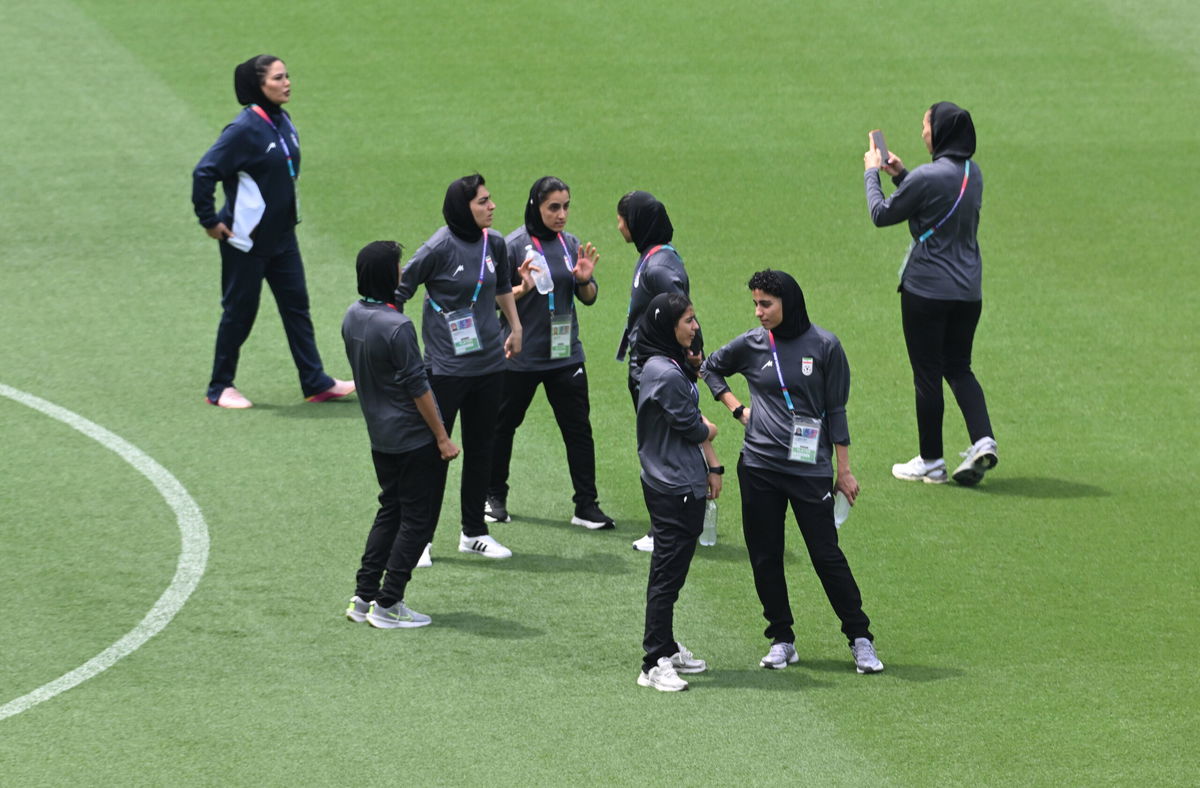
IRAN WOMENS ASIAN CUP press conference, PK, Pressekonferenz Members of the Iranian Womens national soccer team are seen while inspecting the pitch at Robina Stadium on the Gold Coast, Sunday, March 1, 2026. The team is in Australia to compete in their second Womens Asian Cup. NO ARCHIVING GOLD COAST QUEENSLAND AUSTRALIA PUBLICATIONxNOTxINxAUSxNZLxPNGxFIJxVANxSOLxTGA Copyright: xDAVExHUNTx 20260301121972071774
Imago
IRAN WOMENS ASIAN CUP press conference, PK, Pressekonferenz Members of the Iranian Womens national soccer team are seen while inspecting the pitch at Robina Stadium on the Gold Coast, Sunday, March 1, 2026. The team is in Australia to compete in their second Womens Asian Cup. NO ARCHIVING GOLD COAST QUEENSLAND AUSTRALIA PUBLICATIONxNOTxINxAUSxNZLxPNGxFIJxVANxSOLxTGA Copyright: xDAVExHUNTx 20260301121972071774
The Iranian women’s soccer team now faces a moment of intense uncertainty. After losing 2‑0 to the Philippines on the Gold Coast, their Women’s Asian Cup 2026 campaign ended. But their biggest challenge came after. While on the campaign, the players refused to sing Iran’s national anthem, which has drawn threats from their own government. This has now urged even the exiled Crown Prince Reza Pahlavi to step forward with a request on their behalf.
Watch What’s Trending Now!
Reza Pahlavi, son of the last Shah of Iran, posted on X: “The members of the Iranian Women’s National Football Team are under significant pressure and ongoing threat from the Islamic Republic.”
“As a result of their brave act of civil disobedience in refusing to sing the current regime’s national anthem, they face dire consequences should they return to Iran. I call on the Australian government to ensure their safety and give them any and all needed support.”
The Crown Prince has requested the Australian government to provide the team support in their nation as returning back home amid the controversy could have serious consequences for them. But how did things get so serious?
For context, the controversy emerged on March 2, 2026, before Iran’s opening match against South Korea on the Gold Coast. The players remained silent during the national anthem, an act widely viewed as a form of quiet protest.
Iranian state media later criticized the gesture, describing it as inappropriate given the current circumstances.Even after the team sang and paid its respects to the anthem in their next matches with Australia and the Philippines, Iran eventually lost all of the three group games and finished last in Group A.
On the ground, however, the pressure only increased, with some revealing the players are “terrified.”
Exiled Iranian Crown Prince Reza Pahlavi has called on the Australian government to ensure the safety of the Iranian women’s football team, following threats from the Iranian regime after their refusal to sing the national anthem.https://t.co/Y7FM1JY6BG
— Sky News Australia (@SkyNewsAust) March 9, 2026
The strong response of state media back home fueled the players’ safety concerns, and international human rights groups and diaspora activists have urged Australia to protect the players. Thousands of people have posted petitions seeking immediate action.
“They are terrified,” said Tina Kordrostami, a Sydney council member in contact with several players. “They were born and raised in a country that denied them any right to choose, and that silence was the only way they could cry out.”
But even in Australia, their freedom is limited. Reports suggest officials linked to the Islamic Revolutionary Guard Corps are part of the team delegation, monitoring communications and movements, even inside the hotel where the team is staying.
On the other hand, the Australian government has also shown concern but has not gone further to provide asylum or disclose certain protection.
Foreign Minister Penny Wong said she was worried. Even a spokesperson for Australia’s Home Affairs Department told AFP it “cannot comment on the circumstances of individuals.” Wong also said Australia “stands in solidarity” with the people of Iran.
Sure, official support is limited, but human rights advocates are also pressing Australia to act.
Iran Women’s soccer team finds hope
Craig Foster, a former captain of the Australian national team and a human rights activist, called the situation of the players an instance of strict control and solitude.
“It’s clear they are being silenced and are under coercion… They can only speak through silence. It was an act of rejecting the regime, one of the bravest things I’ve seen,” Foster said.
He warned that, although Australia offers them the option of remaining, not all of them will do so. “Many of them have families and children in Iran so even if they are given the right to stay here some may feel they cannot accept that opportunity,” he explained.
According to human rights experts, the risk is high. Zaki Haidari, from Amnesty International Australia, told ABC Sport:
“They should be granted asylum. There’s no way they can go back. The Iranian authorities will detain and prosecute them on arrival, and they’ve done that historically.” he added, “We know that has happened a lot, particularly in the last two months. Anyone that came out, protested against the Iranian regime, have suffered the consequences.”
Melbourne-based activist Dr. Minoo Ghamari, one of the organizers of petitions for the players’ protection, painted an equally grim picture:
“People are trying to get in touch with these girls. But basically, they are being kept hostage in Australia. It’s really disgusting. No one can get close to them because of the Islamic Republic guys who are surrounding them. And that’s really unfair.”
As this case has attracted such international focus, leaders outside Australia have begun to comment. Interestingly, Israeli Minister Gila Gamliel allegedly sent a letter to the Australian embassy requesting asylum for the entire Iranian women’s soccer team because they refused to sing the Iranian anthem.
She wrote that these athletes deserve “the possibility of a safe future, free from threats and enforced silence. These are courageous women who seek only the most basic right to live without fear.” But there is also a glimmer of hope on the ground.
According to Reza Pahlavi, five members of the team: Fatemeh Pasandideh, Zahra Ghanbari, Zahra Sarbali, Atefeh Ramazanzadeh, and Mona Hamoudi have already sought refuge in Australia, leaving the team’s training camp.
“These five athletes, who are now in a safe location, have publicly announced their support for the national revolution of Iran’s Lion and Sun,” Pahlavi said.
For now, it’s yet to be seen how the situation will turn out for these soccer stars. Only time will tell if the voices speaking up for them will turn in their favor. What’s your take on this? Share it in the comments below.