
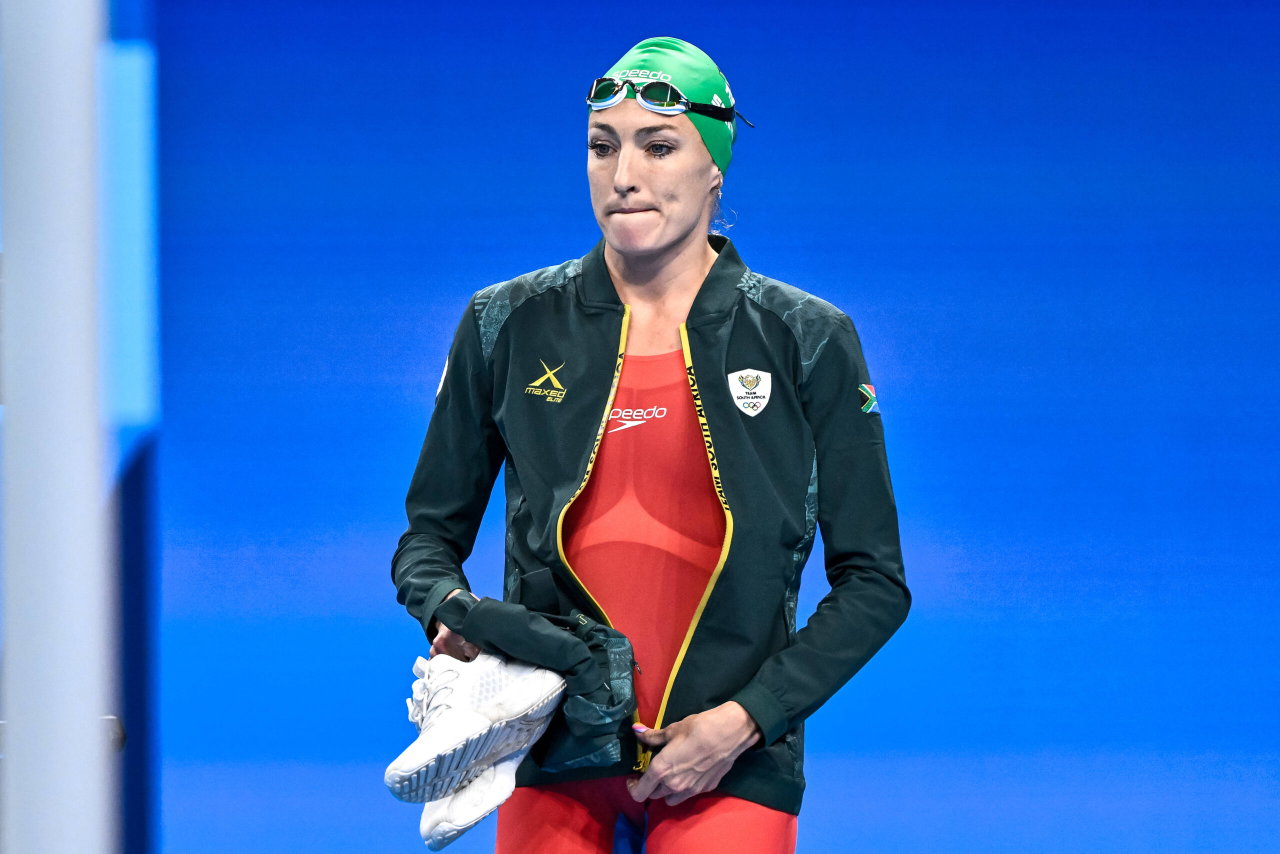
Losing an Olympic champion is one thing. Losing her after a breakdown in trust with the national federation is another. South Africa is now facing both after Tatjana Smith decided to represent the Netherlands, prompting Sports Minister Gayton McKenzie to take a hard look at Swimming South Africa (SSA). The minister has not hidden his frustration, even admitting that he is ready to remove the federation’s officials as he pushes for an investigation into its affairs.
Watch What’s Trending Now!
Smith, formerly known as Tatjana Schoenmaker, made history at the Tokyo 2020 Olympics by winning gold in the 200m breaststroke and silver in the 100m. She added another gold in the 100m and silver in the 200m at Paris 2024, becoming South Africa’s most decorated Olympian with four medals. After initially retiring in 2024, she reversed her decision this year with the 2028 Los Angeles Olympics in mind. However, she will now pursue that ambition while representing the Netherlands, a country with which she has dual citizenship.
Her decision has clearly angered McKenzie, who believes the federation’s treatment of the Olympic champion has brought South African swimming to a worrying point. “The federation is in ICU, and we should not run away from that,” he said, while explaining why he had requested a full SASCOC investigation into SSA’s sponsorship agreements, financial management, and treatment of swimmers. The minister also made his frustration personal, admitting, “I am ready to fire all of them,” although he acknowledged that he must follow the legal process to avoid risking an international suspension.
Her departure has brought renewed attention to her strained relationship with SSA, particularly a dispute over prize money from the 2023 World Aquatics Championships in Fukuoka, Japan. Smith earned $35,000 after winning gold in the 200m and silver in the 100m breaststroke. However, the federation withheld the payment for more than a year following a disagreement over its technical sponsor, Arena, and Smith’s decision to compete in Speedo gear. She eventually received the money after involving lawyers, with the interest paid separately later.
McKenzie’s strongest words, however, were reserved for Smith. Apologizing on behalf of the ministry and the federation, he said, “She’s been treated in the worst possible way. They should be ashamed.” He also criticized attempts to blame Smith for the loss of sponsorship following her announcement, insisting that the swimmer deserved recognition for everything she had contributed to the country.
For McKenzie, the issue goes beyond one sponsorship disagreement. He wants the investigation to establish whether other swimmers faced similar penalties or had their earnings withheld. He also hopes it will lead to lasting reforms and new leadership at SSA. But while the minister has made his position clear, the federation’s representatives have offered a different account of how the relationship with Smith deteriorated.
Swimming South Africa defends its handling of the dispute
A few days ago, SSA Operations Manager Mafata Modutoane appeared alongside acting president Zikie Molusi on the South African radio show Sports Night Amplified with Andile Ncube. Modutoane rejected suggestions that the federation had failed to support Smith throughout her career, arguing that SSA had backed her since she was 12. However, he acknowledged that financial limitations often prevented it from providing the support she needed.
“We’ve supported Tatjana. We’ve really supported Tatjana. Sometimes, not financially, because as the federation, we cannot afford it. We don’t have the financial means,” Modutoane explained.
He also placed some responsibility on Smith, saying she had “sabotaged herself” through the sponsorship dispute. According to Modutoane, SSA’s agreement with Arena required national team swimmers to wear the brand’s kit during international competitions. He claimed Smith had accepted the kit before competing in Speedo gear at the 2023 World Championships, creating a conflict with the federation’s commercial agreement.
However, Molusi acknowledged that SSA could have handled the matter differently. He admitted that withholding Smith’s prize money was a mistake, saying the situation should never have unfolded that way. The acting president also pointed to the federation’s financial struggles, describing its operations as “hand to mouth” while comparing its sponsorship opportunities unfavorably with those available to rugby and football.
The concerns surrounding SSA extend beyond Smith’s case. South Africa’s Deputy Sports Minister Bertha Peace Mabe has also called her decision a wake-up call while raising questions about the financial burden placed on swimmers selected for international competitions. Reports suggested that some athletes faced bills of up to R55,000 to participate in the World Short Course Championships in Beijing.
For Smith, the decision to change sporting nationality also offers access to greater high-performance support and a more sustainable swimming career. Meanwhile, her Lighthouse Sport Foundation aims to improve access to swimming for children in disadvantaged communities, where pools, facilities, and qualified coaches remain difficult to find.
As McKenzie awaits SASCOC’s findings, the questions surrounding Swimming South Africa continue to grow. The investigation could determine whether Smith’s departure was an isolated breakdown in communication or a reflection of deeper problems within the federation. Either way, South Africa has lost the services of a four-time Olympic medallist, and the minister appears determined to ensure that the circumstances behind her departure do not go unanswered.