
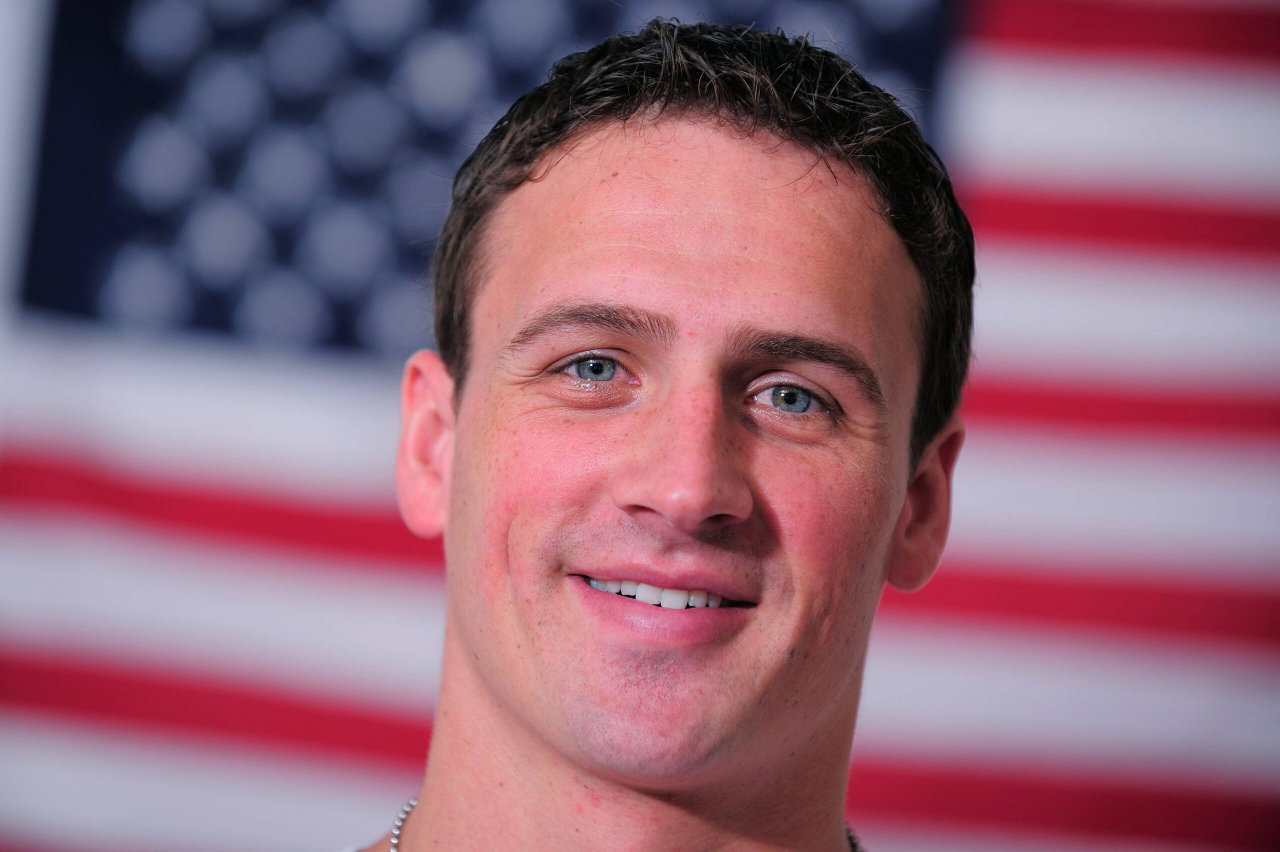
Ryan Lochte spent years chasing greatness in the pool. Twelve Olympic medals and multiple world records later, the American swimming legend still believes he could have achieved more. For him, the defining moment of his career was never simply about winning gold. It was about finally earning his father’s approval.
In a recent documentary featuring the 42-year-old, produced by FRISS Caffeine Pouches, Lochte opened up about the sacrifices, pain, and determination that shaped his journey. And while his achievements place him among the greatest swimmers in Olympic history, his own assessment of that career is surprisingly modest. “I’m my biggest critic, and I had a good career, not a fantastic career. I could’ve done better,” Lochte admitted.
That mindset started long before he became a household name. Growing up under the guidance of his father, who was a respected swimming coach, Lochte learned early that talent alone would never be enough. He wanted to become one of the best in the sport, and he was willing to push himself further than most to get there.
For Lochte, greatness meant doing something beyond what everyone else was prepared to do. He recalled training with a 35-pound weight belt, performing vertical kicks in the diving well for 30 minutes at a time. Even when exhaustion took over, he refused to stop. “When I had nothing left, I would still find something deep down inside and give it a little bit more,” he recalled.
That relentless approach eventually took him to the biggest stage in swimming. But there was one person whose approval he desperately wanted: his father.
Despite breaking world records and delivering impressive performances, Lochte rarely heard his father describe his swimming as great. His father would acknowledge a good performance or a record-breaking swim but never offer the one word Lochte wanted to hear.
The reason became clear during the 2008 Beijing Olympics. His father had set a personal benchmark for greatness: an individual Olympic gold medal accompanied by a world record.
Lochte finally achieved both in the men’s 200 m backstroke. He touched the wall in 1:53.94, setting a new world record and securing his first individual Olympic gold medal.
The moment carried a significance beyond the result. Lochte remembered leaning back after the race, looking at the ceiling and finally feeling the emotion of everything he had worked for.
After receiving his medal, he went looking for his father and embraced him. This time, the response was different. “My dad goes to me; he goes, ‘Son, now you’re great.’ That just meant everything to me,” Lochte recalled.
It was the validation he had chased throughout his childhood and perhaps the most meaningful reward of his Olympic journey.
His determination was not limited to the Olympic stage. Lochte also recalled one of the most physically demanding episodes of his career, when a skateboarding accident left him with a fractured foot ahead of a world championship.
Five weeks before the competition, he attempted a kickflip off a flight of stairs and broke his foot. After spending time in a protective boot, he returned to the pool shortly before travelling for the championships. But his comeback took another painful turn.
During his warm-up, he refractured the foot. Rather than withdraw, Lochte continued competing in the 200m backstroke and broke the world record despite the injury. Every kick brought excruciating pain, but he refused to let the setback dictate his performance.
“Every kick was just crying in my goggles,” he remembered, describing it as probably the most pain he had ever endured. That ability to find another gear when his body appeared to have nothing left became a defining part of his swimming career. Across four Olympic appearances, Lochte collected 12 medals, including six gold, three silver, and three bronze. His seven individual Olympic medals also rank second in men’s swimming history, behind Michael Phelps.
Yet, even after accumulating such an extraordinary collection of achievements, Lochte has never viewed medals as the ultimate measure of success.
Olympic medals were never Lochte’s definition of success
That perspective also explains his decision to auction several pieces of his Olympic collection. In January 2026, three of his Olympic gold medals sold for a combined $385,520. The medals came from the 4x200m freestyle relay events at the 2004 Athens, 2008 Beijing, and 2016 Rio Olympics.
The sale followed another auction in 2022, when he parted with six silver and bronze medals. Lochte later explained that he has never attached his identity to the physical trophies.
“I never swam for the gold medals. My passion has always been about being one of the best swimmers in the world,” he wrote on social media. His latest documentary offers a deeper look at that philosophy. For Lochte, the countless hours in the pool, the sacrifices and the pursuit of excellence mattered more than the hardware that followed.
Now, after stepping away from competitive swimming, he has found another way to stay connected to the sport. In May 2026, Missouri State University appointed him as an assistant coach for its men’s and women’s swimming programs, giving him an opportunity to pass his experience on to younger athletes.
The 12-time Olympic medalist has already experienced the pressure of chasing greatness. This time, he hopes to help others discover what they are capable of achieving.
And perhaps that is what makes his admission so revealing. Even after reaching the summit of Olympic swimming, Lochte remains his harshest critic. The medals tell the world how successful he was. But for the man who spent his life chasing one more breakthrough, the pursuit itself will always mean more than the final count.