
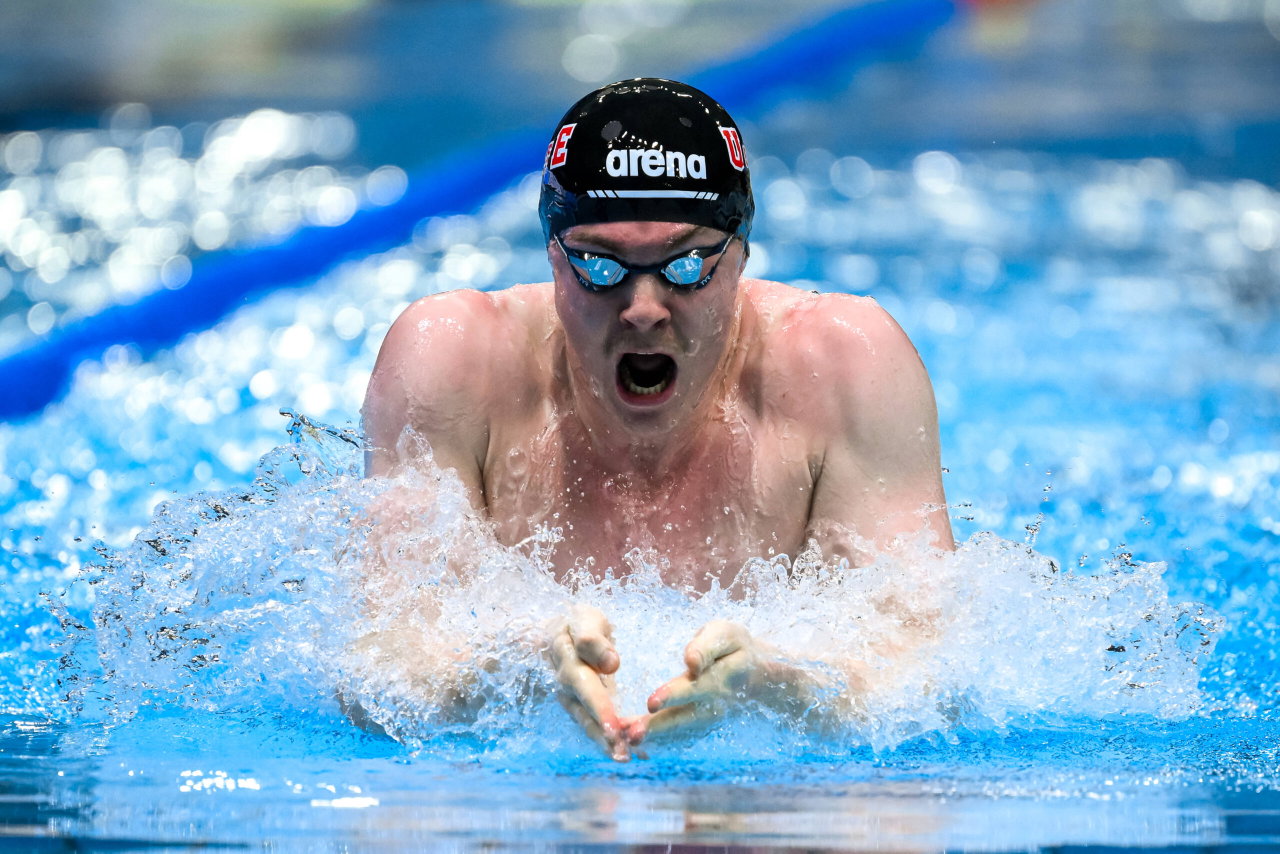
Amid the unexplained bouts of déjà vu that had started creeping into his training, Archie Goodburn had just wrapped up another session for the day. Doctors had ordered scans earlier, and he was still waiting for the results as he climbed out of Edinburgh’s Commonwealth Pool, dried off and checked his phone. There it was: a missed call from an unknown number, presumably from the hospital. So, he called back.
Watch What’s Trending Now!
The then 22-year-old sat down at the edge of the pool, one where he’s trained his whole life, and received the devastating results: a brain tumor. Further tests confirmed three low-grade oligodendrogliomas. They were inoperable. Doctors told him the disease was incurable, and suddenly Paris wasn’t the future he needed to think about anymore. Walking away from the sport was an option. Goodburn chose the harder one. So, by the time he stepped onto the blocks in Glasgow this week, finishing seventh in the men’s 50m breaststroke final had become only part of the story.
“Outside the pool I dream of a future where brain cancer isn’t the biggest killer of those under 40, where the UK government establishes a brain cancer lead to make that change,” Goodburn said after the final ovation that followed and the tears that came after that.
“I’d much prefer that change is made, and that dream is completed, than any of my personal goals in the pool because what families and young people are going through out there is really beyond the comprehension of many people out there and certainly harder than anything I’ve had to do as a world-class sportsman.”
That cause has become as much a part of Goodburn’s journey as swimming itself.
After being diagnosed, he became one of the leading voices calling for greater investment into brain cancer research and better access to new treatments. He also campaigned for wider availability of Vorasidenib, the drug that delayed the need for chemotherapy and radiotherapy, allowing him to continue both his career in the pool and life outside it. Because for Goodburn, the fight has never been limited to his own diagnosis.
He has repeatedly pointed out that while his form of brain cancer has given him time to speak out, many patients never get that opportunity. Brain cancer remains the biggest cancer killer of people under 40 in the UK, yet it has historically received only a small share of national cancer research funding, something he has called impossible to accept.
“I campaign, if I’m being completely honest, because of the disparity in care, the lack of funding, but also because I believe that my campaigning can actually make a difference to my own future,” he told The Guardian ahead of the Games. “In some ways, it’s a treatment of its own.”
That perspective was evident again after his race in Glasgow. Asked how he stays positive despite living with an incurable disease, Goodburn paused for several seconds before answering, visibly emotional.
“I also advocate for the future Archies,” he said. “I swim for future Archies who want to succeed on an international level. But also young patients and people with brain cancer under the age of 40.”
Goodburn may have left Tollcross International Swimming Centre without the medal he had hoped for. But for thousands watching from the stands and many more following his journey beyond the pool, his biggest victory had little to do with where he finished. It was that, two years after a phone call changed the course of his life, he was still there competing and campaigning.