
Ryan Lochte started swimming at just five years old, eventually achieving the unthinkable by capturing 12 Olympic medals. Yet, he baffled fans and sparked intense speculation when he chose to auction off nine of those prized possessions. But while the world assumed it was a financial crisis, Lochte’s true motivation was entirely different: to him, those historic accolades were ultimately nothing but moulds of metal.
Watch What’s Trending Now!
Many initially believed that he had sold the medals because of financial problems. The speculation only grew because this was not the first time Lochte had auctioned parts of his Olympic collection. Back in 2022, he sold six silver and bronze medals for around $166,000. That means he has now sold a total of nine Olympic medals for nearly $550,000 overall. But Lochte has now pushed back strongly against the rumors that money was the driving force behind the decision.
“I’m financially A-OK to support me and my entire Brady Bunch family,” Ryan Lochte said. “A lot of people got that wrong,” he explained. “Do I have some tax debt? Yes, but I did it because I don’t need them. And I’ve done the hard work. I cherish those memories, and if I got money from it, great!”
Medals were never the focus of the emotional value for Lochte, as he sold the medals after seeing no value in them. Any money he raised was just an added benefit. But it’s the years of sacrifice, training, pain, and determination that built his Olympic career. “The thing that gets me the most is the journey that it took me to get there,” he said. “The medals, they were just collecting dust in a sock drawer.”
The former swimmer is believed to have an estimated net worth of around $300,000. During the peak of his career, Lochte reportedly earned “well over $1 million” annually through sponsorships, endorsements, and appearances. The fallout from the 2016 Summer Olympics scandal turned his financial situation around.

Imago
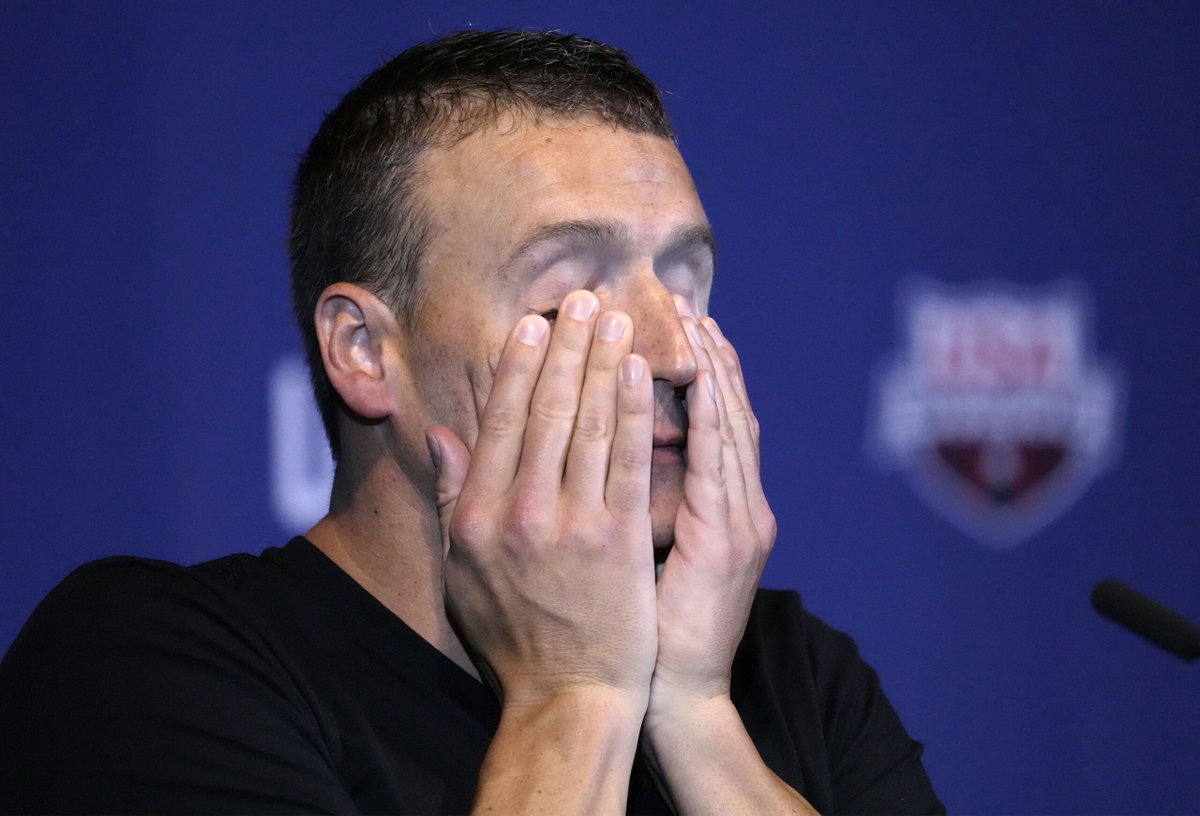
Swimming: U.S. Olympic Team Trials – Swimming Jun 14, 2021 Omaha, Nebraska, USA Ryan Lochte reacts after winning his heat in the MenÕs 200m Freestyle prelims during the U.S. Olympic Team Trials Swimming competition at CHI Health Center Omaha. Omaha CHI Health Center Omaha Nebraska USA, EDITORIAL USE ONLY PUBLICATIONxINxGERxSUIxAUTxONLY Copyright: xRobxSchumacherx 16254017
During the Games, Ryan Lochte falsely claimed that he and three other members of the U.S. swim team had been robbed at gunpoint. Authorities later revealed that the group had actually vandalized a gas station bathroom. The controversy in Rio led to a 10-month suspension and cost him major sponsors like Speedo and Ralph Lauren.
Two years later, he faced another suspension from the USADA after receiving an intravenous vitamin B12 infusion. According to reports, Lochte’s earnings suffered dramatically after his sponsors pulled back. Even at one point, he went from earning well over $1 million a year to making just “$75,000” from a single sponsor.
Plus, court papers tied to his divorce in 2025 also showed a growing strain of financial hardship, including over $167,000 in medical expenses, and unpaid IRS taxes allegedly nearing as much as $99,000.
But if money was not the real reason behind selling his Olympic medals, why did Ryan Lochte choose to take a relatively low-paying college coaching job?
Ryan Lochte reveals why he took a low-paying coaching role
In early May, Ryan Lochte joined the coaching staff at Missouri State University, where he will serve as an assistant coach under head coach Dave Collins. The role is expected to officially begin later this summer after his contract receives approval from the university’s board of governors. According to details obtained by Front Office Sports, Lochte is set to earn an estimated $30,000 annually.
Ryan Lochte’s contract also includes several performance-based bonuses. This includes $750 if Missouri State wins or shares a Missouri Valley Conference men’s and women’s championship. He can also receive $500 for every swimmer who qualifies individually for the NCAA Championships, along with another $500 for each relay team that reaches the NCAA Championships.
The move surprised many fans. After all, Olympic stars who once earned millions rarely accept lower-paying university coaching jobs after retirement.
But Ryan Lochte insists the decision was never about money. Instead, he says coaching represents something much deeper for him personally. “I took this job because I wanted to prove to myself that I could do this,” Lochte revealed. “When I was swimming, I had a fire burning inside of me of becoming the best, and that’s what drove me every day, every year.”
It was a competitive fire that had molded his life in almost all ways. Pablo Morales’ victory in the 100m butterfly at the 1992 Olympics is what first sparked Lochte’s passion for swimming. That inspiration evolved into an obsession with becoming one of the best swimmers. “I started having that mamba mentality,” Lochte said, referencing Kobe Bryant. “I started having that fire inside of me. I was a lion, and I was hunting.”
For decades, that fire defined him. Then, 2021 changed everything. At the 2021 U.S. Olympic Swimming Trials in Omaha, he didn’t qualify for his fifth Olympic team. The then 36-year-old finished seventh in the 200-meter individual medley final.
Following that moment, Lochte felt completely lost. “After 2021, I lost all the fire in me,” he confessed. “I didn’t see the light at the end of the tunnel.” Now, he’s looking for the same motivation, though not in medals or money, but in finding the passion that was a part of his life.