

When Alexey Bychenok arrived at the 2022 Beijing Winter Paralympics under the RPC banner, his aim was simple: to win gold. But that goal already felt uncertain. Just days earlier, in late February 2022, the IOC had urged international sports bodies to exclude Russian and Belarusian athletes from global competitions.
Watch What’s Trending Now!
On 2 March 2022, the International Paralympic Committee announced that RPC and NPC Belarus athletes would compete as neutrals at the Beijing Winter Paralympics, under the Paralympic flag and without being included in the medal table. For Bychenok, that decision brought hope back.
Inside the athletes’ village, he continued his normal routine. Training, recovery, and race preparation went on as usual. But the calm did not last. After several countries and athletes threatened to withdraw, saying the Games could not continue with Russian and Belarusian athletes, the IPC changed its decision on 3 March and removed their entries.
For Bychenok, everything changed in a single moment. He saw Irina Gromova, the senior coach of Russia’s cross-country skiing and biathlon team, standing nearby, completely shaken and struggling to hold back tears. “I was frightened,” he said. “She looked like she had lost someone close. She wanted to cry, but stopped herself so it would not affect us.” Around 83 Paralympic athletes were affected, and their Games ended suddenly.

Imago
210730 — TOKYO, July 30, 2021 — Gold medalist Evgeny Rylov of the Russian Olympic Committee ROC poses during the awarding ceremony after the men’s 200m backstroke final of swimming at the Tokyo 2020 Olympic Games, Olympische Spiele, Olympia, OS in Tokyo, Japan, July 30, 2021. TOKYO2020JAPAN-TOKYO-OLY-SWIMMING-MEN S 200M BACKSTROKE FINAL XuxChang PUBLICATIONxNOTxINxCHN
And years after being pushed to the sidelines of international sport, Russian athletes finally saw a change. In April 2026, World Aquatics became the first Olympic sport to lift restrictions on Russian and Belarusian athletes. For many athletes, it felt like a return of opportunity after a long period of uncertainty, even though most other sports still kept their earlier restrictions in place.
Ukraine, along with several European sports officials, strongly opposed the move. Soon after, European Aquatics put forward its own position, asking World Aquatics to delay the change until 1 September 2026.
In its request, it stated that the new bylaw, “which permits the return of these athletes to full participation across all aquatic disciplines, not be enacted by European Aquatics until 1st September 2026. Until that date, athletes and teams from Russia and Belarus who have been approved under existing eligibility criteria will remain able to compete in European Aquatics competitions exclusively under the status of Individual Neutral Athletes (AIN).”
And with it, one question came: Will this decision hold, or will it be reversed again, like it was in 2022?
Will World Aquatics reverse its decision?
In my view, that does not look very likely. Once a federation makes a formal decision, it usually does not change it quickly unless there is strong pressure over time.
Take a look at past examples. Sports decisions like this rarely move back and forth without a strong reason behind it. In the case of South Africa, the country was banned from the Olympics in 1964 due to its apartheid policies, officially expelled from the IOC in 1970, and exiled from the Olympic movement for more than two decades.
Even when political reforms began in the early 1990s, skepticism remained over whether institutional change was genuine; many international observers and anti-apartheid activists argued that the oppressive system had not been fundamentally dismantled.
Despite those intense internal debates, the IOC readmitted South Africa in 1991, clearing the way for its historic return to competition at the 1992 Summer Games in Barcelona. Ultimately, the decision to reintegrate the country moved firmly in one direction without reversing course. I feel a similar pattern could apply here, too.
Imago
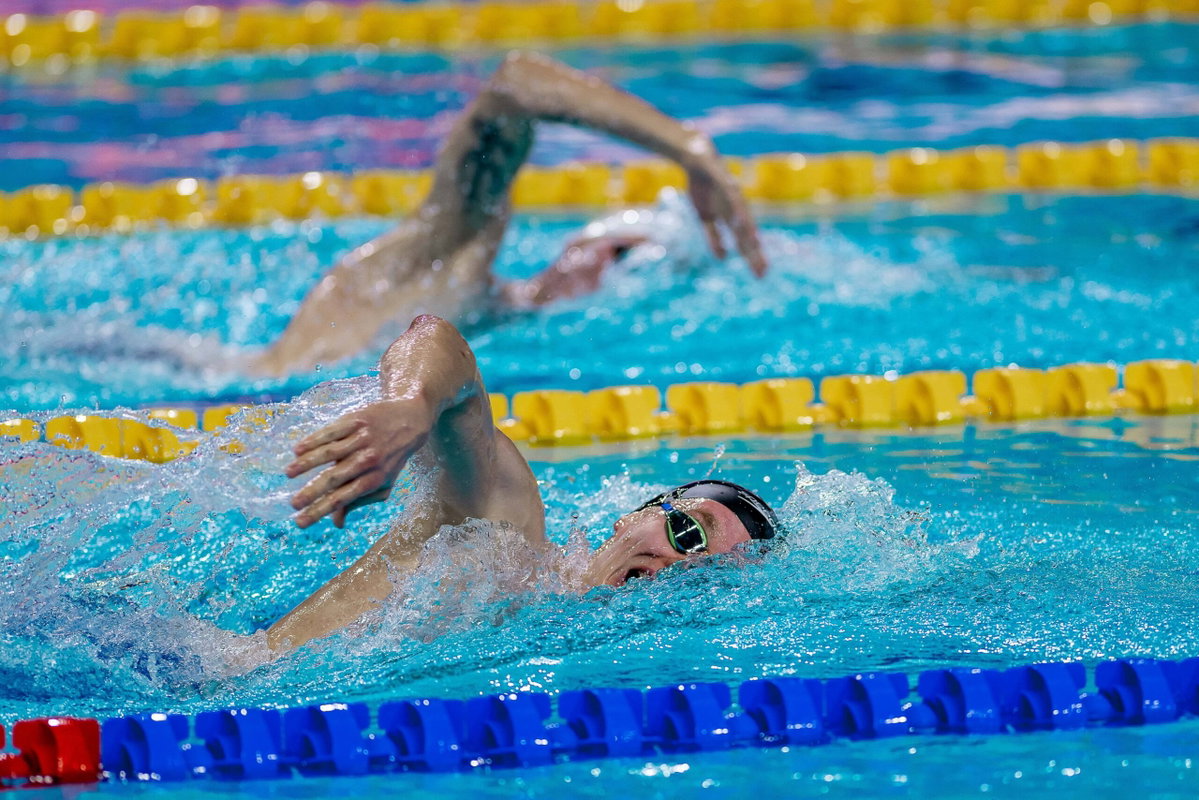
Sven Schwarz GER, HUN, World Aquatics Swimming Championships 25m, Schwimmen, Budapest 2024, 10.12.2024, HUN, World Aquatics Swimming Championships 25m – Budapest 2024, Schwimmen, 10.12.2024 Budapest *** Sven Schwarz GER, HUN, World Aquatics Swimming Championships 25m, Swimming, Budapest 2024, 10 12 2024, HUN, World Aquatics Swimming Championships 25m Budapest 2024, Swimming, 10 12 2024 Budapest Copyright: xEibner-Pressefoto/ChristianxGoldx EP_CGD
Interestingly, allowing Russian athletes to return under their national flag has already been tested in limited form in some events. For example, at the 2026 Winter Paralympics, Russian and Belarusian athletes were allowed entry through invitations in selected disciplines. Around six Russian and four Belarusian athletes competed in sports like para alpine skiing, cross-country skiing, and snowboarding.
Ukraine strongly opposed the decision and chose not to attend official Paralympic events. Matvii Bidnyi, Ukraine’s Minister of Youth and Sports, said on social media that, “We will not be present at the opening ceremony. We will not take part in any other official Paralympic events.”
Despite the criticism, the athletes still competed. In terms of results, they finished with a total of 12 medals (8 gold, 1 silver, and 3 bronze), placing them 3rd in the overall medal table.
So, yes, World Aquatics is unlikely to undo its decision, but it is not fully fixed either. If conditions change, pressure could build again. But the real question now is what could actually push international sport to change direction again?
- Pressure from countries and event hosts
One clear factor would be if a large number of countries refuse to host events or threaten to withdraw: Right now, we already see different groups taking different stances. Some Nordic countries, like Norway, Sweden, Denmark, Finland, and Iceland, have threatened or supported boycotts of hosting events.
In Central and Eastern Europe, countries such as Poland, Estonia, Latvia, Lithuania, the Czech Republic, and Ukraine have strongly opposed Russian representation in sport. The UK government has also supported maintaining pressure in international sport discussions, and European officials have raised concerns about the timing and impact of such decisions.
- Pressure from the International Olympic Committee
The IOC oversees the Olympic Games (both Summer and Winter) and sets the overall rules for participation. Because of that structure, IOC decisions or guidance often influence how individual sports federations act, even if they make their own rules.
However, in this case, there was no immediate response from the International Olympic Committee when asked for comment on World Aquatics’ decision.
At the same time, the IOC has been clear in its general guidelines that sport should remain neutral and separate from political, religious, or any other type of interference. World Aquatics also has the same philosophy.
WA president, Husain Al-Musallam, has openly said that the aim is to keep sport as a space where athletes can still compete together despite global tensions. “We are determined to ensure that pools and open water remain places where athletes from all nations can come together in peaceful competition,” he added.
From that point of view, the IOC sees sport as closer to its ideal when politics does not directly visibly shape participation rules.
Even if things change again, I do not think it automatically leads to a full removal of Russian athletes from competition. In many recent cases, athletes still compete, but not under their national flag. Instead, they participate under a neutral status, which has become a middle path in a lot of international sports decisions. But this also leads to a broader question of how this system of neutrality first developed.
The chain of events that led to Russia’s sporting exclusion
Russia’s exclusion from international sport happened in stages, starting with doping allegations and later expanding due to the war in Ukraine and governance issues in sport.
1. Doping scandal
The first major cracks began to appear in December 2014, when a German ARD documentary exposed what it described as widespread doping in Russian athletics. It claimed that 99% of Russian athletes were involved in performance-enhancing drug use, and also raised concerns about officials helping cover up failed drug tests in exchange for payments.
Soon after, a major whistleblower stepped forward. Grigory Rodchenkov, former head of Russia’s national anti-doping laboratory, revealed details to international investigators. He described a coordinated system involving protected athletes, state support, and the manipulation of urine samples inside the laboratory to avoid detection.
In 2015, the World Anti-Doping Agency launched an independent investigation led by Professor Richard McLaren. His team examined laboratory records from Moscow, athlete testing data, and whistleblower testimonies. This marked the beginning of a formal global probe into Russian sport. The McLaren Report confirmed the findings in July 2016. It concluded that a state-linked doping system had operated over several years.
Imago
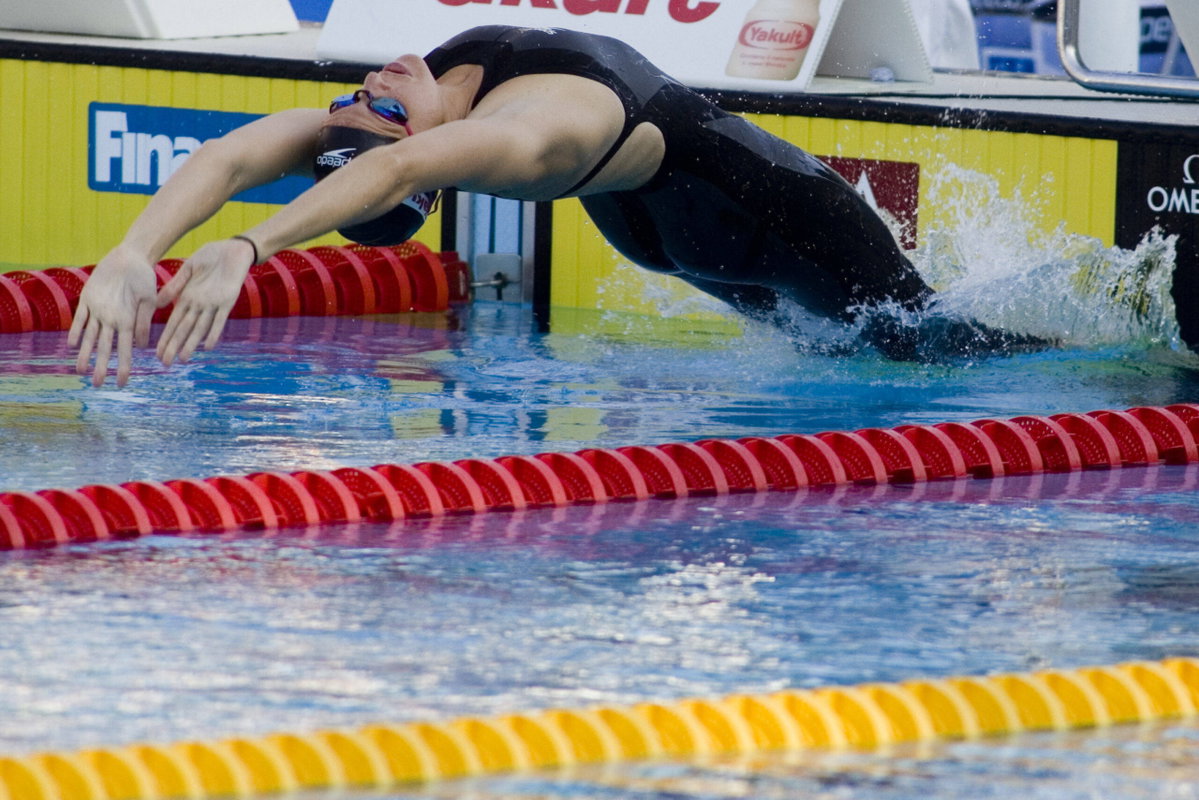
ARCHIVFOTO: Die Schwimm-Legende Kirsty COVENTRY als neue IOC-Praesidentin gewaehlt, Sie tritt die Nachfolge von Thomas Bach an. Kirsty COVENTRY ZIM, Finale ueber 200m Ruecken Schwimmen, Weltmeisterschaft in Rom am 01.08.2009 *** ARCHIVE PHOTO Swimming legend Kirsty COVENTRY elected as new IOC President, succeeding Thomas Bach Kirsty COVENTRY ZIM , 200m backstroke final, World Championships in Rome on 01 08 2009
According to the report, a hidden process secretly swapped samples, government bodies took part, and it implicated more than 1,000 athletes across different sports, including Paralympic athletes.
Following this, the IPC took action and banned Russia from the 2016 Rio Paralympic Games. Then, in 2019, the WADA issued another major decision, banning Russia from major international competitions for four years due to continued issues with data manipulation and non-compliance.
The Court of Arbitration for Sport later reduced this to two years. Even after the reduction, restrictions stayed in place, including no flag, no anthem, and only neutral participation for cleared athletes.
2. Second wave of restrictions
In February 2022, the IOC urged international sports federations to remove Russian and Belarusian athletes and officials from global competitions.
The IOC pointed to the Olympic Truce, a long-standing principle that expects countries to avoid conflict during the Olympic period. It said the invasion went against this idea and the values set out in the Olympic Charter.
Another concern was safety and event security. Several federations warned about possible security risks if Russian teams returned. They also said it could raise tension among athletes and create a more strained environment.
3. Suspension of the Russian Olympic Committee
In October 2023, the IOC suspended the Russian Olympic Committee after it incorporated sports organisations from occupied Ukrainian territories.
Those regions included:
- Donetsk
- Luhansk
- Kherson
- Zaporizhzhia
The IOC said this violated the Olympic Charter because it effectively extended recognition to regions not internationally recognised as part of Russia.
IOC spokesperson Mark Adams stated that the ROC: “The Russian Olympic Committee is no longer entitled to operate as a National Olympic Committee, as defined in the Olympic Charter, and cannot receive any funding from the Olympic movement.”
Impact of the 2022 ban on Russian athletes and competition
Before 2022, Russian athletes were among the most consistent performers across several Olympic sports.
- Figure skating: Russia dominated the sport, especially in women’s events, with athletes like Kamila Valieva, Anna Shcherbakova, and Alexandra Trusova at major events.
- Cross-country skiing: Alexander Bolshunov led Russia to 9 Olympic medals
- Biathlon: Russia regularly stayed competitive in World Cup circuits and Olympic relay events.
- Swimming: Russia produced Olympic-level swimmers like Evgeny Rylov, who won gold in the backstroke events at Tokyo 2020.
Even at the 2022 Winter Olympics in Beijing, Russia competed under the ROC banner. Despite ongoing restrictions, they still finished 9th in the medal table with 32 medals. But after 2022, everything shifted.
Russian athletes faced broad restrictions that limited their participation in international sport. In figure skating, the ISU excluded them from major events, cutting off ranking opportunities and top-level competition. Then, in athletics, many were absent from Diamond League meetings, which are key for world rankings. In gymnastics and swimming, younger athletes lost out on international experience during key development years.
Beyond competition, the effects went further:
- Sponsorship and funding became harder without global visibility
- Some athletes reported lower motivation due to a lack of an international stage
- Training cycles changed, since there was no clear pathway to major global events
- Domestic competitions became the main focus, but they did not fully replace international exposure
Overall, the change didn’t just affect results; it also changed the career paths and development cycles of many athletes.
For now, WA has fully lifted its ban, but most other international federations have not followed the same approach. World Athletics still keeps its restrictions in place. In several Olympic sports, federations allow athletes to compete only under neutral status, while some events still exclude them completely. Even so, the move by World Aquatics has raised questions about whether other federations could slowly reconsider their stance in the coming period.