Imago
World Aquatics Championships Fukuoka (JPN) 14-30 JULY 2023
Imago
World Aquatics Championships Fukuoka (JPN) 14-30 JULY 2023
Imago
World Aquatics Championships Fukuoka (JPN) 14-30 JULY 2023
Imago
World Aquatics Championships Fukuoka (JPN) 14-30 JULY 2023
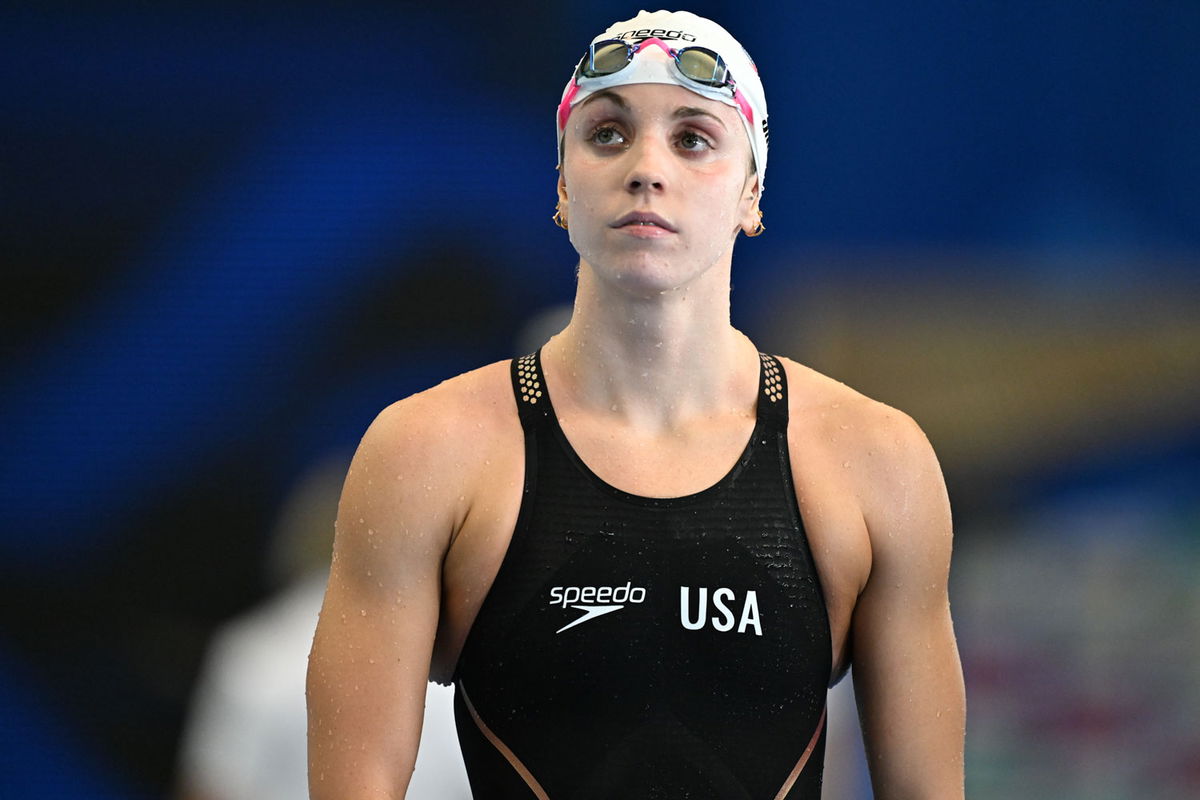
A brewing controversy is rippling through American swimming as a proposed policy could bar international athletes from training at the U.S. Olympic & Paralympic Training Center ahead of the 2028 Los Angeles Games. The move has sparked widespread concern among top U.S. swimmers, who warn it could fracture long-standing training groups that blend global talent and friendship. Even Regan Smith, one of the nation’s leading swimmers, has joined the growing chorus of athletes questioning the move.
Watch What’s Trending Now!
“I don’t understand the decision. I really don’t fundamentally understand it,” Smith said.
“I don’t see who it helps. I just think it hurts it hurts me. It hurts my teammates, and it hurts anyone else who
trains with international swimmers. I don’t see the point,” she continued.
Unless her training group is allowed to swim at the USOPTC as a whole, Regan Smith and her teammates would have to pay increased out-of-pocket costs in terms of renting other pools, finding new housing, commuting more, and paying expenses that are at present covered in the center.
Regan Smith said it’s not discussed yet, but her coach Bob Bowman wouldn’t likely split the international athletes from the American ones in the group, which would result in the entire group finding a different facility for altitude training.


“So, I’m not like pointing fingers at anyone here, but I think it’s just an example of like, okay, we got that great gain with the stipend, but it’s like, shoot, we still have a lot of money that we’re going to have to start spending here in the future because they made that decision to not allow it,” Smith added.
And this move could actually have repercussions for the American swimmers.
US Olympian Regan Smith shares that she and her US teammates will have to pay for more expenses out of pocket if her training group is not allowed to swim at the USOPTC:
"I really don't fundamentally understand it… I don't see who it helps. It hurts me." https://t.co/MZQ4ZNEfrq pic.twitter.com/eP5XpvKpFs
— Swim Updates (@swimupdates) March 1, 2026
Training with the elite swimmers like Leon Marchand, Summer McIntosh, and Hubert Kos, Smith has developed her skills in a very competitive and facilitating environment. And within the present structure, the cost of international athletes staying at the USOPTC is a little higher, an estimate of around $125 a night compared to $90 among the Americans.
However, excluding international swimmers would force U.S. athletes to train in isolation, disrupting routines and logistics while driving up costs. The USOPTC provides lodging, meals, training facilities, and support services all in one location, so separating groups could add unnecessary complexity to Olympic preparation.
Quite contrarily, this policy was intended to give U.S swimmers support. The reasoning from leadership is about giving U.S. swimmers full access to the facility during the most important period of preparation before the 2028 Olympics.
According to USA Swimming CEO Kevin Ring, the idea is that by limiting access to Americans only in that training environment, U.S. athletes will not have to share training areas with foreign competitors and can have uninterrupted use of the center’s resources.
However, at the same time, proponents of the move believe that the reduced number of individuals sharing lanes, weight rooms, and recovery spaces would allow U.S. athletes to concentrate on their training regimens and minimize logistical congestion within the facility.
This policy, however, been highly criticized by the very members of the swimming community, including its top performers, who believe that the move would not improve the quality of daily training but instead work against it.
Before Regan Smith, Michael Phelps slammed this policy change
Not just Regan Smith, even Michael Phelps publicly criticized USA Swimming’s decision to ban international swimmers from using its training facilities, including the USOPTC. He slammed the decision and the leadership’s direction, asking:
“What are our goals?” and noting, “I thrived training [with] all athletes. Never discriminated.” It is not about a single policy that Phelps is worried about, but a larger discontent with the way athletes are supported through USA Swimming.
Even more recently, Phelps expressed deep dissatisfaction with the organization, explaining that he tried to help but felt ignored, including being told he “didn’t know what the f**k I was talking about.”
He also emphasized that it took 372 days to find a new CEO, which he termed as almost impossible by the normal business standards, and emphasized that the U.S. swimming would need to be treated better and given more support to keep competing at the world stage.
That being said, and as the Olympics are still far off, the question is, will leadership reevaluate the USOPTC policy before these changes disrupt the sport that relies on all advantages to win?