
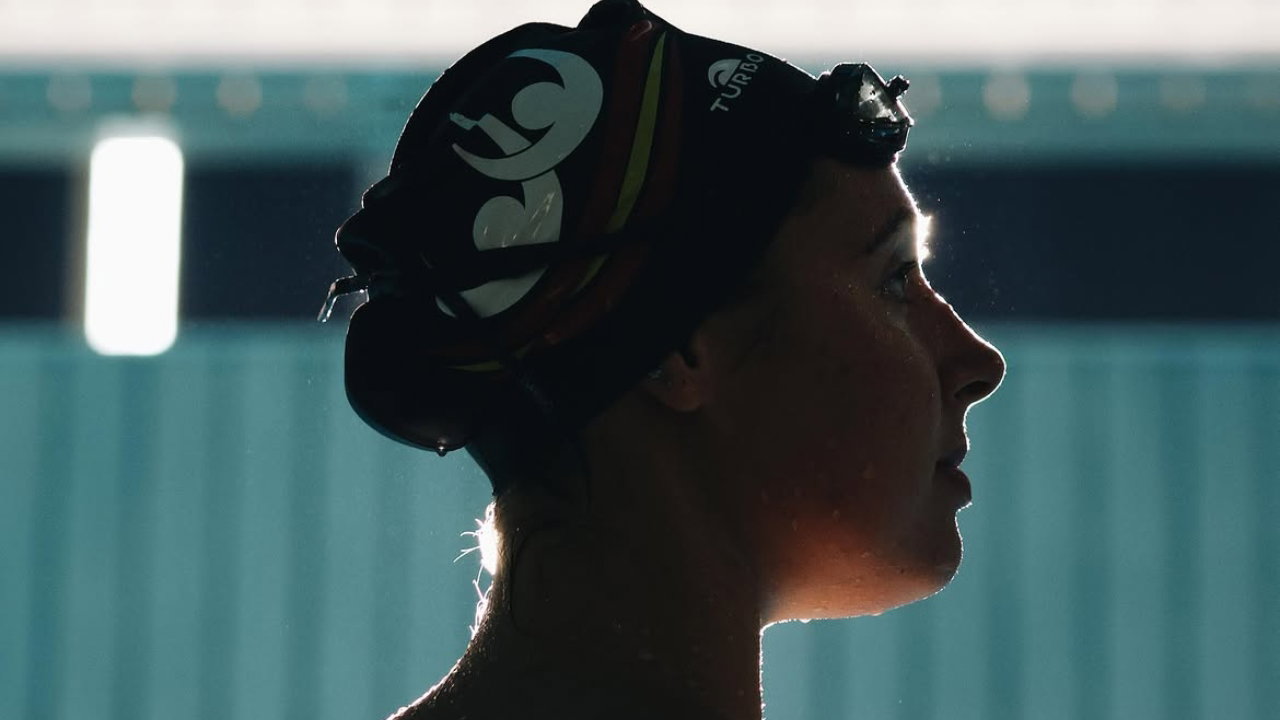
After capturing the women’s team free title at the 2026 European Aquatics Championships, Russia returned to the number one spot in European artistic swimming. The team, representing the ‘Neutral Team B’, beat Spain in a contest for gold. However, the outcome of the match was later the cause of the biggest controversy after the Spanish Olympic bronze medallist Alisa Ozhogina accused the Russian team of copying Spain’s routine.
Watch What’s Trending Now!
Ozhogina, who was part of Spain’s bronze medal-winning team at the Paris Olympics, took to Instagram, saying she could no longer stay silent about what she believed had happened. “I don’t usually get involved in these conflicts, but today I’m going to speak out,” she wrote (translated via Google Translate).
The 24-year-old explained that she has always supported both Spain and Russia because of her background. Born in Moscow to Russian parents before moving to Seville as a young child, Ozhogina said she had welcomed the return of Russian athletes to international competition because she believed they should not be blamed for their government’s actions.
“As half Russian, half Spanish, I’ve always supported both countries,” she wrote. “I’ve been one of the few people happy about their return to competition, because those girls aren’t to blame for what’s happening with their government.”
That, she said, made what happened at the European Championships even harder to accept. “Today I’m speechless…I’d love to ask them what went through their minds when they made that decision. Is a gold medal really so valuable to you that you don’t care how you win it? By copying the country below you? Is that the way? Stealing an idea?”
According to Spanish media, the controversy centers on a hybrid element that Spain debuted during the competition as part of a routine choreographed by Olympic medalist Andrea Fuentes. The performance earned high marks for its execution and artistic impression. The Russian team reportedly made the move to a five-point harder routine after incorporating the same hybrid move before the final free.
However, Spanish media celebrated Spain’s performance despite the controversy, as the team came in at just 2.6805 points behind Russia. However, the Spanish camp believes that decision helped Russia overtake Spain for the gold medal, fueling accusations that the winning routine borrowed one of Spain’s biggest innovations.
Despite the disappointment, Ozhogina insisted the incident proved which team was setting the standard in the sport. “We don’t have the gold, but we have the respect and admiration of a whole world of fans of this sport,” she wrote. She added that if another team needed Spain’s breakthrough idea to defeat them, then Spain was still leading the evolution of artistic swimming.
For now, the Russian team has not publicly responded to Ozhogina’s allegations.