
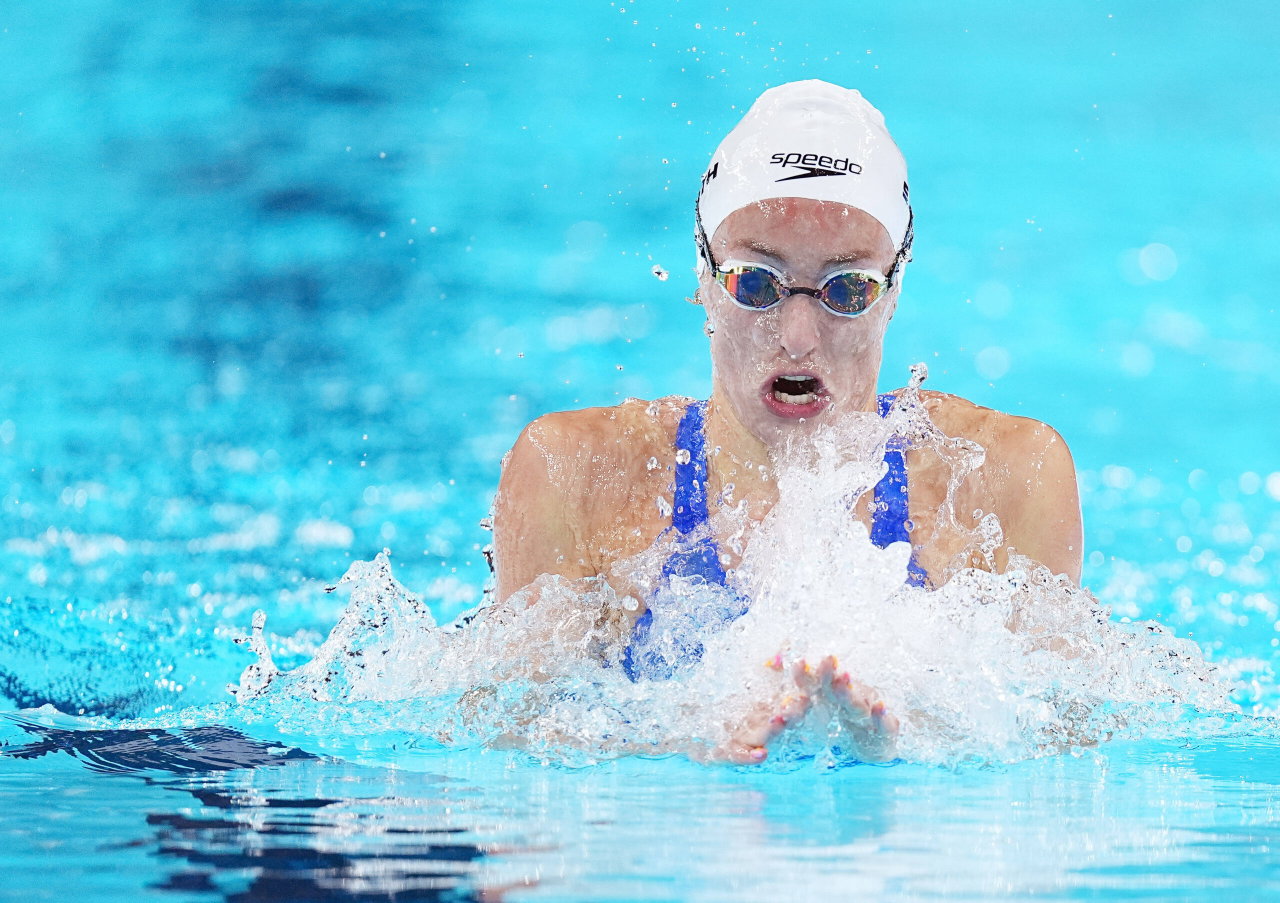
Tatjana Smith gave South Africa plenty of reasons to celebrate, winning four Olympic medals across the Tokyo 2020 and Paris 2024 Games. But behind those achievements, her experience with South African swimming was not smooth. In 2023, after winning two medals at the World Championships, she became involved in a dispute with Swimming South Africa, which withheld her $35,000 in prize money for more than a year over a disagreement about her competition swimwear. The money was eventually paid, but the experience added to her frustrations with the federation. Three years later, Smith has decided to represent the Netherlands, and she is now opening up about the financial struggles she faced while swimming for South Africa.
Watch What’s Trending Now!
Speaking on the SwimSwam Podcast on November 11, Smith said the Netherlands offered her the kind of support she had wanted from a swimming federation for years. She recalled that one of the first things she was told was, “Our athletes come first.” That message clearly made an impression on her. “That’s what the Netherlands were able to provide, and from what I’ve seen, they’re exactly what they say is happening. I can already feel the difference,” she said.
Smith added that she no longer has to pay her own way to attend championships, something she had previously struggled with. She also spoke about the financial pressure facing swimmers who continue to represent South Africa. According to Smith, athletes are being asked to pay R55,000, around $3,200, to attend upcoming championships. She said the amount is roughly ten times the country’s monthly minimum wage, leaving many swimmers unable to afford the trip.
Smith estimated that around 80% of the team are trying to raise money through GoFundMe pages and other crowdfunding efforts to cover the costs. The problem, she explained, is that swimmers do not receive a regular salary from the federation. Instead, they depend on sponsorships to pay for their training and competition expenses.
“We don’t have a salary, so we really just rely on sponsorships,” Smith said. She then questioned how athletes were supposed to manage such high costs without financial support from their own federation. “If I’m not even getting the minimum wage from my federation, then how am I supposed to cover these costs?” she asked.
That shows how different her experience has become since joining the Netherlands. While she is now able to focus on swimming without having to fund her own travel to championships, she says many South African swimmers are still struggling to find the money to compete. But this raises an obvious question: how was Smith able to switch countries after spending her entire international career representing South Africa?
Tatjana Smith’s Dutch roots open the door to a new Olympic dream
Although Smith was born in Johannesburg on July 9, 1997, and grew up representing South Africa, she also has Dutch roots through her father, René Schoenmaker, who is from Naaldwijk in the Netherlands. This means she has connections to both countries and holds dual South African and Dutch citizenship. Her decision to represent the Netherlands was not a change in her birthplace or personal identity. It was a change in the country she competes for in international swimming.
Her Dutch citizenship made the switch possible, but she still needed approval under World Aquatics’ rules. After her change of sporting nationality was approved in November 2026, Smith was cleared to compete for the Netherlands. Her first major international competition under the Dutch flag is expected to be the World Aquatics Swimming Championships (25m) in Beijing, scheduled for December 1 to 6, 2026.
Smith now has her eyes on another Olympic appearance, this time representing the Netherlands at the Los Angeles 2028 Games. She is also looking forward to the possibility of competing in the 50m breaststroke, a new Olympic event that would give her another challenge alongside the 100m and 200m breaststroke.
When she announced her return to swimming in September 2026, Smith made it clear that LA 2028 was her target, while recognising that she still had work to do to earn her place. She said, “LA 2028 is the goal. It is not a promise. I still have to build a race, qualify and earn my place back on those blocks.”
For Smith, this new chapter is about more than changing the flag she swims under. She wants to enjoy the sport again and give herself the best chance to reach another Olympics. Explaining her decision to represent the Netherlands, she said, “This time I want to make a different choice to protect the love that brought me back to the sport and give myself the best possible opportunity to pursue my new Olympic dream.”