
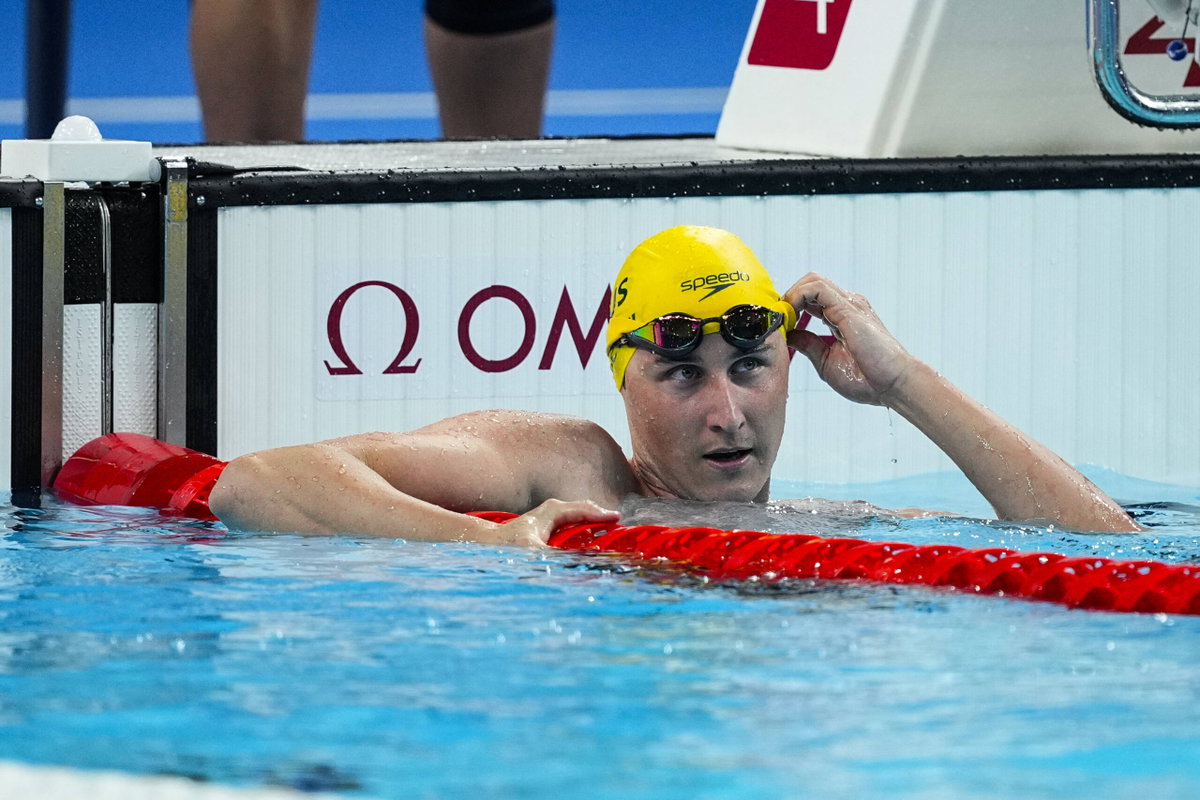
After Kirsty Coventry’s statement on athlete pay, Australian Olympian and swimming champion Cameron McEvoy cast a spotlight on the $12 billion disparity between IOC revenue and athlete earnings. His concrete alternative highlighted a potential payment for athletes appearing in, medaling, and finishing fourth and lower at the Olympics. McEvoy’s figures exposed the lopsidedness of the IOC’s current financial model, showcasing a 98.5% difference in revenue sharing should his idea even be implemented.
Watch What’s Trending Now!
“If every athlete who competes at the Olympics is paid $10k as an appearance fee, and every gold/silver/bronze earns 100k/60k/25k (including individuals on teams), then that would be around $180m-which is only 1.5% of the quadrennial revenue ($12 billion) the IOC generates,” McEvoy wrote on social media.
McEvoy also compared the Olympic model to major professional sports leagues, where athletes receive a much larger share of revenue.
View this post on Instagram
“For reference the NBA has a 50% revenue share with the players. You can have prize money and pay all athletes to help those who aren’t are the absolute top and still be extremely comfortable with your boatloads of revenue.”
The NBA’s agreement on revenue sharing first came to the fore in 1983, when the NBA had to deal with the deteriorating financial health of the league. Deferred money to be paid to players exceeded an estimated $80 million, which threatened players’ jobs and a possible loss of franchises. Per ABPR.org, this led to the collective bargaining agreement, where players would receive between 53%-57% of the NBA’s gross revenue.
This worked because the players had a seat at the table, and the NBA faced the real pressure of the league possibly failing. This is not yet happening with Olympic athletes, but comments from IOC president Kirsty Coventry’s interview with Sport Nation New Zealand have stirred things.
“I don’t believe in paying athletes.”
The Zimbabwean, who won a total of seven medals across two Olympic Games in Athens and Beijing, went through a journey of struggle. With the help of her family and school system, she swam from a young age and gradually climbed her way up to international competition.
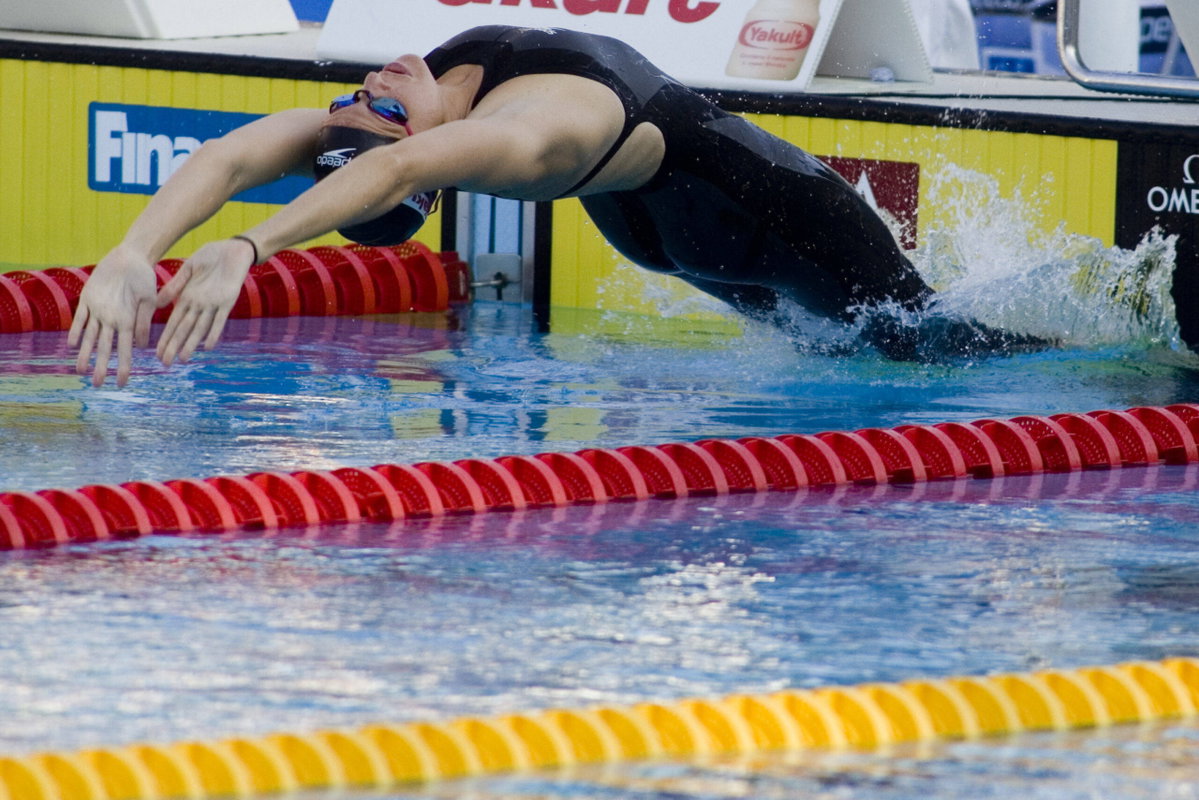
Imago
ARCHIVFOTO: Die Schwimm-Legende Kirsty COVENTRY als neue IOC-Praesidentin gewaehlt, Sie tritt die Nachfolge von Thomas Bach an. Kirsty COVENTRY ZIM, Finale ueber 200m Ruecken Schwimmen, Weltmeisterschaft in Rom am 01.08.2009 *** ARCHIVE PHOTO Swimming legend Kirsty COVENTRY elected as new IOC President, succeeding Thomas Bach Kirsty COVENTRY ZIM , 200m backstroke final, World Championships in Rome on 01 08 2009
From these modest starts, she became one of the most successful swimmers in Olympic history. But behind two golds, four silvers, and a bronze was a difficult financial journey. Coventry has openly admitted that continuing her swimming career almost became impossible because of money. At one point, she revealed that moving to the United States on a full scholarship was “the only option” if she wanted to keep competing at an elite level.
The Olympic Solidarity funding, a system designed to help athletes from countries with limited resources survive the road to the Games, supported her rise. Even then, her family played a major role in keeping her career alive. Reports from her early years describe her parents selling cakes and hamburgers on weekends just to help cover training and competition costs.
Shortly after Coventry broke the world record in Beijing, she was given $100,000 by then-President Robert Mugabe in a television ceremony when the country was plagued with acute economic insecurity. Coventry received direct payment as an athlete, but now opposes direct athlete payments as the IOC president.
Top athletes criticise Kirsty Coventry’s statement
Coventry’s statement drew criticism from the likes of Greg Rutherford, Keely Hodgkinson, and Leisel Jones.
“The glory is not worth it. The Olympic Games are not worth pursuing if you’re not going to pay athletes, said nine-time medalist Jones to Triple M Gold Breakfast. You will be in debt for a long time.”
Rutherford, meanwhile, looked back to the day before he became an Olympic medalist in London. On the night of August 2 (the night before the qualification) or 3 (the night before the final), he had worries apart from the competition and his competitors.
The British long jumper wrote, “I went overdrawn on my bank account. I rang my best friend Andrew to ask if that meant I’d get hit with bank charges.”
He put out 10 slides on Instagram with Paris gold medalist Tara Davis-Woodhall, reposting it.
Reigning 800m Olympic champion Keely Hodgkinson reacted more briefly but pointedly, writing, “Eeeeee this won’t age well.”
Three-time Olympic swimming medalist Roland Schoeman said, “The IOC loves the idea of ‘Olympic values’ as long as athletes are the only ones expected to sacrifice financially.”
As policy discussion has become a controversy about principles, a question of fairness, history, and the true beneficiaries of the Olympic system, Coventry later released a public statement clarifying her position. The Zimbabwean Olympic legend explained that she had failed to repeat the words “prize money” clearly during the original interview, calling it “my mistake, lesson learnt.” Nevertheless, she defended her position on Olympic prize money.
“Yes, I have always said that I don’t believe in paying athletes prize money at the Olympic Games, as this would benefit only a very small number of athletes. I do believe our role as the IOC is to find ways to directly support a large number of athletes on their journey to becoming Olympians, at the Olympics, and as they transition into life after sport.”
The debate over principles, however, cannot be separated from the debate over money.
McEvoy’s post is just a suggestion, but athletes have yet to see any direct payments from the IOC just for competing in the Games. Though the IOC is estimated to earn billions of dollars from broadcasting rights, sponsorships, and commercial deals during every Olympic cycle, most sportsmen depend upon their national Olympic committees or federations for bonuses.
For example, the U.S. Olympic and Paralympic Committee pays around $37,500 for gold. World Athletics introduced $50,000 for Olympic gold medalists ahead of Paris 2024. Meanwhile, reports suggest Kirsty Coventry earns roughly $350,000 annually, along with housing benefits through the Olympic system, while IOC leadership compensation across senior executives has reportedly reached around $55 million combined.
This is why McEvoy’s point struck a chord with many athletes, as they feel that the Olympic system is based on athlete stories, athlete sacrifices, and athlete performances, and that financial benefits are not necessarily returned to the athletes themselves.
The NBA comparison is also true to life. The overall basketball-related income distribution in the league follows a very close-to-49-to-51 percent going to the players, but the Olympics are very different.
The biggest portions of the IOC’s funds stem from two sources: broadcasting rights and worldwide sponsorship arrangements. The IOC has estimated that it generated approximately $7.7 billion in commercial revenue over the 2021 to 2024 Olympic cycle. Television rights accounted for much of NBCUniversal’s multi-billion-dollar Olympic broadcast deal and its newer $3 billion deal to extend its rights until 2036.
The IOC claims 90% redistribution regularly, but the money flows through federations, national Olympic committees, Olympic Solidarity programs, never directly to athletes. The gap never gets closed.
Athletes themselves are the reason for this revenue, so why is none of it in their hands, especially considering the President’s own journey?