
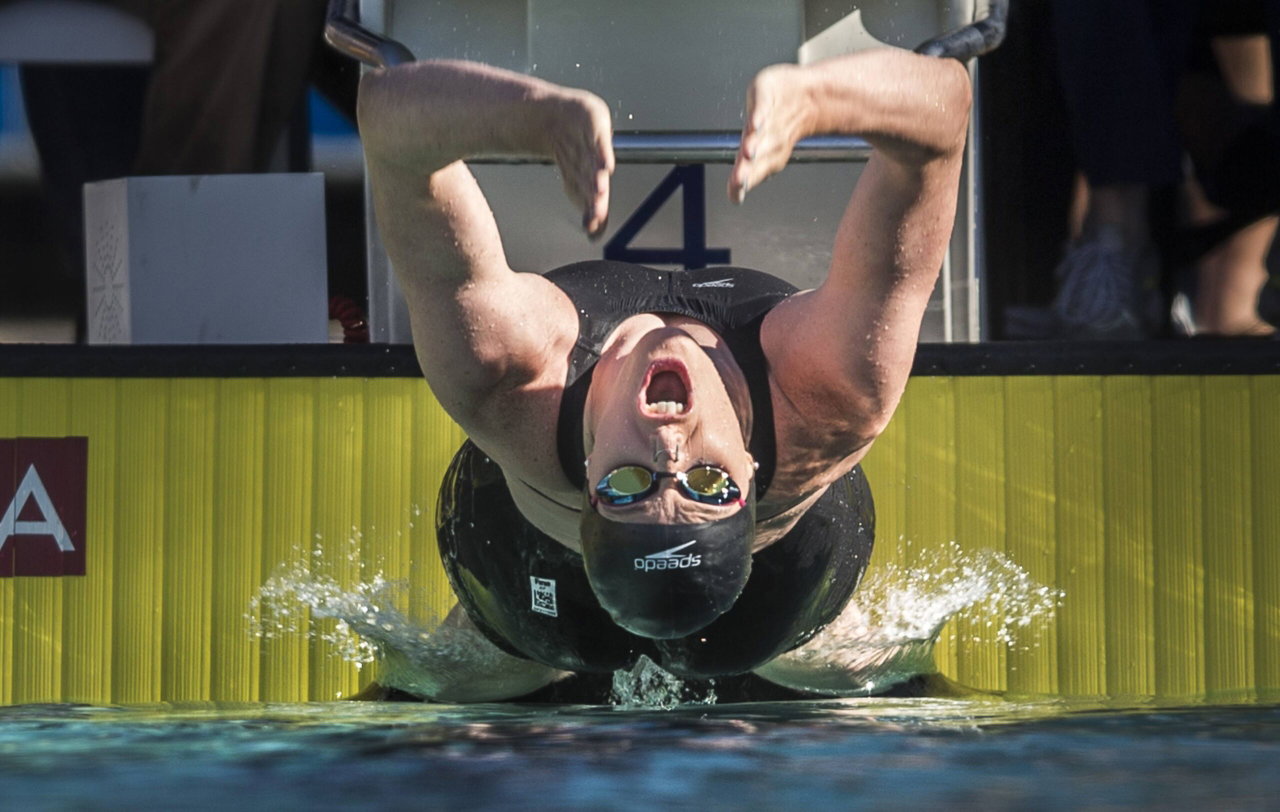
Missy Franklin arrived at the 2016 U.S. Olympic Trials as the reigning Olympic champion in the 100m backstroke, with a place on the Rio team seemingly well within reach. Instead, the event became one of the most painful nights of her career. Franklin finished seventh in the opening final, leaving her Olympic hopes hanging in the balance. Ten years later, she has opened up about what happened after that race and the decision that kept her Rio dream alive.
Watch What’s Trending Now!
Franklin revisited that moment during an appearance on Ken Rideout’s The Other Side of Hard podcast, recalling the shock of failing to qualify in the very event that had brought her Olympic glory four years earlier.
“I get to Olympic trials in 2016. First event 100 backstroke. I’m the reigning Olympic champion and I don’t make the team,” Franklin said.
The result left Franklin’s Olympic hopes in serious jeopardy from the very first night. She finished seventh in 1:00.24, well behind winner Olivia Smoliga (59.02) and runner-up Kathleen Baker (59.29), with only the top two earning spots on the Olympic team. Her bid to defend the 100m backstroke title was over, and Franklin returned to her hotel room devastated.
“I went back to the hotel room that night and just sobbed for like three hours,” she recalled.
Franklin turned to her faith during those hours, repeatedly praying as she tried to process what had happened.
“My faith is my foundation. I just remember praying, praying, praying,” she added. “I literally felt God say to me, like I will love you just as much like if you pack up and go home right now.”
But that thought led her to a harder question. She could accept the result, leave the Trials and let her Olympic campaign end there, or stay and keep fighting despite knowing that another disappointment was possible.
The decision was not about believing she would suddenly turn things around. Franklin knew she could keep competing and still fail to make the Olympic team. But she would rather leave knowing she had exhausted every possibility than wonder what might have happened if she had walked away after one bad race.
“At the end of the day, at least you know that you essentially died trying,” she said. “You know that you fought and that you failed.”
That mindset convinced her to stay in Omaha and keep competing, giving herself another chance to qualify for Rio, which proved to be the turning point in her 2016 Olympic Trials.
Despite the crushing opening-night disappointment, Franklin stayed in the fight and eventually secured her place on the U.S. Olympic team. She qualified for Rio in the 200m freestyle and 200m backstroke and also earned a spot on the U.S. 4x200m freestyle relay team. But making the team did not mean the struggle was over. By the time Franklin arrived in Rio, she was dealing with problems that went well beyond the disappointment of missing the 100m backstroke.
Missy Franklin faced pain, anxiety and panic attacks in Rio
Franklin ultimately left Rio with one gold medal, helping the U.S. win the women’s 4x200m freestyle relay after swimming in the heats. It was the fifth Olympic gold of her career, but the medal did not reflect what she had endured to get there.
Franklin had been dealing with shoulder pain since April 2016, forcing her to withdraw from a Pro Swim Series meet four months before the Olympics. Alongside the physical problems, she later revealed that she was battling depression, anxiety and insomnia while preparing for Rio. By the time she reached the Games, the Olympic champion was carrying a much heavier burden than her results alone suggested.
The mental strain had already begun to surface at the Olympic Trials, where Franklin experienced panic attacks for the first time. She was frightened by the physical symptoms and struggled to understand what was happening. In a first-person account for TIME, Franklin credited her trainer, Loren Landow, with helping her work through those moments.
“Loren, my trainer, would sit with me and talk me through these uncertainties, and help me to meditate,” Franklin wrote. “I don’t think I would have gotten through that week in Omaha without his help. Without those meditations, my throat would close, I couldn’t breathe, and I’d start to shake uncontrollably.”
The problems did not end with the Rio Olympics. Franklin’s shoulder pain persisted, eventually leading to surgeries on both shoulders as she spent the following years trying to rehabilitate her body and return to competition. For an athlete who had reached the top of the sport as a teenager, the road back proved far more difficult than she had hoped.
Franklin was eventually diagnosed with severe chronic tendinitis affecting both the rotator cuff and biceps tendons. Treatment and rehabilitation allowed her to make several attempts at rebuilding her career, including periods of training away from home, but the shoulder issues continued to limit her. She never returned to the form that had made her a four-time Olympic champion at 17.
Eventually, the physical toll left Franklin with little choice. In December 2018, at just 23, she announced her retirement from competitive swimming after years of shoulder problems, surgeries and attempts to return. The decision brought an end to the career she had once expected to continue for years, but it also meant finally stepping away from a sport that her body could no longer withstand at the highest level.