
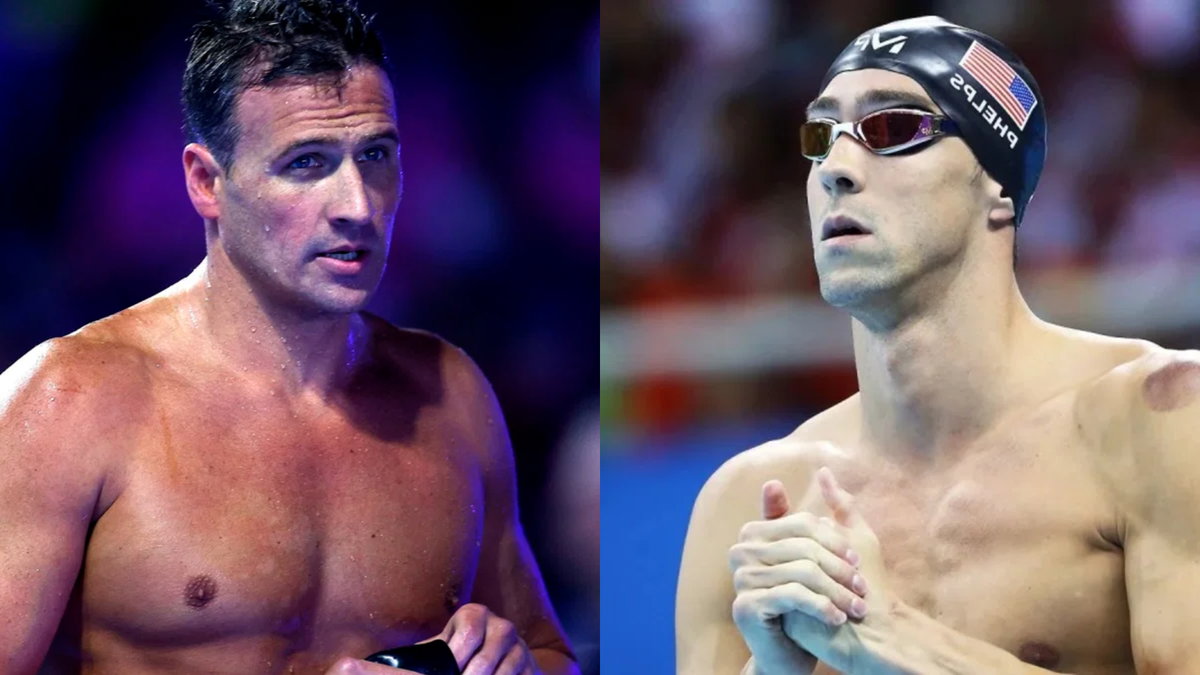
Being a father was something that used to keep Ryan Lochte grounded. But over time, this became entangled with his emotional issues. Returning from the 2016 Summer Olympics, he claimed he was robbed at a gas station in Rio de Janeiro, Brazil. However, authorities later revealed he and his teammates had vandalized a restroom at that gas station. Soon after, he was subjected to backlash labelling him as “the most hated person in the world.” During that dark phase, his son Caiden Zane became his anchor. Years later, the pressure returned in a different form that very well relates with Michael Phelps.
Watch What’s Trending Now!
At the 2021 U.S. Olympic Swimming Trials, Lochte finished 7th in the 200m individual medley, his signature event, with only the top two earning a spot in Tokyo. The miss sent him spiraling. “I just lost everything because I felt like I was a failure,” he said, describing a period of deep depression where he questioned his identity and who he even was as a person.
“I was looking at myself in the mirror every day and being like.. who the f–k am I? And it was rough. And I went for years like that,” he admitted.
At first, Lochte resisted. He pushed back against treatment, convinced he could handle it himself, even as his family urged him to get help. But things only got heavier. “There were some points where I was so depressed that I didn’t even get out of my bed to go down to the mailbox, and it started affecting me as a father, which was ki**ing me inside,” he said.
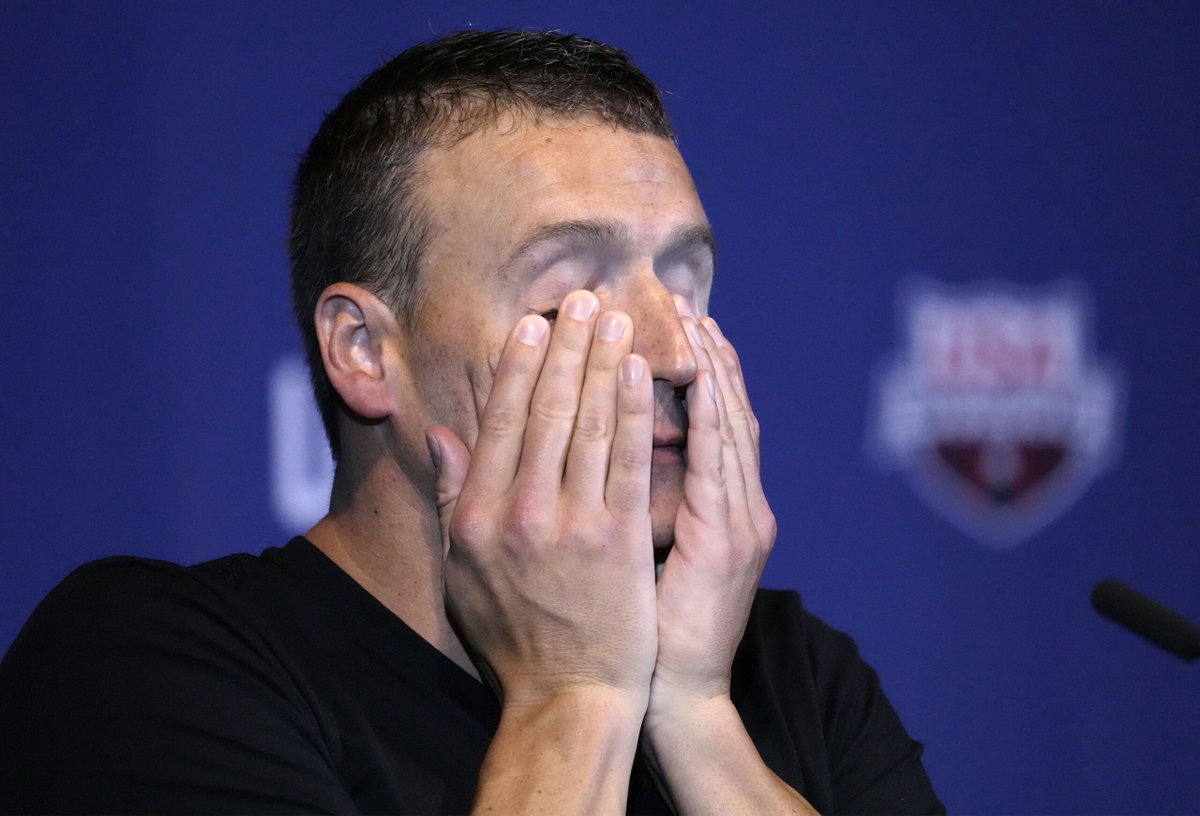
USA Today via Reuters
Jun 18, 2021; Omaha, Nebraska, USA; Ryan Lochte holds a post-race press conference after failing to make the U.S. Olympic Team during the U.S. Olympic Team Trials Swimming competition at CHI Health Center Omaha. Mandatory Credit: Rob Schumacher-USA TODAY Sports
He was raising two young children, Caiden Zane and Liv Rae, while battling his own inner turmoil. The weight of parenthood on top of everything else became too much to carry. And even after seeking help, life did not let up. In 2023, he was involved in a serious car accident while driving his children to school in Florida, sustaining significant injuries in the process.
During his recovery, he said he “fell into a dark place,” with depression and substance-related struggles resurfacing all over again. “I struggled to find myself again, sinking back into depression and doubting my worth as a father, a husband, and the person I knew I could be,” he admitted. It is a sentiment that echoes, in many ways, what Michael Phelps has spoken about openly.
The hidden struggles of Michael Phelps
After winning gold at the 2004 Summer Olympics, Michael Phelps described a sudden emotional drop once the races were over. The victories were enormous, but what followed felt strangely empty.
Between 2008 and 2011, he continued to dominate in the pool while life outside it grew increasingly unstable. He later admitted to leaning on alcohol during those years and shutting himself off from difficult conversations altogether.
The 2012 Summer Olympics brought everything to a head. He said he felt completely lost after the Games, isolating himself for days. “I didn’t want to be in the sport anymore,” he said. He stepped back from competition in 2013, but the struggles still followed. By 2014, things had reached rock bottom following a DUI arrest. That became his wake-up call.
Later that year, family and close friends pushed him toward treatment. He entered a facility in Arizona, accepted therapy, and began the work of recovery. Things slowly improved, but fatherhood brought it’s own emotional weight.
He has spoken about moments where his children watch him walk out of the room without any explanation. . “Sometimes my kids will just see me leave the room. And that’s because I’m overwhelmed, and my emotions are firing on all cylinders, and I can’t think straight,” he said. Those moments are hard for him precisely because he does not want his children to see him that way.
However, rather than suppressing it, he now tries to let it out. “Maybe I’ll scream, maybe I’ll write things down,” he said. “But it’s getting those things out instead of letting them pile up inside of you.” For Phelps, success never erased the struggle but rather just changed its shape.