
November 30, 1956, became an unforgettable day for Australian swimming when 21-year-old Jon Henricks won the men’s 100m freestyle at the Melbourne Olympics. With the home crowd cheering him on, he touched the wall in 55.4 seconds, setting a new world record and making history as Australia’s first Olympic 100m freestyle champion. The moment was even more special as Australia swept all three medals, with John Devitt taking silver and Gary Chapman claiming bronze. Now, 70 years later, the swimming community is mourning the loss of Henricks, who passed away at 91 just as his fellow 1956 Olympians gathered to celebrate the anniversary of the Melbourne Games.
Watch What’s Trending Now!
Henricks passed away on November 20, 2026, in Santa Barbara, California, where he had made his home after moving to the United States. Swimming Australia confirmed his death through an official tribute on November 21. While the cause of his death has not been publicly disclosed, tributes have poured in from across the Australian sporting community.
Swimming Australia chief executive Rob Woodhouse remembered him as one of the country’s greatest champions, saying, “Jon will be remembered as one of our greatest ever champions.” He also expressed sadness that Henricks passed away just before the reunion of the 1956 Melbourne Olympians.
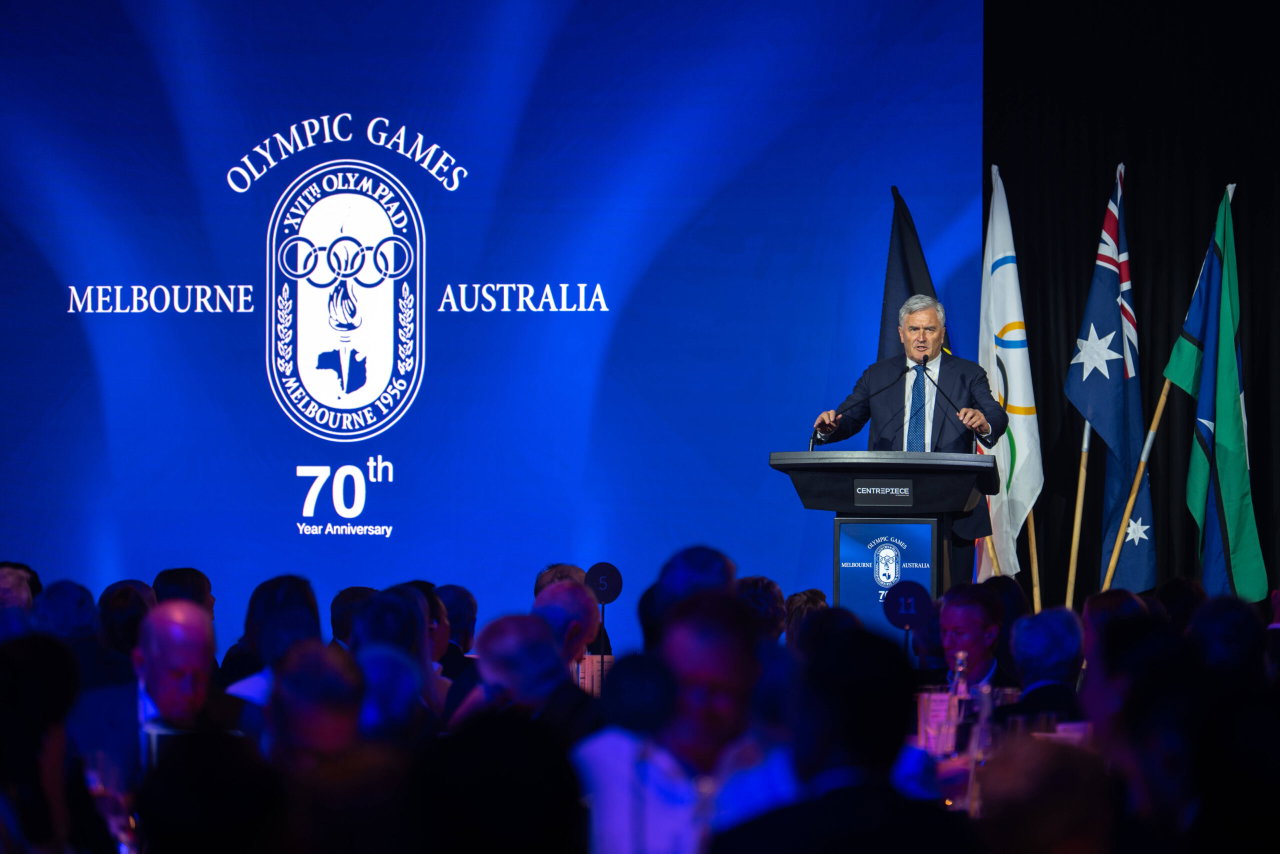
The timing made his loss particularly emotional as former Australian Olympians gathered at the Melbourne Cricket Ground on November 22 to celebrate the 70th anniversary of the Games. Around 30 athletes who competed in Melbourne in 1956 reunited for the occasion, joined by approximately 180 athletes from other Olympic Games. The group walked a lap of the MCG before coming together for a celebratory luncheon. Although Henricks could not join his former teammates, his achievements remained an important part of the reunion.
Australian Olympic Committee president Ian Chesterman also paid tribute to the late champion, remembering the role he played in one of the country’s most memorable Olympic campaigns. “Jon Henricks was a giant of the Melbourne 1956 Games and part of a remarkable generation of Australian Olympians alongside Murray Rose, John Devitt, longtime friend Dawn Fraser and many others,” Chesterman said.
He further recalled how Henricks won Australia’s first swimming gold medal in front of a home crowd before helping the 4x200m freestyle relay team set a world record. “That week helped establish Australia’s reputation as a swimming nation, and it still inspires our athletes today,” he added. Chesterman also acknowledged that although Henricks built his life in the United States, he remained a proud Australian Olympian, extending condolences to his family, friends and the swimming community.
Former Olympian Peter Tonkin also remembered Henricks with an emotional tribute. “Vale Ricksy. What a legend,” he wrote. Tonkin highlighted Henricks’ connection with fellow Olympic champion Dawn Fraser, noting that both swimmers won the 100m freestyle at the same Olympics and shared the same coach. He also remembered them as members of “Mr G’s Golden Dolphins,” referring to their association with legendary Australian swimming coach Harry Gallagher.
Champion swimmer Shane Gould also shared her condolences with Henricks’ family, remembering his personality alongside his sporting achievements. “I met Jon a few times and loved his wit and strength of character. His swimming record was fantastic too,” she said. But Henricks’ remarkable swimming career had begun long before his Olympic triumphs.
Jon Henricks’ journey from young swimmer to Olympic Champion
Born in Sydney on June 6, 1935, Henricks began swimming at the age of 11 at Balmain Baths. Interestingly, he initially focused on distance freestyle events before moving towards sprint swimming. At the 1952 Australian national championships, he won gold in the 400-yard freestyle, silver in the 800-yard event and bronze in the 1,500-yard competition. However, a persistent ear infection prevented him from making Australia’s team for the 1952 Helsinki Olympics. Missing the Games was a major disappointment, but it eventually changed the direction of his career.
After the setback, Henricks shifted his attention towards sprint swimming under coach Harry Gallagher, with guidance from University of Sydney physiology professor Frank Cotton. The change quickly paid off. In January 1953, at just 17, he broke the Australian 110-yard freestyle record by 1.2 seconds. He went on to win four consecutive Australian national titles in the 110-yard freestyle from 1953 to 1956. His international success continued at the 1954 British Empire and Commonwealth Games in Vancouver, where he collected three gold medals in the 110-yard freestyle, 4×220-yard freestyle relay and 4×110-yard medley relay.
However, his biggest moment arrived in Melbourne two years later. Along with his individual 100m freestyle victory, Henricks helped Australia win the 4x200m freestyle relay alongside John Devitt, Kevin O’Halloran and Murray Rose. So, he won two gold medals there in the same Olympics. The team also set a world record of 8:23.6. Reflecting on the feeling of winning Olympic gold, Henricks later admitted that the achievement left him unsure about what would come next. “That [Olympic gold] had been the focus of my life up until that point,” he recalled. “And I thought, ‘Gosh darn it, what am I going to do now?'” He described the feeling as something that left him wondering whether his sporting journey had reached its end.
Following his Olympic success, Henricks moved to the United States and joined the University of Southern California in 1958. There, he trained alongside fellow Australian Olympic champion Murray Rose and helped USC win three NCAA swimming titles during his four years. He also won American outdoor national championships in the 100m and 200m freestyle in 1958. His time in the United States became an important part of his personal life as well, as he met his future wife, Bonnie Wilkie, at USC.
Henricks returned to the Olympic stage at the 1960 Rome Games, hoping to defend his 100m freestyle crown. However, his campaign took an unfortunate turn when he developed a gastrointestinal illness just three days before the final. Despite trying to compete, he failed to progress beyond the semifinals, while his Australian teammate John Devitt went on to win the gold medal. Speaking about the disappointment, Henricks later said, “I was so weak I just could not do it.” He also recalled feeling deeply upset about letting down his team and coach Harry Gallagher.
His contribution to swimming continued to receive recognition long after his competitive career ended. Henricks was inducted into the International Swimming Hall of Fame in 1973 and the Sport Australia Hall of Fame in 1986. He also received the Australian Sports Medal in 2000 and the Medal of the Order of Australia in 2018 for his service to swimming and mentoring.