
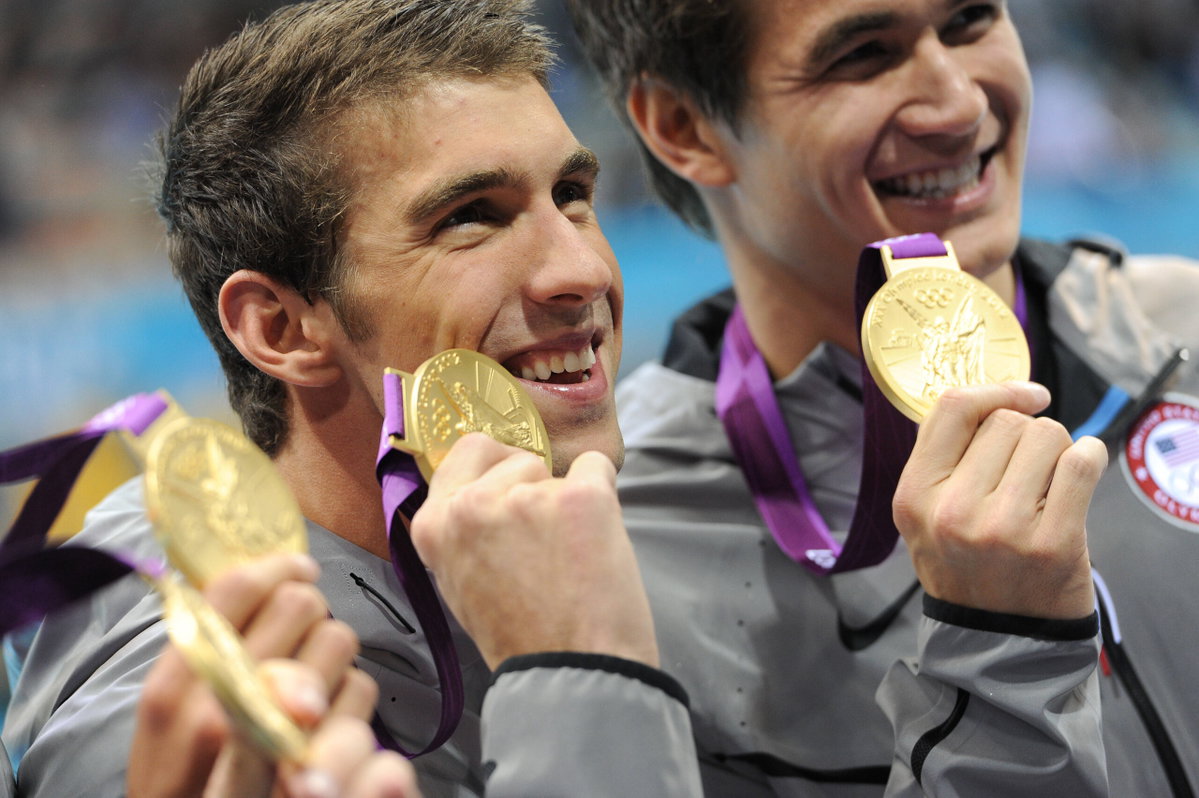
83 medals. 23 Olympic Golds. A career so dominant it may never be replicated. Yet, Michael Phelps has found something he values more. The greatest swimmer in history may have retired over a decade ago, and he has traded the pursuit of gold for a mission he believes can save lives. And he’s not being subtle about which one matters more.
Watch What’s Trending Now!
The now 40-year-old spent over two decades of his life chasing after perfection. By the time he retired, there was no denying that Michael Phelps had achieved his dream. Yet, he felt he lacked something, and his own battle with mental health eventually paved the way forward. So much so that the Olympic icon believes that his gold medals have lost their meaning now.
“For me, winning a gold medal is way less important than having a chance to save a life,” Phelps told CNN.
Imago
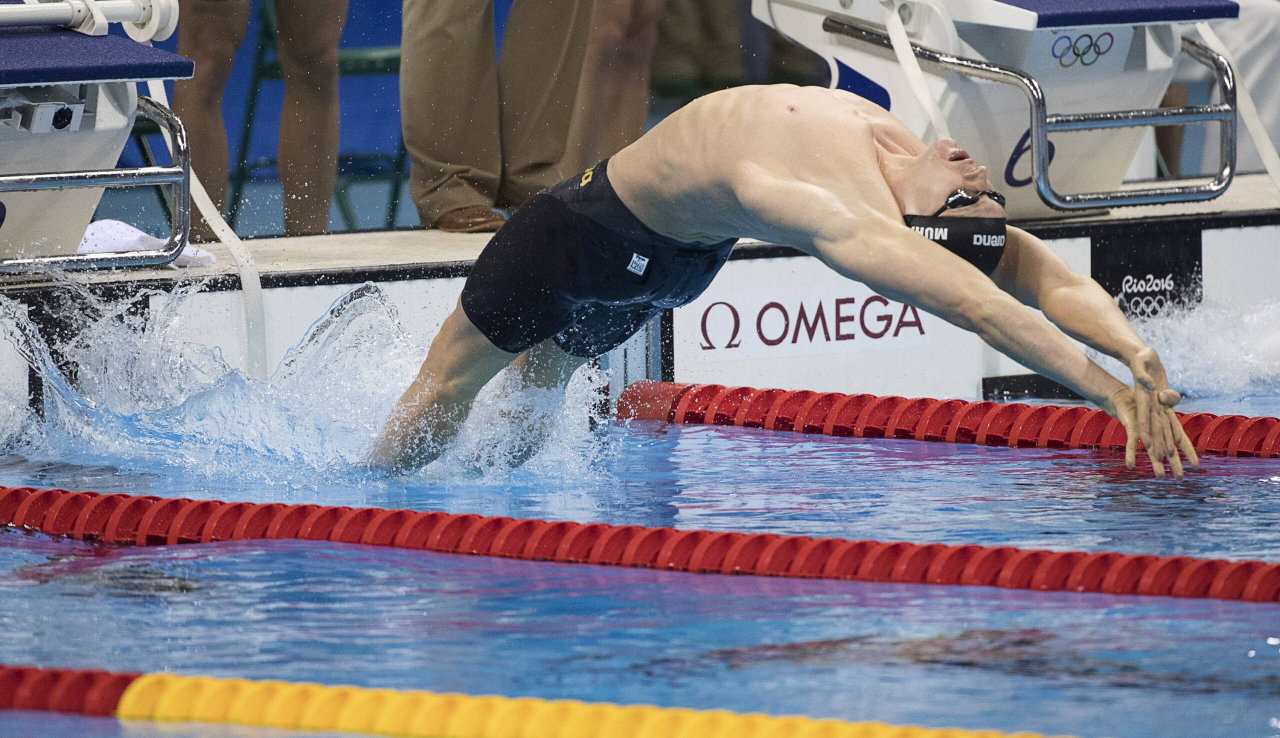
August 13, 2016 – Rio de Janeiro, RJ, Brazil – OLYMPICS SWIMMING: Ryan Murphy (USA) swims to a gold media with Michael Phelps (USA), Cody Miller (USA) and Nathan Adrian (USA) in Men s 4x100m Medley Relay at Olympics Aquatics Stadium during the 2016 Rio Summer Olympics games.Micheal Phelps (USA) celebrates his 23rd gold medal, and career total of 28 Olympics medals RIO 2016 – Swimming: Men s – ZUMAj89_
More importantly, all of his sporting achievements pale in comparison to the work he’s doing as a mental health advocate. Phelps has become one of the most prolific supporters and advocates of mental health amongst active and retired athletes. So much so that the now 40-year-old has been showered with a catalogue of awards for his work in the field.
That includes the Muhammad Ali Legacy Award in December 2025. Presented to him by Sports Illustrated, the award honors athletes who embody what Ali once did, the ideals of “sportsmanship, leadership, and philanthropy”. That’s exactly what Phelps has been doing ever since he detailed his own battle with mental health and alcoholism.
The American opened up about his problems in 2015 and has been very vocal about them since. In fact, few athletes of yesteryear have been as vocal as Phelps has been about his battles with depression, ADHD, and more. That’s because for the multiple Olympic gold medalist, it all changed when he started talking to people and getting help.
“I honestly think it’s really when I got to that point of not wanting to be alive,” Phelps explained. “Once I got to that point, I was like, ‘OK, something is wrong. I need to ask for help.’
“That was the first time that I ever asked for help because I just didn’t know what to do, (and) I’m very thankful that I got the help that I needed because I wanted change.
“And then, at that point, (it was about) just being able to find that ground to stand on and be OK sharing the stories that I talk about.”
While Phelps might be one of the rare cases from yesteryear, many modern-day athletes have made mental health a priority. None more so than Simone Biles. The gymnast even stepped away from the Tokyo Olympics mid-competition, citing mental health. It followed what Naomi Osaka had done in 2020 before Biles, with Alysa Liu and Ilia Malinin, and more recently touched on the same.
Yet for Phelps, there was one incident after his final record-breaking Olympics that stood out more to him than anything he did in the pool.
“I remember after the 2016 Olympics, I was at Microsoft and this kid … I say ‘kid,’ he was probably 25 years old, stood up and he was like, ‘I have my dream job. Everything I’ve ever wanted to do has happened. And I don’t want to be alive anymore,” Phelps revealed.
“And I was like, ‘Bro, I hear you. I’ve had those thoughts before.’ So we had that moment where he was like, ‘You sharing that gave me the power or the confidence to open up and share.’”
That willingness to share has become Phelps’ greatest weapon. But understanding why took him all the way back to Athens.
Michael Phelps opens up about his mental health struggles in 2004
Athens, 2004, and a young Michael Phelps steps onto the stage. After his performances at the 2002 Pan Pacific and 2003 World Championships, the pressure was on. And boy did Michael Phelps deliver. By the end of the Olympics, the 19-year-old had won six gold medals and two bronze medals, kicking off something special.
It was the second-best performance since Mark Spitz won seven Olympic golds in 1972. Yet for Phelps, the high quickly wore off. So quickly that after the Olympics ended, the teenager had no idea what to do or how to deal with himself. That saw him go into a depressive spiral, as Phelps admitted that he began struggling with the four-year cycle.
“I would say probably 2004. 2004 was my first taste of post-Olympic depression, you know, coming off such a high,” Phelps told NBC in 2024.
“It’s basically… You get to like the edge of a cliff, like ‘Cool, now what? Oh, I guess I’ve got to wait four more years to have the chance to do it again’.
Things repeated after the 2008 Olympics as well, where he broke Spitz’s record, winning eight gold medals. It stunned the then 23-year-old, especially after what had happened earlier.
“2008 was my second taste of post-Olympic depression because coming off that high after doing something you set out to do your whole entire life,” he added.
It meant that by the end of his career, the gold medals and the records meant very little to him. Because the 23 gold medals only built the legend. The kid at Microsoft, and all the others, who finally felt seen, that’s the moment Phelps felt like he actually won something.