
South African swimming is going through a difficult time. Some of the country’s biggest Olympic stars are now looking to represent other nations. Disputes over prize money, sponsorship deals, and a lack of financial support have raised serious questions about how Swimming South Africa (SSA) treats its athletes. However, one of the country’s brightest swimming stars is showing a different side of the story. Pieter Coetzé still believes in South Africa and its future.
Watch What’s Trending Now!
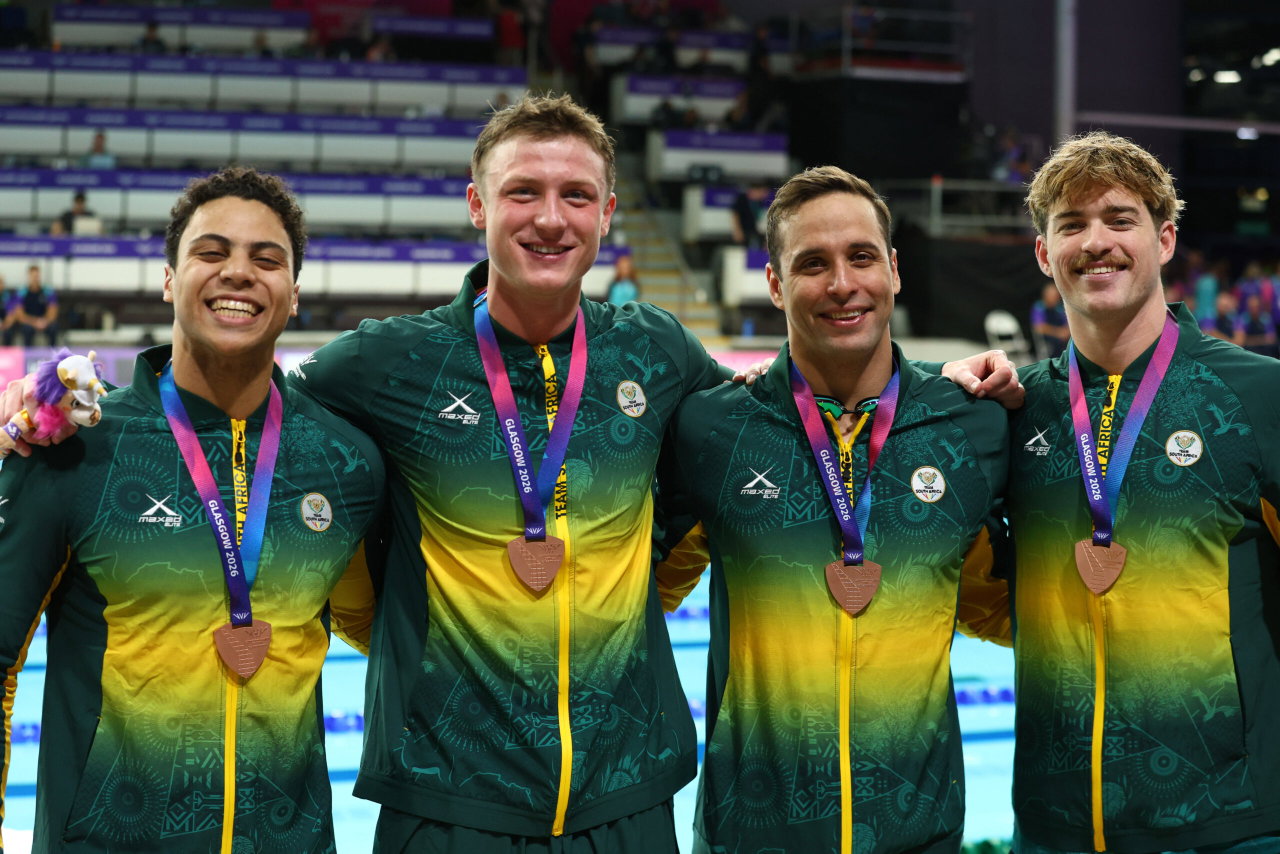
Amid the growing crisis, Coetzé has shared a message of hope. He posted a picture from an event on Instagram with the caption, “I understand, but South Africa’s story isn’t over.”
His words come at a time when three swimmers from South Africa’s eight-member squad at the 2024 Paris Olympics are looking to represent other countries. Tatjana Smith is moving towards the Netherlands, Matthew Sates has Australia in his sights, and Rebecca Meder wants to represent New Zealand. But Coetzé has chosen a different path. He is preparing to represent Team South Africa at the World Aquatics Swimming Championships in Beijing from Dec. 1 to 6.
Coetzé’s Instagram post comes at a difficult time for South African swimming. His recent performances have already given the country plenty to celebrate.
The 22-year-old recently made history for his country. He set a new short-course world record in the men’s 50m backstroke with a time of 22.09 seconds in Tashkent. He also won the overall men’s title at the 2026 World Aquatics Swimming World Cup. According to Reuters, he broke the previous world record of 22.11 seconds, which Russia’s Kliment Kolesnikov had set in 2022.
But Coetzé did not stop there. He continued his impressive run at the competition and secured the overall men’s World Cup title in Astana on Oct. 17. He finished ahead of Russia’s Egor Kornev. World Aquatics reported that Coetzé also earned $100,000 for winning the overall competition.
His next challenge will be the short-course world championships in Beijing. The team also features experienced swimmers such as Chad le Clos, Erin Gallagher, and Michael Houlie.
At a time when some of South Africa’s biggest swimming stars are looking for opportunities elsewhere, Coetzé’s decision to stay with his country sends a different message.
The situation attracted major attention on Nov. 10, when Tatjana Smith announced that she would represent the Netherlands in future international competitions. The 29-year-old shared an emotional video on social media and explained that financial problems and better support for her career played a major role in her decision.
However, her decision also brought an old dispute with Swimming South Africa back into the spotlight.
The problem goes back to the 2023 World Aquatics Championships in Fukuoka, Japan. Smith won gold in the 200m breaststroke and silver in the 100m breaststroke. But SSA held back her $35,000 prize money because she competed in swimming equipment supplied by her personal sponsor, Speedo, instead of the federation’s sponsor, Arena.
According to IOL, the federation also threatened to fine her €46,000. Smith eventually hired lawyers to recover the money she had earned through her performances. The federation released the prize money after legal intervention and later paid the interest as well.
The dispute raised a serious question: Why did one of South Africa’s greatest swimmers have to fight her own federation to receive her prize money?
And Smith is not the only Olympic swimmer looking for a new home.
Matthew Sates is looking to represent Australia. He won the 200m individual medley title at the 2022 World Short Course Championships in Melbourne and also holds several African records.
Rebecca Meder wants to represent New Zealand after training there for several years. She is a 14-time African champion and set a South African record in the 200m individual medley at the Paris 2024 Olympics.
Losing three members of that team has now raised serious concerns about the country’s swimming future.
Olympic legends criticise SSA as government steps in
The growing crisis has also drawn criticism from some of South Africa’s biggest swimming names.
Former Olympic champion Roland Schoeman reacted to Smith’s decision on X. He wrote, “Well done, @SwimSouthAfrica. Another world-class swimmer choosing to leave South Africa to pursue the career she deserves.”
Schoeman also raised concerns about the financial burden on athletes. He pointed out that swimmers were being asked to pay R55,000 to represent their country at the upcoming short-course world championships.
Another Olympic gold medallist, Ryk Neethling, also spoke out against the federation. He said, “The message it sends is that @SwimSouthAfrica don’t look after their athletes. If you treat South Africa’s best Olympic athlete in history like this, imagine what an up-and-coming athlete deals with. Unacceptable.”
These reactions have put even more pressure on SSA.
The issue has also reached the South African government. On Nov. 17, Sports Minister Gayton McKenzie asked the South African Sports Confederation and Olympic Committee (SASCOC) to investigate Swimming South Africa.
During his press conference, McKenzie apologised to Smith and said, “She’s been treated in the worst possible way. They should be ashamed.”
He also added, “Tatjana has been treated like an enemy of this country.”
McKenzie stated that the investigation should examine the Arena sponsorship deal, penalties imposed on swimmers, unpaid prize money, and spending at SSA’s Franschhoek High Performance Centre. It will also review issues with the federation’s constitution.
McKenzie said he no longer trusted the federation’s leaders but could not remove them without following the proper process. SASCOC acting president Lwandile Simelane expects the investigation report within 90 days. The minister also plans to form a task team and improve sports funding through tax benefits and support from the National Lotteries Commission.
Losing three swimmers from an eight-member Olympic team is a big blow for any country. These athletes bring valuable experience, international exposure, and the ability to win medals. Their exit could hurt South Africa’s future teams and make it harder for young swimmers to learn from experienced champions.
Amid this situation, Pieter Coetzé’s Instagram message offers a different perspective. While some big names are exploring opportunities abroad, he continues to represent South Africa. His world record and World Cup title show the country’s strength in swimming.
However, keeping top swimmers will require more than talent. SSA must provide better financial support and treat its athletes fairly. Coetzé believes South Africa still has a bright future, but will the investigation bring the changes needed to stop more swimmers from leaving?