
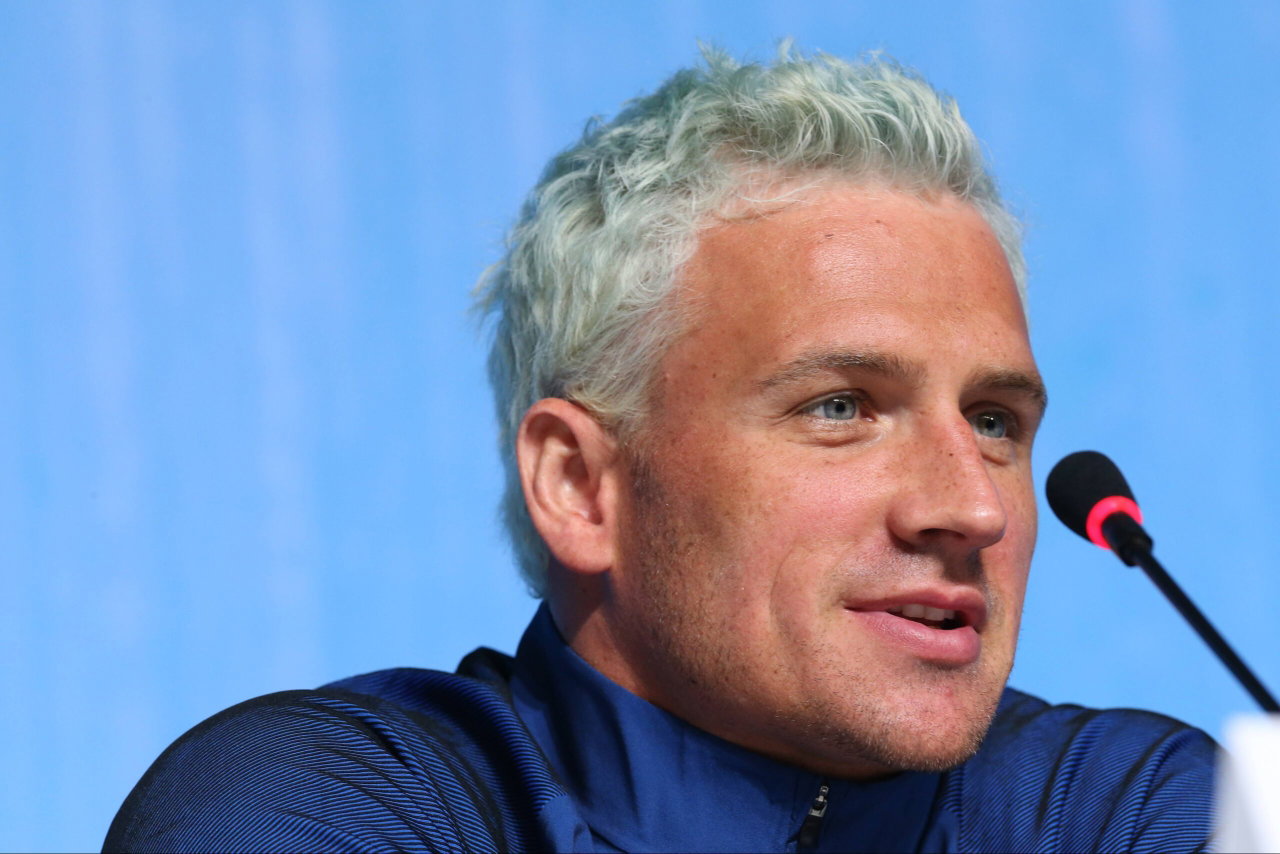
For almost 16 years, Ryan Lochte chased greatness down a pool. Now, the six-time Olympic champion is standing on the other side of the lane line, trying to help the next generation find its own.
Watch What’s Trending Now!
In May, Missouri State University added one of swimming’s biggest names to its coaching staff. Lochte joined Dave Collins’ program as an assistant coach for both the men’s and women’s teams, a role that has given the 12-time Olympic medalist a fresh reason to stay close to the sport he once dominated.
And Lochte knows exactly why he made the jump. “Well, I mean, I’ve done everything there is to do in the sport of swimming as a swimmer, and I’ve been coached by one of the greatest coaches in the world, and I learnt so much from them, and I’ve a big heart, and I always love helping the younger generation in any way I can. I just found a niche when I started doing swim clinics for like these kids I was actually helping, teaching… I started seeing a huge difference in their swimming after I talked to them, and I was like, ‘I actually know what I’m talking about (laughs). Why don’t I go all in and be a swim coach and really help this next generation of swimmers achieve their goals and their dreams like I once did when I was a younger kid’… I freaking love it.”
That enthusiasm matters because coaching is not simply another job for Lochte. After spending years measuring his life through medals, world records and Olympic appearances, he is now trying to rediscover the competitive spark in a completely different role.
“I took this job because I wanted to prove to myself that I could do this,” Lochte said in another previous interview. “When I was swimming, I had a fire burning inside of me of becoming the best, and that’s what drove me every day, every year.”
That fire once pushed him toward four Olympic Games and 12 medals. It also made the transition away from competition incredibly difficult. At the 2021 U.S. Olympic Trials in Omaha, the 36-year-old finished seventh in the 200-meter individual medley and failed to qualify for his fifth Olympic team.
For Lochte, the result felt like more than a missed race. It felt like losing his identity. “After 2021, I lost all the fire in me,” he admitted. “I didn’t see the light at the end of the tunnel.”
The swimmer who had once hunted records suddenly had to figure out what came next. Becoming a father, stepping away from elite competition, and confronting the challenges that followed his career forced Lochte to look beyond the pool.
That makes his decision to sell several Olympic medals particularly interesting.
Ryan Lochte explains why his Olympic medals no longer define him
In January, Lochte made headlines after auctioning three Olympic gold medals through Goldin Auctions. His 2008 Beijing 4×200-meter freestyle relay gold fetched $183,000, while his Athens 2004 and Rio 2016 relay golds sold for $80,520 and $122,000, respectively. Together, the three medals brought in $385,520.
It was not his first time parting with Olympic hardware. In 2022, Lochte sold six silver and bronze medals for about $166,000, taking the total number of Olympic medals he had auctioned to nine.
The sales naturally led to speculation that money had forced his hand. Lochte, however, pushed back against that idea. “I’m financially A-OK to support me and my entire Brady Bunch family,” he said. “A lot of people got that wrong. Do I have some tax debt? Yes, but I did it because I don’t need them. And I’ve done the hard work. I cherish those memories, and if I got money from it, great!”
For Lochte, the medals were never the heart of the story. The journey was. “I never swam for the gold medals,” he wrote on social media. “My passion has always been about being one of the best swimmers in the world. Those medals? They were just the cherry on top of an incredible journey.”
He later explained why the physical trophies had become less important to him: “The thing that gets me the most is the journey that it took me to get there. The medals, they were just collecting dust in a sock drawer.”
That perspective perhaps explains why coaching feels so natural now. Lochte has already experienced the highest highs and the lowest lows of elite sport. He wants the swimmers at Missouri State to learn from both.
“This opportunity means everything to me,” Lochte said. “Swimming gave me structure, purpose, and a platform to grow not just as an athlete, but as a person.”
He now hopes to pass that perspective forward. At Missouri State, his responsibilities will include helping athletes develop beyond their times and results, while Collins believes Lochte’s work ethic and experience can immediately strengthen the program.
The Bears are coming off a 2026 Missouri Valley Conference men’s championship, and Lochte’s arrival adds an unusual voice to the deck – one that has seen Olympic pressure from the inside.
But perhaps the biggest change is happening away from the stopwatch. “I’ve reached the highest of highs, and I fell to the lowest of lows,” Lochte said. “I’m most proud of that when I did fall, I was able to get back up and keep moving forward.”
For a swimmer who once believed everything revolved around the next race, Lochte now sees something bigger. “Swimming is just a sport that I love to do,” he said. “It doesn’t define who I am. I love being a dad.”
And now, he is discovering that he can love being a coach, too.