Imago
Credit: Instagram / @andrewblaser
Imago
Credit: Instagram / @andrewblaser
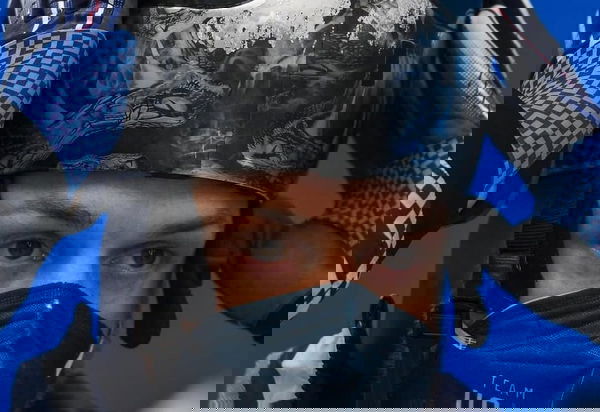
Just weeks before the Winter Olympics begin, Team USA has raised concerns about what it describes as “unethical” behavior by the Canadian skeleton team. And the move didn’t sit well with U.S. head coach Andrew Blaser.
Watch What’s Trending Now!
The controversy erupted after Canada pulled out four of its six women from a North American Cup competition in Lake Placid. Blaser, along with his colleagues, then wasted no time in formally raising the matter to the IOC’s athlete commission.
The North American Cup is a key Olympic qualifying event, where athletes earn points toward the International Bobsleigh & Skeleton Federation (IBSF) world ranking list. That ranking decided who qualifies for the Milan-Cortina Winter Olympics. The more athletes who start a race, the more points are available for everyone.
With the qualification window closing on January 18, 2026, even a small drop in available points can make or break an athlete’s Olympic chances. But in that same race, Canada withdrew four athletes, which slashed the field and reduced the points available. And for one U.S. athlete, the timing couldn’t have been worse.
For Katie Uhlaender, the Lake Placid race was her last chance to reach a sixth, and perhaps final, Olympics. When Canadian coach Joe Cecchini (her friend of 20 years) called to explain, Uhlaender reportedly responded tearfully: “You just f****ed us.”


According to Uhlaender, the withdrawal was deliberate in order to prevent the U.S. from catching up to Canada in the Olympic qualifying standings. “I cried when I found out he went through with this plan,” she said.
In response, Blaser and officials from other national teams, such as Denmark, Israel, and Malta, raised a formal complaint to Athlete365, the athlete body of the International Olympic Committee.
The letter described Canada’s action as “potential sport manipulation and unethical conduct,” noting that the withdrawn athletes were healthy, registered, and had competed only days earlier.
Imago
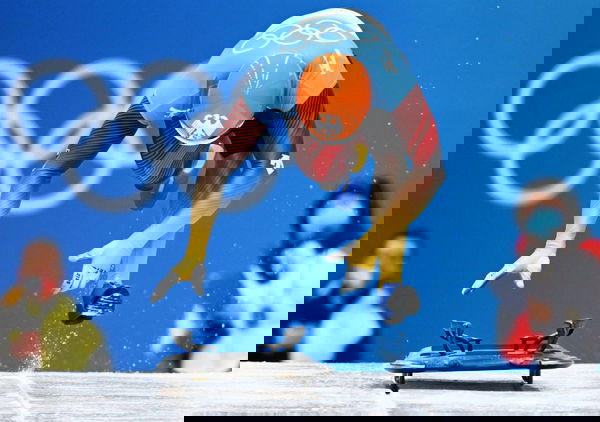
Sport Bilder des Tages hina Olympics 2022 Skeleton Men 8111412 11.02.2022 Germany s Axel Jungk competes in the men s skeleton heats during the Beijing 2022 Winter Olympics Games, Olympische Spiele, Olympia, OS at the National Sliding Centre in Yanqing, China. Vladimir Astapkovich / Sputnik Yanqing China PUBLICATIONxINxGERxSUIxAUTxONLY Copyright: xVladimirxAstapkovichx
According to the letter, the move was made to reduce the field options below those required for full participation points:
“This situation raises serious concerns regarding fair play, ethical governance, and the integrity of the Olympic qualification process and Olympic values. It also placed Canadian athletes in a difficult position, where they expressed a desire to compete but felt unable to raise concerns or advocate for themselves without fear of negative repercussions.”
“Given the multi-nation impact and the implications for Olympic qualification, I respectfully request that this matter be reviewed to determine whether further inquiry or intervention is warranted. Several nations are seeking clarification and accountability regarding this incident, continued the letter”
Shortly afterward, U.S. head of performance Curt Tomasevicz contacted the IBSF executive committee. But the federation acknowledged, “In general, the rules do not prevent a member to register athletes for the competition—training and race—and withdraw them before the race.”
While the decision is technically within the national teams’ discretion, this has left many questioning: why did the Canadian coach make such a decision at a critical stage just before the Winter Olympics?
Canada’s reasoning behind withdrawing its athletes just before the Winter Olympics
Canada’s head coach Joe Cecchini insisted there was a clear reason behind the controversial decision to withdraw four of the team’s six female skeleton athletes from the Lake Placid race. According to Bobsleigh Canada Skeleton, the move was made after assessing the athletes’ condition following races earlier in the week.
“It was determined that continuing to race these athletes was not in their best interests nor in the best interests of the programme,” BCS said in a statement, adding “BCS remains confident that its actions were appropriate, transparent and aligned with both athlete welfare and the integrity of the sport.”
At the same time, Cecchini acknowledged that withdrawing four athletes would reduce the size of the field and, in turn, limit the Winter Olympics qualification points available to other competitors.
But Uhlaender, a two-time world champion and six-time world championship medalist, claimed differently. According to the 41-year-old, Cecchini told her that it wasn’t his responsibility to “uplift” the competition, and that his aim was to “eliminate any possibilities” that his athlete, Jane Channell, would miss the Olympics.
On the other hand, Cecchini later said he reached out to Uhlaender because he cared and recognized how difficult the situation would be for her. His intention, he said, was to explain the reasoning directly and with respect, rather than allowing her to learn about the withdrawals through others.
Even so, the debate over fairness and fallout remains far from settled.