
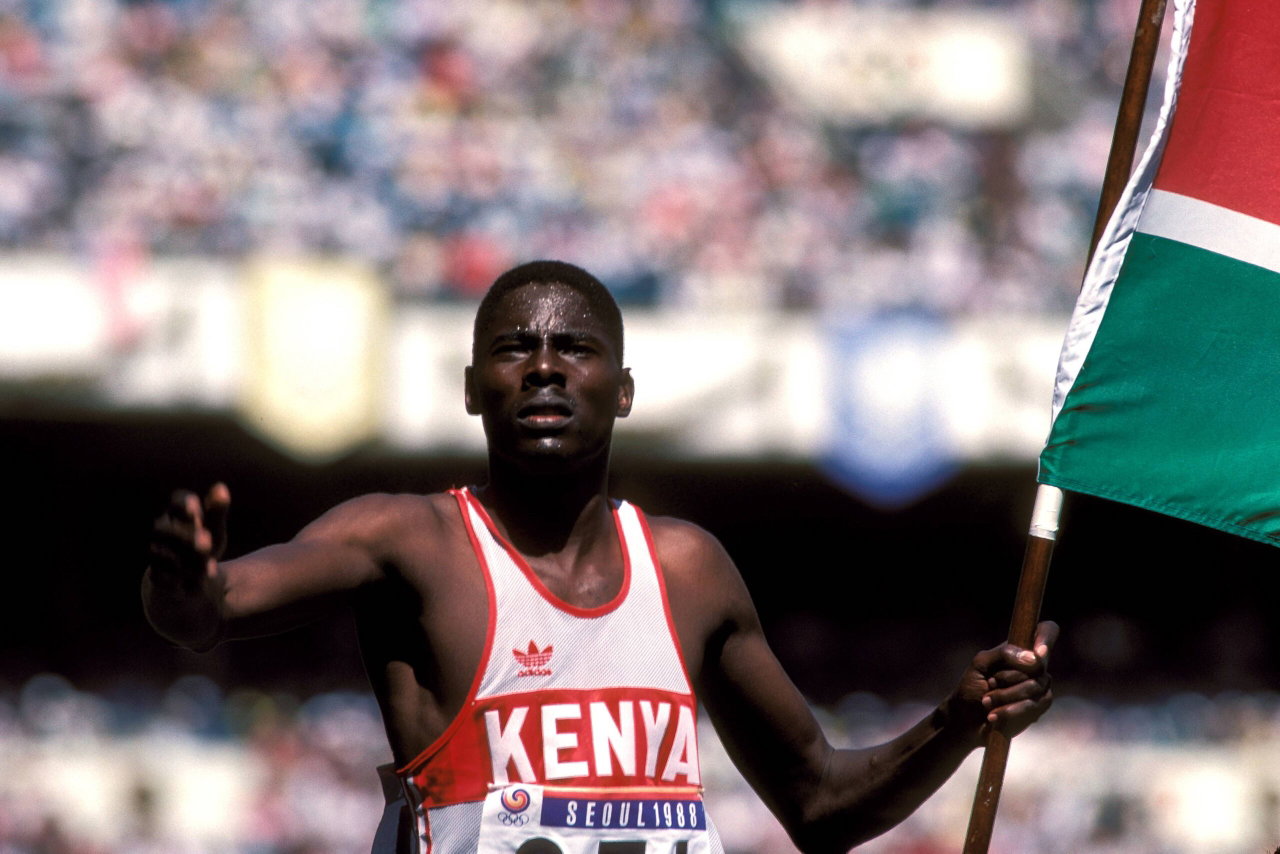
Paul Ereng spent his career mastering the 800m. Today, the former world-record holder is putting those lessons to work from the other side of the track.
Watch What’s Trending Now!
At Texas A&M, Ereng has taken on a different role. The former 800m world-record holder is now helping young runners understand the small details that can separate a good race from a winning one. One of those athletes he is coaching is Stefon Dodoo, who has quickly emerged as one of America’s promising middle-distance talents.
Dodoo recently gave Ereng another reason to be proud. At the 2026 USATF U20 Championships, the Texas A&M runner claimed the men’s 800m title in 1:48.59, earning his place among the country’s top young athletes heading into the World Athletics U20 Championships.
But behind that result is a coach who knows better than most that an 800m race isn’t won simply by running hard.
In a recent clip shared by TRACK: All-Access, Ereng could be heard reminding Dodoo about one of the simplest mistakes young runners make: easing up too soon.
“Don’t cut your effort before you cross the line. Imagine the finish line is like another 5 m after the real line,” Ereng told him. He even gave the drill a name: “You have an imaginary finish line. It’s called Dodo’s line.”
That straightforward approach says plenty about how Ereng coaches. He isn’t interested in constantly shouting instructions from the sidelines. Instead, he wants his athletes to think for themselves, learn their bodies and understand why something went wrong.
“I’m the type of a coach who explains you what I want you to do, and I just sit there and observe,” Ereng explained. “Then after you’re done, then I will come and tell you, ‘I didn’t tell you to do that. This is what we talked about.'”
For Ereng, coaching is giving athletes the tools to eventually coach themselves. “I’m not your cheerleader. I instruct you what you need to do and you do it. If I see mistakes, I come and correct it,” he said.
In that same interview, Ereng spoke about the biggest challenge that young runners face these days: pacing.
Coming straight from high school, athletes can get carried away once the gun goes off. They feel good, chase the runners around them, and suddenly find themselves running much faster than planned.
“The thing about the young guys like this, when you bring them to this level, is, you know, them being able to understand themselves,” Ereng said.
His goal is to make Dodoo understand exactly what a particular pace feels like. If the target is 38 seconds, the athlete should be able to recognize that rhythm without constantly relying on a coach or a clock.
“That’s the challenge in the beginning of young people that are coming from high school. Pacing discipline,” Ereng explained. “They get excited. They go fast. And then after that it kills them. Then they mess the workout.”
It is a lesson Ereng learned himself when his own career took an unexpected turn.
From a 400m runner to Olympic glory: A closer look at Paul Ereng’s incredible journey
Born in Kitale, Kenya, Ereng initially showed promise as a 400m runner. His career changed after he moved to the University of Virginia, where he switched to the 800m in early 1988.
The transition worked almost immediately.
Ereng won the NCAA 800m title in 1988 and defended it the following year. But making Kenya’s Olympic team was hardly guaranteed. He finished third at the national trials and only just secured his place in Seoul.
Few expected him to win once he arrived at the Olympics. But Ereng had other plans.
With his trademark finishing kick, he stormed past the field down the final straight to win the 800m gold medal at the 1988 Seoul Olympics. What had started as an experiment in a new event had suddenly turned into an Olympic title.
“I had never run 800 until I came to school,” Ereng recalled. “The guys guided me through my first year. And then after that, you know, I understood what I needed to do.”
His success didn’t stop in Seoul. At the 1989 World Indoor Championships in Budapest, Ereng produced another devastating finish, winning gold in a world-record 1:44.84. He went on to defend his world indoor title in 1991.
His achievements eventually earned another honor. In February 2026, the Virginia track and field alum was named to the Collegiate Athlete Hall of Fame Class of 2026 by the USTFCCCA.
Ereng’s 1:44.84 indoor mark remained a Virginia program record, while his 1:43.16 outdoor mark also stands among the school’s best performances. Now, his own legacy is beginning to take another shape.
Instead of chasing medals himself, Ereng is standing beside the next generation, teaching runners like Dodoo how to finish a race, control their pace and, perhaps most importantly, understand what their bodies are telling them.