
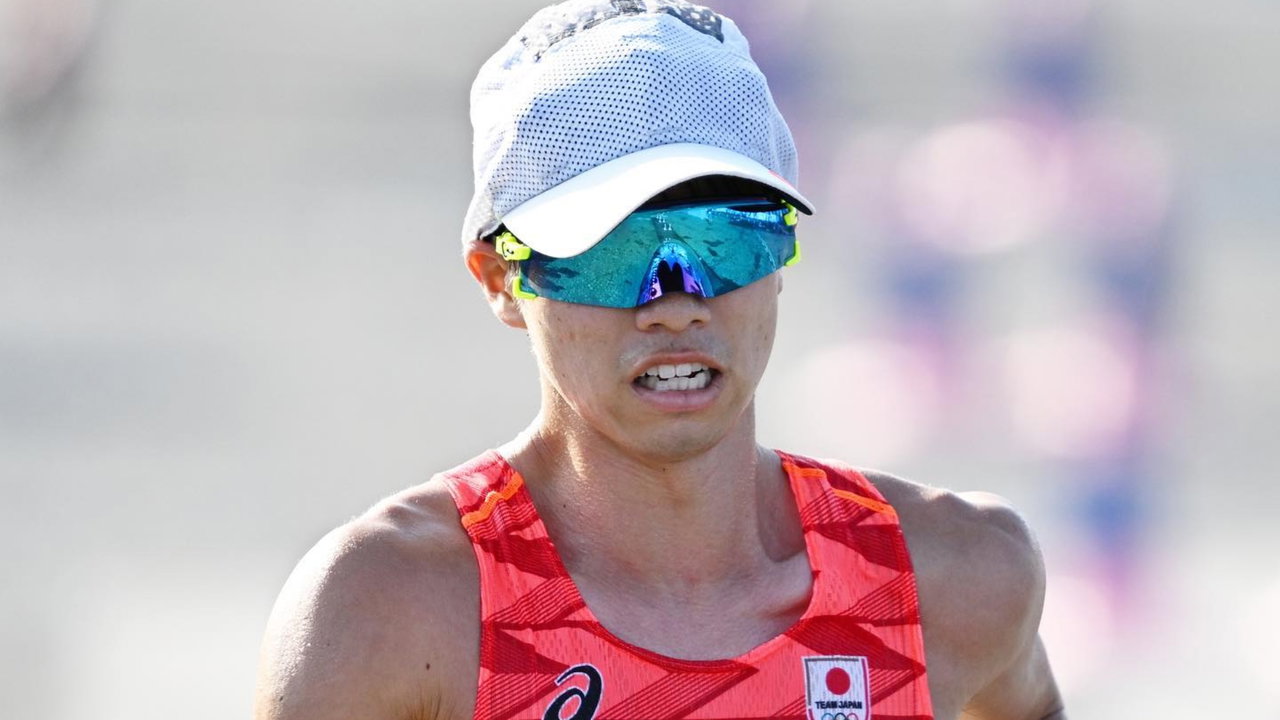
Back in November 2024, Japanese race walker Koki Ikeda’s career was thrown into uncertainty when he was provisionally suspended over suspected blood manipulation. The Tokyo Olympic silver medallist faced the prospect of a four-year ban, the loss of major competition results and a lengthy absence from the sport. The allegations stemmed from unusual changes in his blood profile, which anti-doping experts believed could indicate a prohibited method. Ikeda denied wrongdoing throughout the case. Nearly two years later, a major legal decision has changed the course of his case and reopened the door to his return.
Watch What’s Trending Now!
On October 23, 2026, the Court of Arbitration for Sport overturned Ikeda’s four-year ban after reviewing his appeal and additional medical evidence. The panel ruled that the alleged anti-doping violation had not been established, overturning the original disciplinary decision and clearing him to compete again.
The case centered on Ikeda’s Athlete Biological Passport, an anti-doping system that tracks changes in an athlete’s biological markers over time to identify patterns that may indicate doping. Investigators examined blood samples collected in 2023 and flagged abnormalities in his haemoglobin and reticulocyte levels, which are indicators related to red blood cells and their production.
One sample, collected on June 20, 2023, recorded a haemoglobin level of 11.0 g/dL and a reticulocyte percentage of 4.38%. Subsequent samples collected between August and September showed haemoglobin rising to as high as 15.7 g/dL, while the reticulocyte percentage fell to 0.74%. The AIU’s case was that the pattern was consistent with blood withdrawal followed by reinfusion. Three independent experts supported the interpretation that the changes indicated blood manipulation.
However, Ikeda disputed the conclusions and offered alternative medical explanations. His defence pointed to foot-strike haemolysis, a process in which repeated impact during running or walking can damage red blood cells. He also argued that gastrointestinal bleeding associated with anti-inflammatory medication prescribed for a knee injury could have contributed to his low haemoglobin level. His team maintained that the blood profile could be explained by medical factors and recovery from anaemia rather than deliberate manipulation.
The original disciplinary tribunal rejected his explanations and imposed a four-year ban, announced on February 14, 2025. The sanction also led to the disqualification of his results from June 20, 2023, onward, putting his performances at major championships, including the Paris Olympics, in jeopardy. Ikeda appealed the decision to CAS in March 2025, continuing to challenge the interpretation of his biological data and the conclusions drawn from it.
The appeal was heard in Lausanne, Switzerland, in May 2026. After considering the case and the additional evidence, CAS concluded that the alleged anti-doping violation had not been established and overturned the original decision.
Following the ruling, Ikeda expressed relief that his appeal had succeeded. “I am relieved that my claims were upheld,” Ikeda said. “It took time, but I believe that reaching this conclusion is of great significance to me as an athlete.” He added that he had faced the case head-on to protect his rights and sporting career, and pledged to move forward with renewed dedication. “Moving forward, I will use this experience to sincerely dedicate myself to my sport and strive to deliver results,” he said.
With the ban overturned, Ikeda can now look ahead to competition again. The ruling also gives him a renewed opportunity to work towards the Los Angeles 2028 Olympics. However, the road back will not be easy.
Koki Ikeda’s past success could boost Japan’s LA28 medal hopes
Ikeda’s journey in athletics began with long-distance running during middle school, but he struggled to achieve the results he wanted. His path took a different direction in his first year of high school when his coach encouraged him to try race walking to improve his body movement and gain more competition experience. The change proved to be a turning point, eventually transforming him into one of Japan’s leading race walkers.
His breakthrough came in 2018, when he won the men’s 20km race walk at the World Race Walking Team Championships in Taicang, China, helping Japan claim the team title as well. He continued to build on that success, winning silver in the men’s 20km race walk at the Tokyo 2020 Olympics, held in 2021, with a time of 1:21:14. He added another major achievement at the 2022 World Athletics Championships in Oregon, where he secured silver in 1:19:14, establishing himself among the world’s elite race walkers.
Ikeda also enjoyed success at home, winning the Japanese 20km race walking championships in 2023 and 2024. In February 2024, he recorded a personal best of 1:16:51, strengthening his position as one of Japan’s leading medal contenders ahead of the Paris Olympics. He finished seventh in Paris with a time of 1:19:41, but his result was subsequently caught up in the anti-doping case that led to his four-year ban.
Now, with the Court of Arbitration for Sport overturning that suspension, Ikeda has an opportunity to help Japan on the international stage once again. His return could strengthen the country’s race-walking team as it prepares for the Los Angeles 2028 Olympics, particularly given his experience of winning medals at both the Olympic Games and World Championships.
However, an Olympic comeback will depend on how quickly he regains his competitive form and whether he meets the applicable qualification standards and Japanese team selection requirements. With the Games scheduled for July 2028, Ikeda has time to return to competition and rebuild his momentum. However, he has not confirmed a specific plan for LA28.