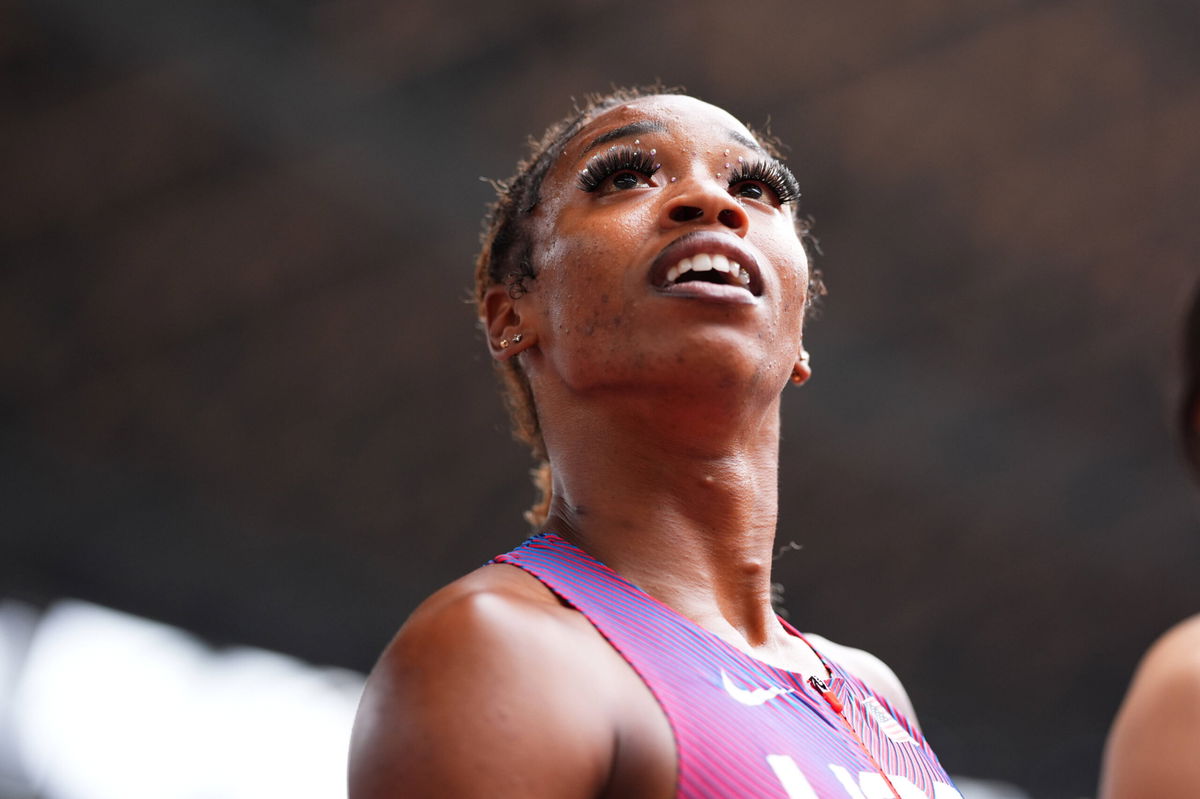
Imago
Alia Armstrong USA, MAY 18, 2025 – Athletics : World Athletics Continental Tour Seiko Golden Grand Prix in Tokyo at National Stadium in Tokyo, Japan. Noxthirdxpartyxsales PUBLICATIONxNOTxINxJPN 291052638
Imago
Alia Armstrong USA, MAY 18, 2025 – Athletics : World Athletics Continental Tour Seiko Golden Grand Prix in Tokyo at National Stadium in Tokyo, Japan. Noxthirdxpartyxsales PUBLICATIONxNOTxINxJPN 291052638
Just days before the World Athletics Indoor Championships on March 20, 25-year-old Alia Armstrong seemed unstoppable. After all, she had just claimed the 60m hurdles title at the 2026 USA Indoor Track and Field Championships in 7.82 seconds. Then, out of nowhere, she faced a “provisional suspension” from USADA. But Armstrong didn’t stay quiet for long; she hit back, explaining her side of the story and questioning the legitimacy of the suspension.
Recently, Armstrong shared her thoughts on social media while in her car: “I tested positive for a banned substance called spironolactone… and I got a call saying I’m basically provisionally suspended.”
Watch What’s Trending Now!
Well, Spironolactone is listed as a prohibited substance in competition by the World Anti-Doping Agency (WADA) because it is a diuretic and masking agent. While it can be legally prescribed for medical conditions, athletes must have a Therapeutic Use Exemption approved by USADA to compete with it in their system. Alia Armstrong did not have a TUE at the time.
However, she had a genuine medical reason for taking the medication: it was part of her hormonal acne treatment for PCOS (polycystic ovary syndrome), a condition she has managed for years.
“I was really, really nervous. I didn’t know what was going on because I didn’t even know it was a banned substance, so I’ve learned so much from this experience, and my doctor did clarify that this was a medicine that I could take,” Alia Armstrong said, ” I trusted my doctor, but I think moving forward, I just know that I do need to be more educated on just USADA and all the anti-doping rules.”
Debrief on my anti-doping violation/“provisional suspension” 🚨‼️🫂 pic.twitter.com/v4d8u32bqp
— Alia Armstrong©️ (@aliaarmstrong_) March 15, 2026
Armstrong also used the moment to raise awareness about PCOS: “Learned it the hard way, but yeah. I also did want to make it known that I do have a condition by the name of PCOS… I was pretty much a big adult by the time I understood and knew what this was, but I did know growing up that I always had acne on my face.”
PCOS is common, affecting an estimated 5 to 6 million U.S. women per the Endocrine Society’s 2022 data.
Alia Armstrong described the challenges it brings: “Some side effects include weight gain, chin hairs. I do have facial hairs. I get my chin waxed. I have cysts on my ovaries. It can cause infertility as well, but I just wanted to spread some awareness about PCOS. It’s a serious thing.”
She then reaffirmed her dedication to competing clean and working hard: “I also did want to give people some understanding of my situation, what was going on. I’m going to always be a clean athlete. I don’t have to cheat to win. I don’t have to do anything to win. I work hard. My nutrition is T. My recovery is T, but I appreciate y’all listening. Please comment if you have kind words. I love kind words.”
But at the same time, it’s important to note that a provisional suspension does not automatically mean an athlete is banned. It simply pauses competition while USADA reviews the case. Alia Armstrong’s suspension does not take away her national champion status. But she is not the only track and field athlete to face a provisional suspension due to medically prescribed medication.
Track athletes other than Alia Armstrong suspended over prescribed medication
In 2023, U.S. track athlete Allison Ostrander accepted a USADA sanction after testing positive for canrenone, a metabolite of spironolactone, during an out‑of‑competition test. The positive result came from an oral acne medication she had been prescribed, but she did not have a (TUE) at the time.
Consequently, she was given a four-month ineligibility beginning on the day of a provisional suspension. All her competitive performances since the date of the test, such as medals, points, and prizes, were disqualified.
Likewise, in 2023, track and field thrower Gwendolyn Berry was also found positive for canrenone following the use of a topical spironolactone drug in the treatment of a legitimate skin condition. Like Ostrander, she had not obtained a TUE before using the medication.
Since this was her second anti-doping violation within ten years, USADA imposed a 16-month suspension. The date of her provision suspension was retroactively used to sanction her, and all the results after the date of the positive test were forfeited.
Such instances show that the boundary between athletes can be slim indeed, even medications that are prescribed by a doctor may have anti-doping repercussions without a TUE. To Alia Armstrong, Ostrander, and Berry, cheating was not the issue; it was negotiating through the complicated regulations that apply to elite sport. What’s your take on this? Share it with us in the comments below.