
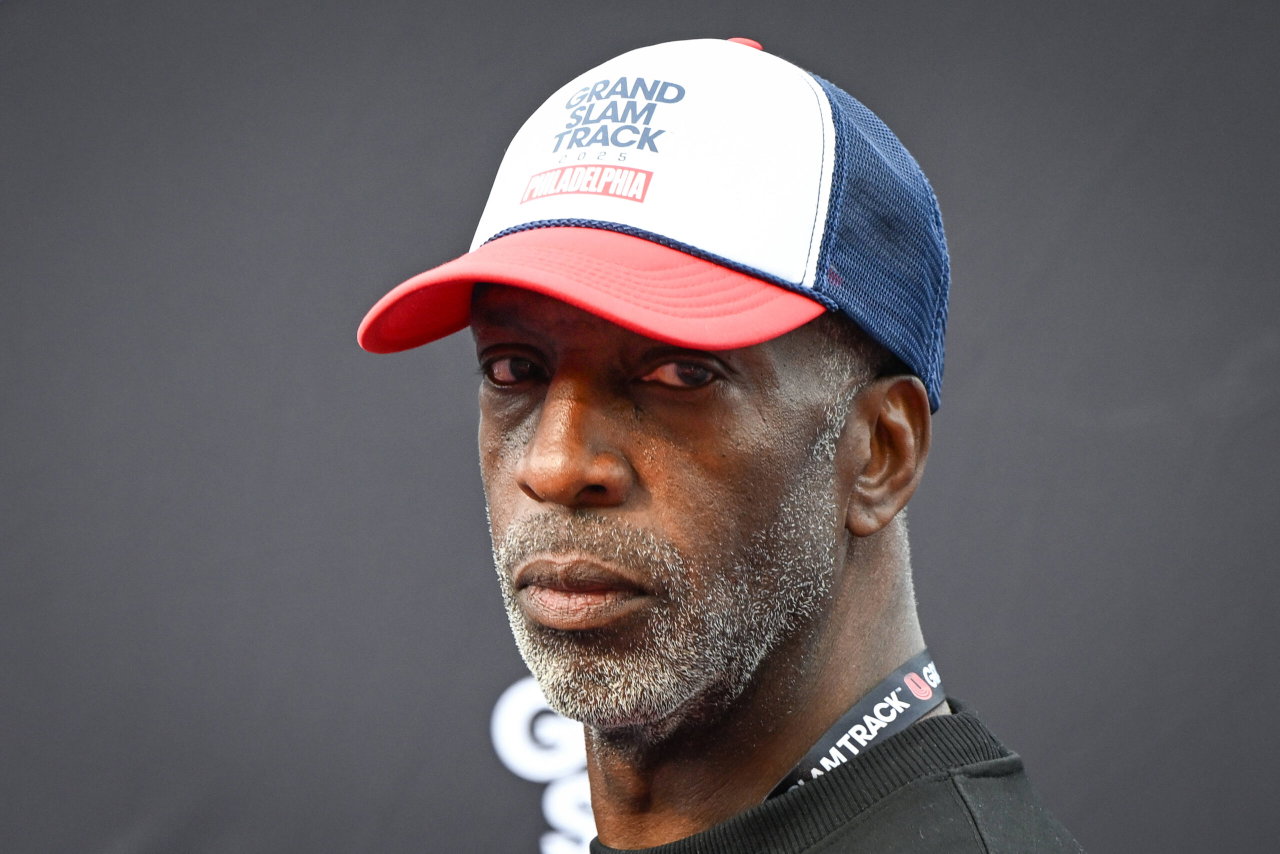
Michael Johnson had dreamed of becoming an Olympic champion, and at just 20 years old, he came close to taking his first step towards that goal. While studying at Baylor University, the young American sprinter was running times that could have earned him a place on the US team for the 1988 Seoul Olympics. However, a stress fracture in his left fibula before the Olympic Trials ended his hopes of making his first Olympic appearance. Johnson was devastated, but four years later, he got another opportunity to chase Olympic gold. He finally made it to the 1992 Barcelona Games, but another unexpected setback ruined his hopes of winning individual Olympic gold. Now, decades later, Michael Johnson has opened up about those two painful Olympic disappointments and how they affected him.
Speaking on Elizabeth Day’s How to Fail podcast on November 25, Johnson looked back on the disappointment of missing the 1988 Seoul Olympics despite believing he was good enough to make the US team. “I should have been on that team in 1988 and I got injured and didn’t make the team. I was devastated,” he recalled. But his next Olympic disappointment was even harder to deal with because, unlike the first, the entire world was watching.
By the time the 1992 Barcelona Olympics arrived, Johnson had established himself as one of the world’s best sprinters. He had won the 200m world title at the 1991 World Championships in Tokyo and was undefeated for two years. He also arrived in Barcelona as the heavy favourite for the 200m gold medal after winning the US Olympic Trials in 19.79 seconds. Everything appeared to be falling into place for the American, but an unexpected illness in Spain changed everything.
However, Johnson’s preparations were interrupted by food poisoning after he ate at a restaurant in Salamanca, Spain, around two weeks before the Olympics. The illness left him weak and affected his physical condition. Although he managed to compete in the 200m, he finished sixth in his semifinal in 20.78 seconds and failed to reach the final. For an athlete who had been dominating the event for two years, it was a painful result. He did, however, leave Barcelona with a gold medal after helping the United States win the 4x400m relay.
Speaking about the disappointment on the podcast, Johnson also revealed what he believes caused the illness. When Elizabeth Day asked what he had eaten in Barcelona, he replied, “It’s still one of my favorite things today.” He then identified Spanish ham, adding, “I don’t even eat meat much anymore but when I’m in Spain.”
Looking back, Johnson explained why the Barcelona disappointment was much harder to process than his missed opportunity in 1988. “What happened in 1988 four years prior was very quiet. Nobody knew, you know, so I knew that I failed to make that team but most people didn’t know,” he said. The situation in Barcelona was different because everyone expected him to win.
“Barcelona was an entirely different situation because the expectation that everyone had was that I’m going to take that gold medal,” Johnson recalled. He also described the two Olympic disappointments as two consecutive chances he believed he should have had to win gold. The setbacks even made him question his abilities. “So now you start to doubt, you know, yourself and you hear about athletes going into a slump,” he admitted. Johnson explained that he could see himself heading towards that situation but recognised that he needed to regain his confidence before it affected his career.
Fortunately, the disappointment did not define the rest of his journey. Johnson returned to the Olympic stage at the 1996 Atlanta Games, where he produced one of the greatest performances of his career. He won gold in both the 200m and 400m, becoming the first man to win both events at the same Olympic Games. The victories helped him put the painful memories of Seoul and Barcelona behind him and cemented his place among athletics’ greatest champions. However, just when it seemed he had overcome the hardest moments of his career, another injury threatened to slow him down.
Injuries tried to stop Michael Johnson, but he kept coming back
In June 1997, Johnson suffered a left quadriceps injury during his much-anticipated 150m race against Canadian sprinter Donovan Bailey in Toronto. The injury forced him to miss the US Outdoor Championships and raised doubts about his participation in the World Championships in Athens. But Johnson refused to let another setback keep him away. He returned to competition and successfully defended his 400m world title in August, claiming his third consecutive world championship gold in the event.
The injuries continued to trouble Johnson over the next two years, making his preparations for the 1999 World Championships particularly difficult. He had spent much of that period battling physical problems, and there were questions about how well he could perform in Seville. Yet, once again, he answered on the track. At the championships in August 1999, Johnson won his fourth consecutive 400m world title, but this time he did something even more remarkable. He clocked 43.18 seconds to break the 400m world record, which had stood for nearly 11 years.
His final Olympic campaign in 2000 brought another setback. At the US Olympic Trials in Sacramento, Johnson injured himself during the 200m final and lost the chance to defend his Olympic title in that event. However, he had already secured his place in the 400m, and he made the most of it at the Sydney Olympics. Johnson won gold in 43.84 seconds, successfully defending his Atlanta title and becoming the first man to win consecutive Olympic 400m titles. Even after years of injuries and disappointments, he finished his Olympic career with another individual gold medal.