
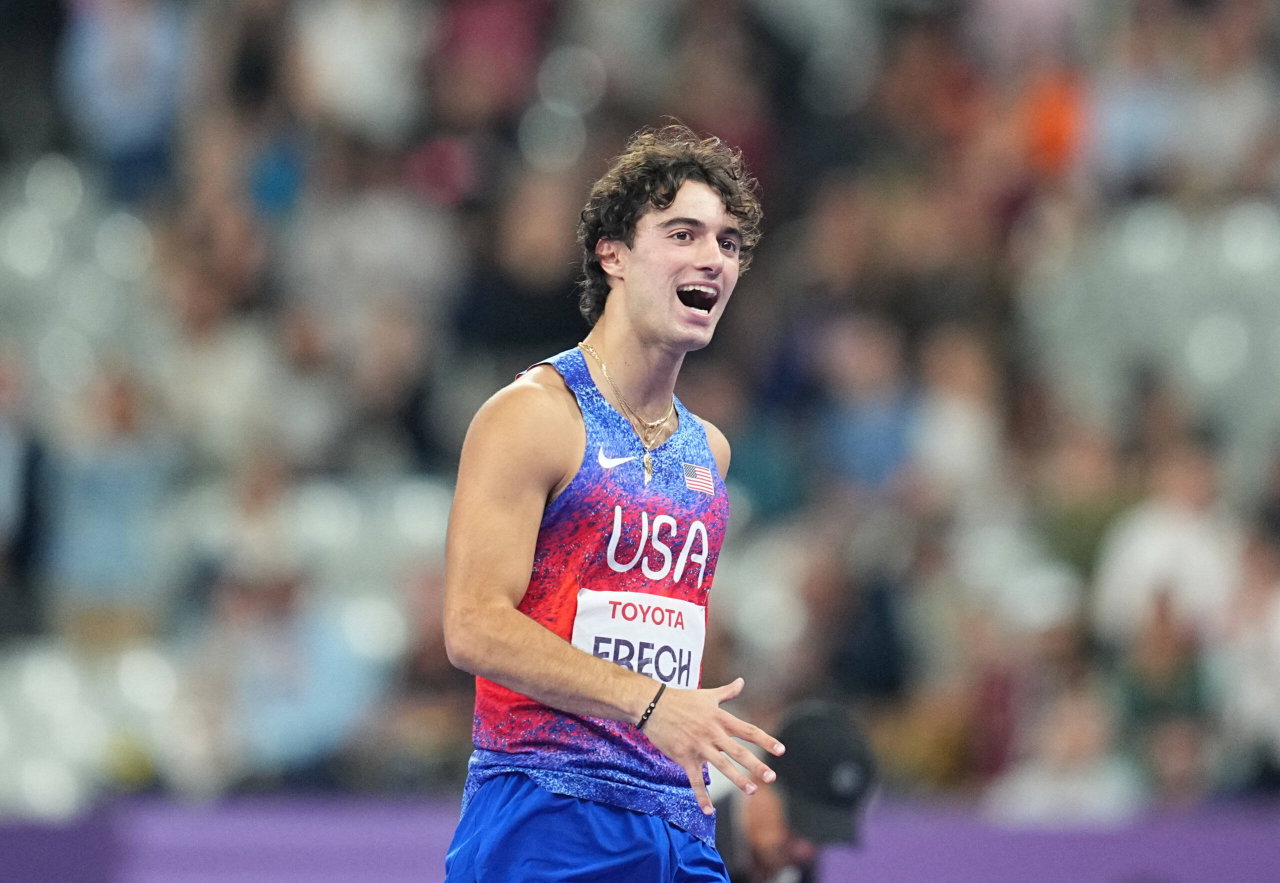
Amy Purdy sat in the Dancing With the Stars ballroom where she once made history, watching her mentee, two-time Paralympic gold medalist Ezra Frech, take the same stage. As Frech made his debut, Purdy was in the crowd cheering for him, later posting, “Ezra watched me on the show and now here we are… I’m sitting in the ballroom watching HIM.”
Frech’s tango with Daniella Karagach to Kelly Clarkson’s “Since U Been Gone” drew strong reactions, but the moment turned emotional when his mentor Purdy watched from the crowd.
Frech and Karagach earned 20 out of 30 points, giving them the second-highest score that night. For Purdy, who has watched Frech grow from a young fan of her own DWTS run into a two-time Paralympic champion, the score mattered less than the moment.
Purdy made her feelings clear with a message on Instagram. “I am #TeamEzra for life! He absolutely killed it!” she wrote after his dance, praising the energy inside the ballroom while cheering him on.
But Purdy’s emotions ran deeper than the score.
Twelve years earlier, she had stood on that same DWTS stage and made history herself as the first double-amputee contestant in the show’s history in 2014, reaching the finale with Derek Hough before finishing second. Watching Frech follow in her trailblazing footsteps represented a full-circle milestone for disability representation on national television.
Frech watched Purdy compete on the show when he was still a young boy, making his appearance on the same stage a full-circle moment for both mentor and mentee. The mentor who once inspired him was now watching him create his own legacy, promising to keep supporting him far beyond his first performance.
Frech and Karagach’s strong routine came after the pair worked through unique mechanical challenges during rehearsals. Karagach was extremely happy with their opening routine, saying she was “on cloud nine” afterward as their preparation helped them step into the ballroom without letting the pressure take over.
What made the performance stand out was how they adapted to Frech’s above-the-knee amputation, which creates specific balance and movement constraints when using a prosthetic. Unlike a below-the-knee amputee, he cannot control the lower portion of his prosthetic during movements, and he warned Karagach that the prosthetic could buckle if he was slightly off during a step.
That concern became real during rehearsals, forcing Karagach to rethink how they approached certain movements. She noticed Frech could not simply walk smoothly in a straight line using his running blade, so the pair began using side-steps instead of relying heavily on straightforward movements.
Karagach built their choreography around Frech’s movement instead of simply changing one small section. Rather than hiding his disability, the pair deliberately made his prosthetic part of their performance, giving their routine a different flow while allowing Frech to perform movements he could control naturally.
Frech’s DWTS journey carries a bigger meaning for people who feel different or look different, as he wants viewers with physical disabilities to feel represented on a national stage. Before the premiere, Frech thanked Karagach for being his “fearless leader,” best teacher, and “big sis.”
Their preparation showed in every step, proving what thoughtful adaptation and hard work could produce.