
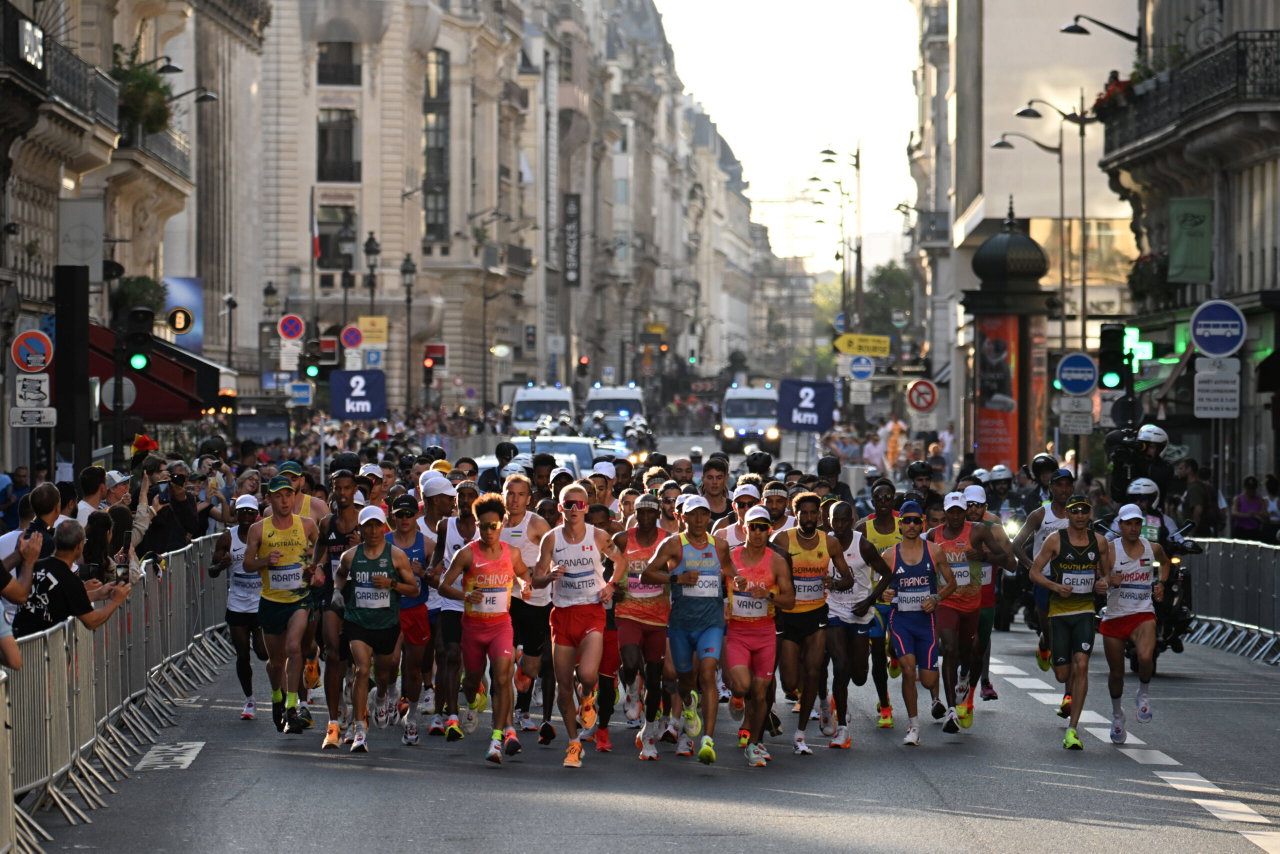
Something didn’t add up at the Edmonton Marathon on Sunday. The runners crossed the finish line expecting to have raced the official distance, only to find their GPS watches showing something longer. That raised a rather uncomfortable question about whether the Edmonton Marathon course was actually the correct distance.
Watch What’s Trending Now!
The concerns soon spread beyond frustrated recreational runners. Calgary elite runner Polly Cunes alleged that the course was 700 to 900 meters longer than what they had advertised. Canadian half marathon record holder Rory Linkletter and other runners also said they could tell the course was long. But the organizers aren’t backing down.
Athletics Canada’s Director of Domestic Programs and Safe Sport, Chris Winter, said the course was measured and certified according to its standards before the race. The route was also confirmed on race day by a World Athletics/AMS Grade A Course Measurer.
“Based on this process, and the fact that the route was also confirmed on race day by a World Athletics/AMS Grade A Course Measurer, we are confident in the accuracy of the certified course distances and the validity of the race results.”
The Edmonton Marathon’s Race Director, Tim Keogh, also looked after the measuring process, noting that the route was physically measured, not by GPS technology. The organizers say that GPS devices may sometimes add extra distance to the run due to satellite signal drift, turns, and changes in a runner’s position.
But that explanation hasn’t convinced everyone. Several runners reported GPS readings of about 21.9 to 22.1 kilometres in the half marathon, while Cunes argued that a discrepancy of 700 to 900 metres was too large to simply blame on GPS error.
One of the owners of Fast Trax Run and Ski Shop, Simon Stewart, and a coach for the 12 athletes in the marathon and half marathon noticed something was amiss right away.
“I coached several athletes, and two of which were in this race that had very specific, concrete time goals. And when you hit a certain point in the race and you realize the course is mismeasured, it not only means you will not hit your time goal, but it also deflates all the motivation to continue to dig as deep as you can and get every second out of yourself, which is kind of the point of competition in the sport.”
Also, Rory Linkletter, who won the race, had a wrong winning time, which was among the first things that raised concerns. While his 64:40 was a strong performance, Stewart said he and others expected the winner to finish closer to 62 minutes. As more athletes finished, Stewart said the results continued to look slower than expected. “We became aware that something wasn’t right fairly quickly,” Stewart said.
Linkletter also began to question the course during the race. Around the 15-kilometre mark, he said he felt he was increasing his pace rather than slowing down, yet his progress did not match what he expected from the effort he was putting in. The situation was particularly frustrating for Linkletter because he was also coaching athletes in the race. Several had entered with specific time goals, meaning any additional distance could have affected their chances of reaching those targets.
Wellington Bridge closure adds to questions
The closure of the Wellington Bridge has been a big issue in the Edmonton Marathon controversy. Route changes and extra turns were experienced by runners throughout the race, and the question arose as to whether the runners’ route was the same as the officially certified route.
Their standing is determined by the certified measurement and confirmation conducted at the point of race on a course that has been measured by an accredited course measurer. That is the crux of the controversy. Although GPS watches are not the official means of measuring road-race courses and can actually add additional distance due to satellite inaccuracies, some athletes feel that the changes to the course caused by construction may have added true distance to the course.
There has been no official finding that the Edmonton Marathon course was incorrectly measured. To this day, the organizers maintain that the distance they measured was correct. Official Edmonton Marathon results will be final until an independent review or new measurement to the contrary occurs.