
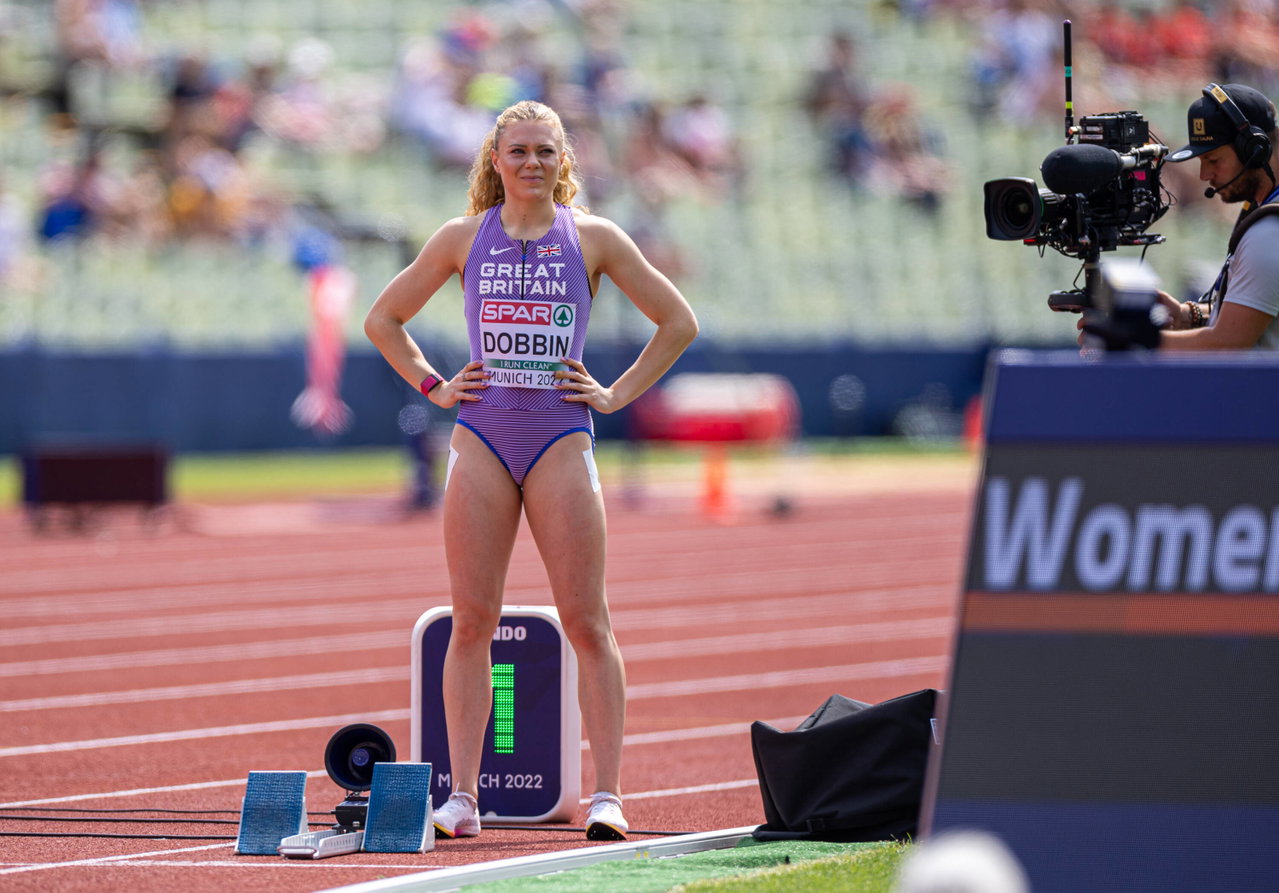
Former British Olympic sprinter Beth Dobbin has seen her life change completely after being diagnosed with Myalgic Encephalomyelitis, a chronic illness that leaves her spending around 22 hours a day in bed. The 32-year-old, who represented Great Britain at the Tokyo 2020 Olympics, has struggled with even simple daily activities. Seeking better support for herself and others with ME, she wrote to Prime Minister Andy Burnham, calling for more government funding for research. After initially receiving no response, she launched a public campaign backed by hundreds of athletes. Now, her plea has finally received a response from the government.
Watch What’s Trending Now!
The development came on November 18, when Labour MP Alice Macdonald raised Dobbin’s concerns during Prime Minister’s Questions. She asked Burnham to support the former sprinter’s call for more ME research funding and better treatment for those living with the condition. Responding to the MP, Burnham confirmed that Health Secretary Yvette Cooper would meet Dobbin to hear about her experiences.
“The Health Secretary (Yvette Cooper) will soon be meeting Beth to discuss her experiences,” he said. He also referred to ongoing research into the genetic factors behind ME and efforts to explore a clinical trial for potential treatments. Acknowledging that more work was needed, he added, “Progress is being made, but she is right, more is needed.”
Following the exchange in Parliament, Dobbin took to X to thank Macdonald. “Thank you SO much @AliceMLabour for raising my letters to the Prime Minister at PMQs this morning,” she wrote. The former sprinter also welcomed the opportunity to meet Cooper, adding, “I look forward to meeting with the Health Secretary to discuss further.”
She then thanked the journalists who had covered her story, the people working behind the scenes and the ME community for helping keep her campaign in the public eye. “I may be doing the interviews, but you’re interacting and keeping this momentum up,” she wrote. She also expressed her gratitude to all 500 sportspeople who signed her letter, saying their support had made the development possible.
Dobbin’s appeal to the government began on October 21, when she wrote to Burnham asking for a meeting and greater investment in ME research. In her letter, she explained how the illness had taken away her ability to train and compete, while thousands of other people across the UK were also struggling with its effects. When she did not receive a direct response, BBC Sport contacted the government on her behalf.
On October 23, the Department of Health and Social Care issued a statement outlining its existing research plans. However, Dobbin was not satisfied, saying the response contained information she already knew and what she described as fundamental inaccuracies. She continued pushing for a meeting with Burnham, hoping to discuss the issue directly rather than receive another general statement. This time, she was not appealing alone.
Her campaign soon gained support from some of the biggest names in British sport. On November 2, more than 350 sportspeople signed a letter to Burnham, urging him to meet Dobbin and commit to greater funding for ME research. The number initially included 360 supporters, among them 114 Olympians and Paralympians with a combined 77 Olympic and Paralympic medals. As more athletes joined, the total reached 500 by November 12.
Supporters included football manager David Moyes, England footballer Millie Bright, Olympic swimmer Mark Foster, and athletes Laura Muir, Eilish McColgan and Adam Gemili. The letter highlighted how Dobbin had gone from training for around five hours a day to spending approximately 22 hours in bed because of ME. It also called on the government to “level the playing field” for ME research funding compared with other illnesses. With such widespread support behind her, Dobbin’s campaign was becoming increasingly difficult to overlook.
The demand for more research is backed by figures showing how little government funding has gone towards ME. According to Action for ME, UK government research funders committed approximately £6.6 million to ME research between 2019 and 2024. During the same period, the figures were £79.1 million for Parkinson’s disease and £496.4 million for dementia. Campaigners argue that this gap has left people with ME waiting for better diagnosis, treatment and care. But Dobbin’s fight for greater support comes after a career in which she had worked for years to reach the top of British athletics.
ME diagnosis changed Beth Dobbin’s life
For years, Beth Dobbin was one of Britain’s leading female sprinters. She broke a 34-year-old Scottish 200m record in 2018, became British champion that year and went on to set a personal best of 22.50 seconds in 2019. Her progress continued as she reached the semi-finals at the Tokyo 2020 Olympics, held in 2021, and won a 4x400m relay bronze medal for Scotland at the 2022 Commonwealth Games in Birmingham.
But that same year, when Dobbin was competing at the World Championships, Commonwealth Games and European Championships, her health began to take a worrying turn. The 32-year-old had contracted COVID-19 in December 2021 and glandular fever a few months later. She had not realised how seriously these infections would affect her, but began noticing that her running times were slower, her glands were sore, and she did not feel like herself. Initial medical tests failed to explain what was happening, so she continued competing and hoped the symptoms would pass.
Instead, things became increasingly difficult. At the World Championships, she struggled with a painful throat and unusual sleep patterns. At the Commonwealth Games, she experienced dizziness while running. The situation became even more alarming at the European Championships, where she false-started after losing all feeling in her legs while waiting in the starting blocks. She later described that period as her “year of hell”.
After the championships, Dobbin took an extended break to recover, but her condition continued to worsen. She struggled to stand, slept for long periods, and spent much of her time in bed. After six weeks of rest, she tried returning to training but managed only three weeks before her symptoms became too much. She was then assessed by four or five specialists, who began telling her that she had Myalgic Encephalomyelitis.
Speaking to BBC Sport, she explained just how different this illness was from ordinary tiredness. “I’ve done little things like attend a blood test at the doctors and been in bed for months after,” she said. She also rejected the common description of ME as chronic fatigue syndrome, explaining that she had known physical fatigue throughout her athletic career. “I wish it was just fatigue, that would be a walk in the park,” she said. “It’s so much more than that.”
The former sprinter described the feeling as if her entire body was shutting down. “It feels like you are a few days from death,” she told BBC Sport. She has also explained that the illness has taken away almost every part of the life she once knew. “I feel like I’ve lost everything. I have still got my family, but I’ve lost my independence, my health, the ability to work, the ability to exercise.”
Today, Dobbin spends around 22 hours a day in bed and usually gets up only to eat or use the bathroom. She left her home just five times in 2026. Even activities that many people take for granted, such as watching television, can be difficult because concentrating on what is happening on screen can use more energy than she has available. She also warned that speaking to the media about her condition could trigger a deterioration lasting months.
After struggling with the illness for around three years, Dobbin announced her retirement from athletics in April 2026. At the time, she did not publicly reveal her diagnosis, describing it only as a “serious and life-changing health issue”. Her experience also exposed the difficulties people with ME can face when seeking medical support. She said she had to educate some of the GPs she consulted about the condition. After her British Athletics funding ended, she waited 22 months for a face-to-face appointment with a private specialist she had found herself.
ME has no known cure, and people living with severe forms of the condition can struggle to access appropriate care. For Dobbin, the promise of a meeting with Cooper is a welcome development after weeks of trying to get the government’s attention. However, with no new funding announcement yet, she is still waiting to see whether her campaign will lead to the research and support that she and other people living with ME have been calling for.