
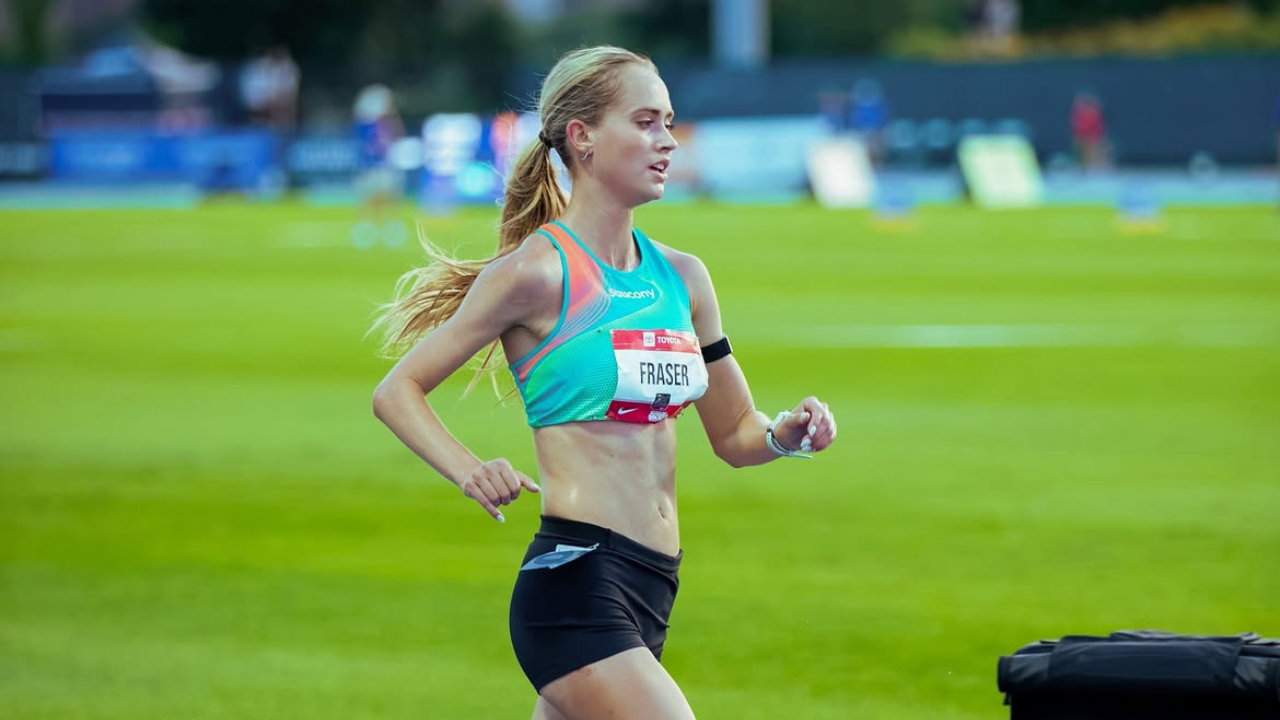
For most runners, eating before a race is routine. For Vanessa Fraser, it became a battle. The American distance runner, with a 14:48.51 personal best in the 5,000m, has spent much of her career struggling with retrograde cricopharyngeal dysfunction (R‑CPD)—a rare disorder that made eating, drinking, and fueling for races increasingly difficult.
Watch What’s Trending Now!
On August 12, Fraser opened up on Instagram, calling R‑CPD “the bizarre medical condition that derailed my track season.” She explained that she had never been able to burp, but the problem escalated into trapped air, reflux, nausea, dry heaving, and an inability to eat before runs.
Fraser said she spent months searching for answers before stumbling across R‑CPD on Reddit, where thousands described similar symptoms. She learned that Botox injections could relax the cricopharyngeus muscle—the tiny gatekeeper between the throat and esophagus- allowing trapped air to escape and retraining the muscle to function properly.
Her first treatment two years ago with Dr. Pitman at Columbia’s Center for Voice & Swallowing provided “100% relief for 18 months.” For a professional runner, that meant being able to eat and drink normally again. But the symptoms eventually returned.
Fraser’s R‑CPD flared up again during her buildup to the U.S. Championships. “The symptoms were so bad that I couldn’t eat anything before the race,” she said. “My body was running on empty.”
For a distance runner, proper fueling is critical. Fraser admitted the condition even made her marathon dream seem impossible: “Fueling for a longer race would have been impossible with this condition.”
She decided to undergo another Botox injection with Dr. Pitman. The office procedure took 45 seconds, and within three days her symptoms began to ease.
“The treatment is a Botox injection into the cricopharyngeus muscle in the esophagus,” Fraser explained. “This temporarily paralyzes the muscle, which trains it to function properly and release trapped air.”
Fraser hopes this round of treatment will provide longer‑lasting relief and allow her to pursue her marathon debut. “I’m hopeful for a full recovery and the ability to make that debut sometime soon,” she wrote.
Despite the challenges she has faced with R-CPD, Fraser has already built an impressive career both on and off the track.
Fraser’s Journey From Stanford Walk-On to Professional Runner
Imago
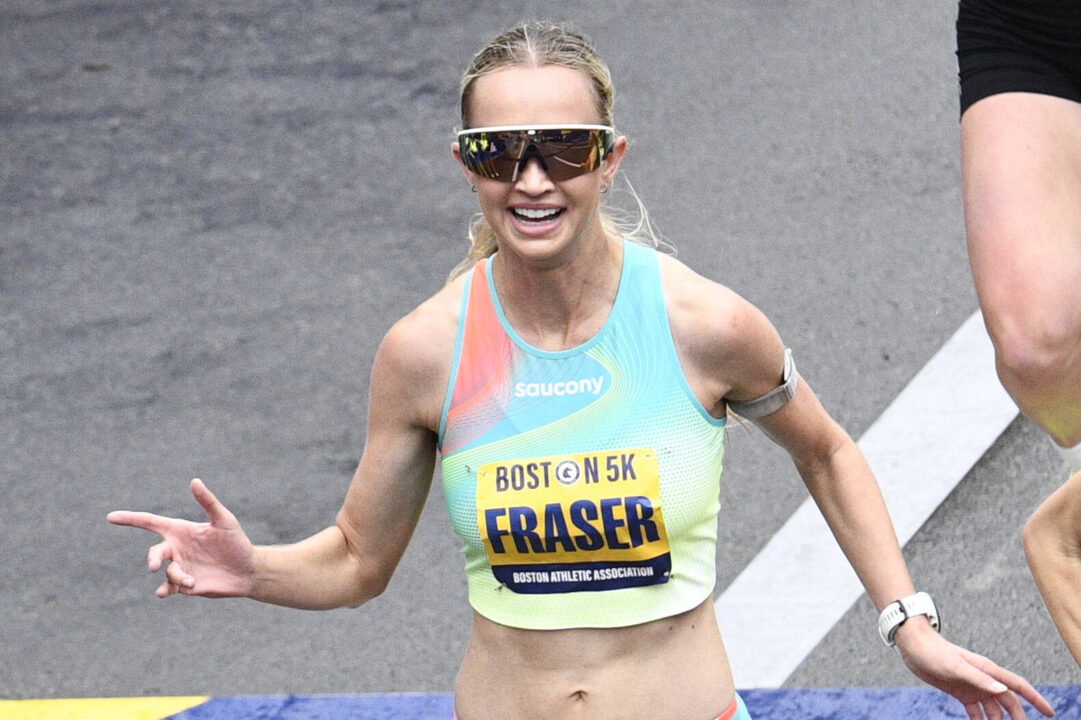
BOSTON, MA – APRIL 18: Vanessa Fraser of the United States after crossing the finish line of the Boston 5K on April 18, 2026, on Boylston Street, in Boston, MA. Photo by Erica Denhoff/Icon Sportswire MARATHON: APR 18 Boston 5K EDITORIAL USE ONLY Icon260418585
Fraser didn’t arrive at Stanford as a star recruit. She came as a walk‑on, gradually improving until she earned All‑American honors in track and cross country. In 2018, she won the Pac‑12 10,000m title, placed fourth in the NCAA 5,000m, and finished fifth at the U.S. Championships.
That July she set a 5,000m mark of 15:09.62 in Belgium. After graduating, she signed with Nike and joined the Bowerman Track Club. In 2020, she ran 14:48.51 indoors, at the time the second‑fastest American woman ever over 5,000m indoors.
Now, despite her achievements, Fraser continues to fight a condition that affects one of the most basic aspects of her sport: her ability to eat, drink, and fuel her body before a race.