
It wasn’t just survival of the fittest at Glasgow; it was survival against the weather. Glasgow’s Commonwealth Games athletics session turned into a battle against relentless rain, freezing temperatures, and waterlogged tracks, forcing athletes to fight the elements as much as their rivals. And while some crumbled, others somehow found a way to shine through the chaos.
Watch What’s Trending Now!
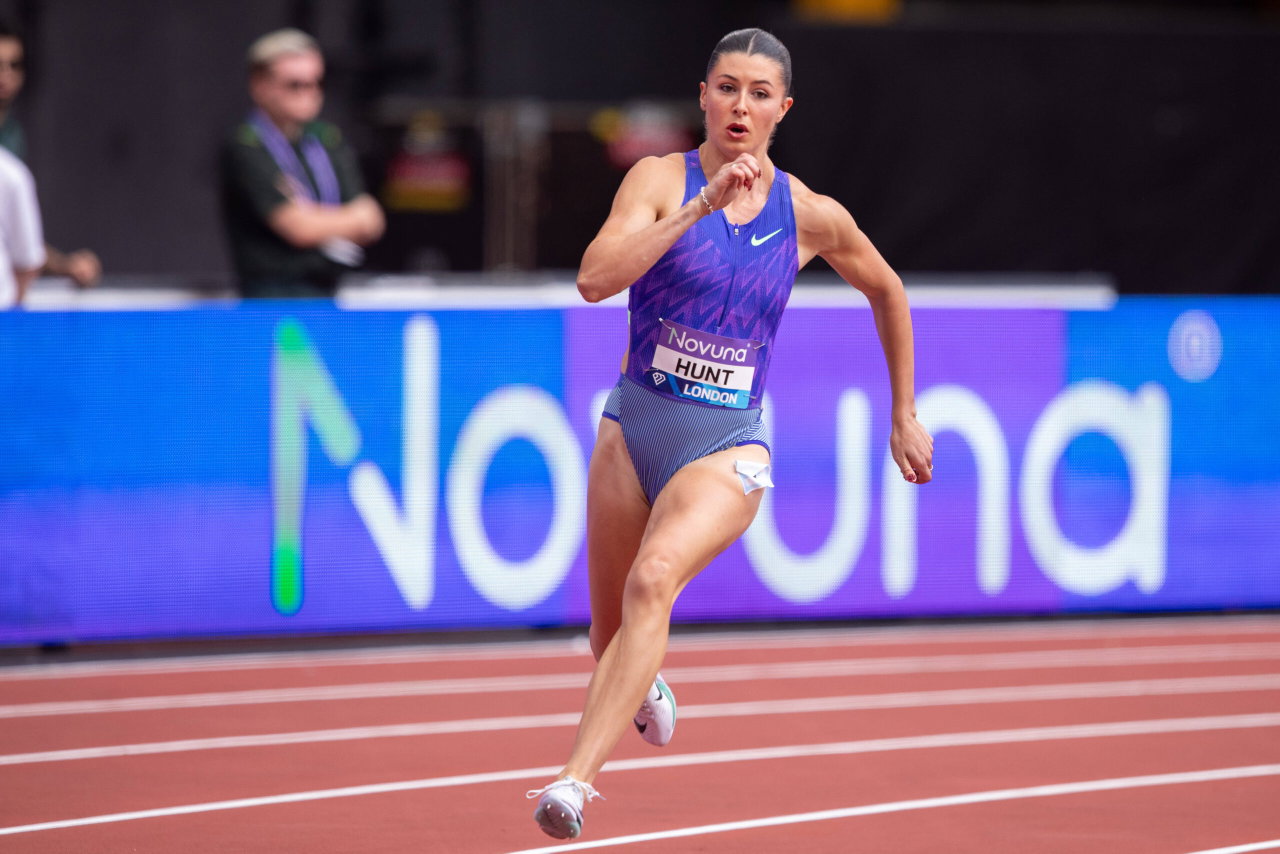
English sprinter Amy Hunt, however, refused to blame the conditions after settling for silver in the women’s 100m, but she admitted just how extreme things had become. “It was pretty gross on the start line. My fingers were underwater, which is a bit novel. But you have to roll with the punches at champs, and bringing away a medal is the most important thing, no matter what happens,” Hunt said.
The rain wasn’t done with her even after the race, stripping off several of her fake fingernails. Laughing through the misery, she pointed to her silver rings and quipped, “I need to start wearing some gold jewellery.”
Despite a week that saw several Team England athletes withdraw, Hunt explained why simply turning up still mattered. “I don’t want to go on my Wikipedia page in 30 years’ time and just see one or two medals. I want to see lists and lists of medals.”
Hunt’s resilience was on full display after a nightmare opening to the race. The 24-year-old, who entered Glasgow as one of England’s strongest medal hopes, stumbled badly through the first half of the final before producing a trademark late surge. But by then, New Zealand’s Zoe Hobbs had already built enough of a cushion to storm home in a personal best 10.93 seconds. Hunt crossed in 10.98 for silver, while Australia’s Torrie Lewis claimed bronze in 10.99.
Given her past injury history, running in these harsh weather conditions was more than just a challenge.
However, afterwards, Hunt admitted the biggest mistake wasn’t the weather… it was her own start. “I had a really, really terrible first 60m,” she said.
“I am a legitimate starter. But today I got it really badly wrong. I was able to dig myself out of the horrendous ditch that I dug in the first half of the race, but I think gold was definitely there for the taking.”
Still, considering what athletes were dealing with throughout the evening, merely reaching the finish line cleanly felt like an achievement. Torrential rain refused to ease, turning the Scotstoun Stadium track into a waterlogged surface that forced competitors across multiple events to constantly adapt.
High jumpers huddled beneath umbrellas and winter coats between attempts, while India’s Pooja Singh wrapped herself in a thick jacket, gloves, and a woolly hat to stay warm during a 90-minute weather delay.
When competition resumed, the conditions remained unforgiving. England’s Morgan Lake exited the women’s high jump after failing all three attempts at her opening height of 1.82m before Australia’s Eleanor Patterson eventually cleared 1.96m to win gold. The hammer throw proved just as chaotic, with the opening two competitors sending their implements crashing into the protective cage as soaked grips betrayed them, prompting ironic cheers when England’s Charlotte Payne finally found the field.
From sprinters to field stars, Glasgow’s relentless rain left nobody untouched
Hunt wasn’t the only athlete left shaking her head at Glasgow’s conditions. Fresh off winning the men’s 100m in a Commonwealth Games record of 9.83 seconds, Cameroon’s Emmanuel Eseme admitted he had never raced in weather quite like it.
“This is the first time I have raced in these conditions,” Eseme said. “It was horrible. But we were all racing in the same conditions and I wanted to be that person with the least complaints. That is what worked for me.”
The rain wreaked havoc across the programme. During the women’s hammer throw, heavy showers combined with thunder made the opening attempts almost impossible to control. In the men’s 10,000m, Uganda’s Samuel Simba Cherop even lost a shoe midway through the race, completing the remaining laps with a soaked sock before finishing seventh.
For Northern Ireland’s Kate O’Connor, the slippery conditions proved costly in the heptathlon shot put. “It just kept slipping out of my hands,” she admitted. “When your chalk gets wet, it’s like you might as well have dish soap on your hands.”
Although disappointed, she bounced back impressively by winning the 200m later in the evening to reclaim the overall lead.
Even Scotland’s Andrew Butchart, no stranger to harsh weather, found a silver lining. “The winters of Scotland in the cross-country are far, far worse than that,” he joked, insisting he would happily race in similar conditions again later in the week.
Malaysia’s two-time Paralympic champion Abdul Latif Romly also felt the impact of the cold. Although he secured gold in the T20 long jump with 7.17 metres, the world record holder admitted the freezing rain prevented him from chasing history.
“It’s true that I wanted to break the world record, but the weather conditions were unfavourable and it was raining, so it was quite tough to do it. When the weather is too cold, it’s really hard,” he said.
By the time the final medals had been handed out, Glasgow’s weather had become as memorable as the performances themselves. Some athletes celebrated records, others battled heartbreak, but every competitor walked away having overcome an opponent that never appeared on the start list… the relentless Scottish rain.