Imago
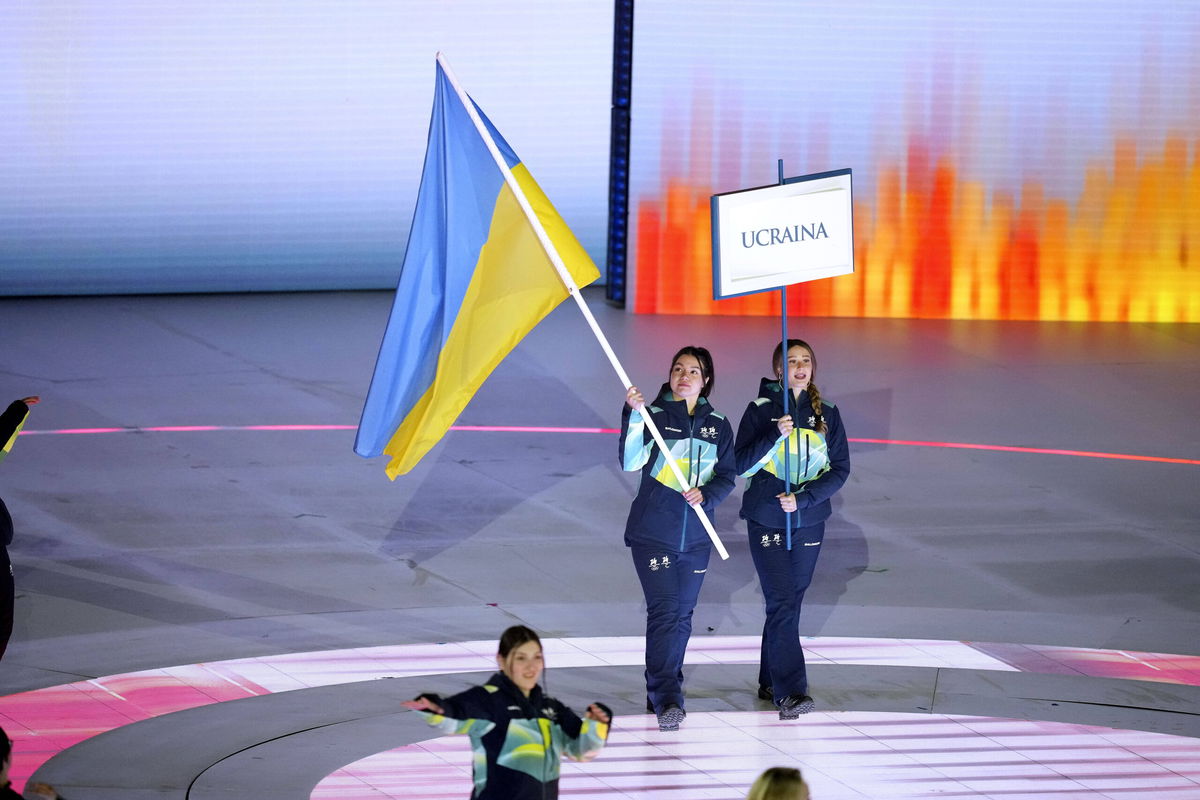
TEAM UKRAINE Boykott EROEFFNUNGSFEIER Boykott Opening Ceremony Paralympische Winterspiele 2026 Cortina – Milano Italien Eroeffnungsfeier im Amphitheater in Verona am 06.03.2026 in Verona *** TEAM UKRAINE Boycott OPENING CEREMONY Boycott Opening Ceremony Paralympic Winter Games 2026 Cortina Milano Italy Opening Ceremony in the Amphitheater in Verona on 06 03 2026 in Verona Copyright: xLacixPerenyix
Imago
TEAM UKRAINE Boykott EROEFFNUNGSFEIER Boykott Opening Ceremony Paralympische Winterspiele 2026 Cortina – Milano Italien Eroeffnungsfeier im Amphitheater in Verona am 06.03.2026 in Verona *** TEAM UKRAINE Boycott OPENING CEREMONY Boycott Opening Ceremony Paralympic Winter Games 2026 Cortina Milano Italy Opening Ceremony in the Amphitheater in Verona on 06 03 2026 in Verona Copyright: xLacixPerenyix
The Ukrainian flag flew high over the podiums in the Milan Paralympics as the team secured 17 medals and a top-seven finish. However, as the event prepares to draw to a close, the nation’s delegation will be absent during the official closing ceremony due to a particular reason that their country stands by.


As reported by Inside The Games, Ukraine will boycott the closing ceremony, as it will not attend while Russian symbols are present at the event. This decision, confirmed by Ukraine’s National Paralympic Committee, extends a protest that began before the Games even started.
Watch What’s Trending Now!
It is rooted in the International Paralympic Committee’s (IPC) policy shift that permitted athletes from Russia and Belarus to compete with their national symbols. Indeed, the decision was a stark contrast to their neutral status at the recent Olympic Games and their complete ban from the 2022 Paralympics in Beijing.
When asked by the German Press Agency about the possibility of attending the closing ceremony, President of the Paralympic Committee of Ukraine, Valeriy Sushkevych, provided a straightforward response, stating, “No, never…These Paralympic Games are the worst in history. The Russian gold medalists dedicated their medals to [Russian President Vladimir] Putin, not to the country or the Russian people.”
Throughout the Milan Paralympics, the Ukrainian delegation alleged a pattern of what they termed “systematic pressure” from Games organizers and the IPC, which they felt was designed to diminish their presence and mute their message.
Sushkevych revealed to the Ukrainian YouTube channel Equalympic: “For more than 2 days, representatives of the IPC constantly told us that they were thinking about where the Ukrainian team would be allowed to hang the flag. Finally, the flag of Ukraine was allowed to be placed where it is less visible.”
The Milan Paralympics organizing committee later clarified that national flags are permitted only in the residential areas teams occupy and that the request to move a flag from a communal space was a matter of adhering to village regulations applied equally to all delegations.
However, tensions rose when Oleksandra Kononova, a para biathlon champion who claimed gold and bronze in Italy, was instructed to remove earrings that featured the Ukrainian flag and bore the words ‘Stop War’ before a medal ceremony.
Ukraine will boycott the Closing Ceremony of the Milano Cortina 2026 Paralympic Winter Games.
Despite winning 17 medals, officials say they will not attend while Russian symbols are present at the event.
📷: Getty Images https://t.co/pmo05GmNuc pic.twitter.com/sNMcLGJolN
— insidethegames (@insidethegames) March 15, 2026
She had competed while wearing them and addressed the incident directly in an interview with Ukrainian public broadcaster Suspilne Sport, stating, “They made remarks, they said that according to the regulations, the [inscription] ‘Stop War’ on earrings is not allowed, although I ran in them. I feel comfortable because I was ready to make comments. This is my state of mind when I wear patriotic earrings, clothes, uniforms, and a flag. It means a lot to me, I live for it, I work for it. This is what inspires me in sports: my state, anthem, flag. Everything about all this — with me.”
This incident was not isolated. Before the Games even began, Ukrainian athletes were required to redesign their ceremonial uniforms because the IPC had prohibited the original design, which prominently featured a map of Ukraine, due to rules against political symbols.
Additionally, there were further issues involving another Ukrainian athlete during the Olympic Games.
Problems before the Milan Paralympics
Ukrainian skeleton racer Vladyslav Heraskevych was disqualified from the Milan Olympics just 45 minutes before his competition after refusing to remove a helmet honoring his fallen compatriots.
The IOC ruled that the helmet, which Heraskevych had worn throughout training, violated Rule 50.2 of the Olympic Charter and its athlete expression guidelines, which prohibit political messaging on the field of play.
“Am I showing ‘conflict’ on the helmet? I’m showing athletes who died since last Winter Olympic Games. By which details did he determine that the helmet is showing a conflict? The whole world sees ‘memory’, but he sees a conflict?” Vladyslav Heraskevych said in pure frustration right before his suspension.
In a final emotional meeting at the top of the sliding track, IOC President Kirsty Coventry personally pleaded with Heraskevych to accept compromises, but he remained steadfast.
“No-one is disagreeing with the messaging. The messaging is a powerful message of remembrance, it’s a message of memory, and no-one is disagreeing with that,” she said. “What I proposed to him this morning and to his dad – because he also said when he goes down it’s blurry, you can’t really see it – so I said: ‘Could we find a solution where we pay homage to his message, to his helmet before he races, then as soon as he’s finished racing going into the mixed zone where you can see the pictures?’ Sadly, we’ve not been able to come to that solution. I really wanted to see him race today. It’s been an emotional morning.”
Amid the glitz of medals and podiums, Ukrainian athletes now compete under a shadow, forced to navigate a thicket of restrictions on how they may honor their fallen comrades and their homeland.