
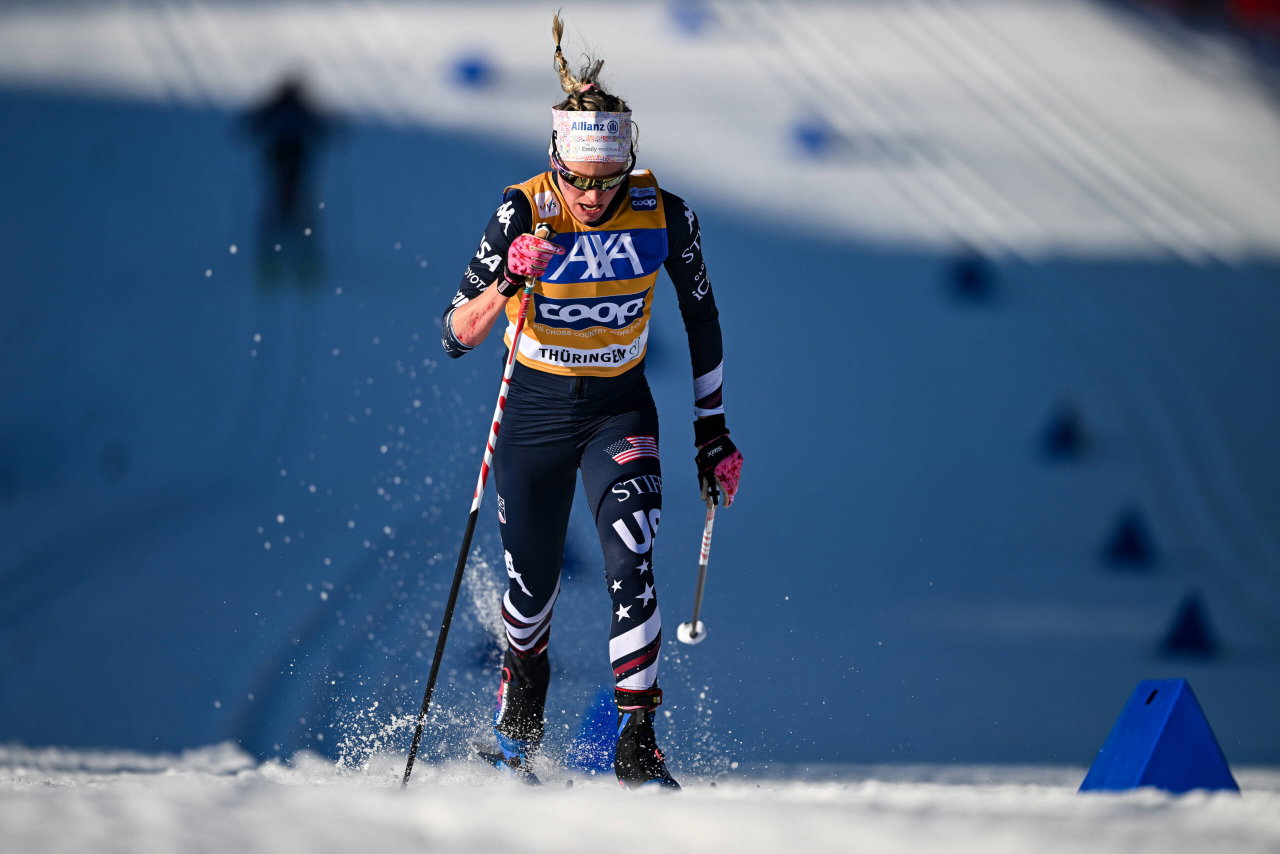
Jessie Diggins gave American fans an Olympic finish they’ll never forget. Alongside Kikkan Randall, she won the country’s first cross-country skiing gold at the 2018 PyeongChang Games. But when Diggins talks about what made that moment possible, she points to something that happened long before the final sprint: getting help for an eating disorder.
Watch What’s Trending Now!
In a video shared by Team USA, Diggins reflected on her experience with bulimia and the support that helped her reach that starting line.
“The only reason we were able to win that gold medal is because I got help,” Diggins said in the video. The clip puts her recovery at the center of a sporting achievement often remembered for its thrilling finish.
“Because no matter who it is, someone you see on TV, someone you look up to, everyone has a challenge in their life that they have to overcome, and the only reason we were able to win that Olympic gold medal was because I got help for my eating disorder when I was 18 years old.”
That help came through treatment at The Emily Program. Long before Olympic medals made her a household name among winter sports fans, Jessie Diggins was trying to understand an illness she struggled to discuss with those closest to her.
“I was diagnosed with bulimia and went through a really challenging experience because back then I didn’t have a shared language with my family to be able to speak about something that I felt so much shame and guilt around.”
Her account reveals how difficult it was to separate what she was experiencing from what she believed she should be able to control.
“I thought that, ‘Oh, this is a behavioral choice. Why can’t I just choose to be healthy? I want that so badly.’ And I didn’t understand, like, this is a mental illness. This isn’t something that anyone chooses.”
For Jessie Diggins, that help began years before she became an Olympic champion. At 18, she entered an intensive day treatment program through The Emily Program. She later became an ambassador for the organization, using her visibility to reach people who might recognize their own struggles in hers.
Her decision to speak publicly came after PyeongChang. In June 2018, she disclosed her eating disorder in a personal blog post. Jessie Diggins expanded on those experiences in her 2020 memoir, “Brave Enough”, writing about recovery alongside the athletic journey fans already knew.
Jessie Diggins transitions from skiing to trail-running
Pyeongchang was only the beginning of Jessie Diggins’ Olympic medal run. Four years later, she earned sprint bronze and silver in the 30-kilometer freestyle at Beijing 2022. She added another bronze in the 10-kilometer freestyle at Milano Cortina 2026, bringing her career total to four.
Those results came during a career that also included personal setbacks. Diggins experienced an eating disorder relapse in 2023 and spoke openly about the support she needed afterward. Her account makes clear that continued success on the snow didn’t mean every challenge away from competition had disappeared.
And now, after retirement, Jessie Diggins won her first-ever 100 mile trail race. It was the 100-mile Superior Fall Trail Race, which is run on a remote trail along the rugged shore of Lake Superior in northern Minnesota and it was an emotional moment for her.
“It was quite emotional for me,” Diggins said. “I remember crying, and then very shortly after crossing the finish line, I realized, like, I can’t stand anymore. Like once I stopped, it was as if every ounce of energy that I had had gone into just getting to that finish line, and once I did it was like oh yeah there’s nothing left now. “
While this was the third long trail race Jessie Diggins has run since retiring from skiing in March. Despite her win, she doesn’t plan to make it a second athletic career. Instead, she’s solely focusing on doing it as a way to keep challenging herself.