
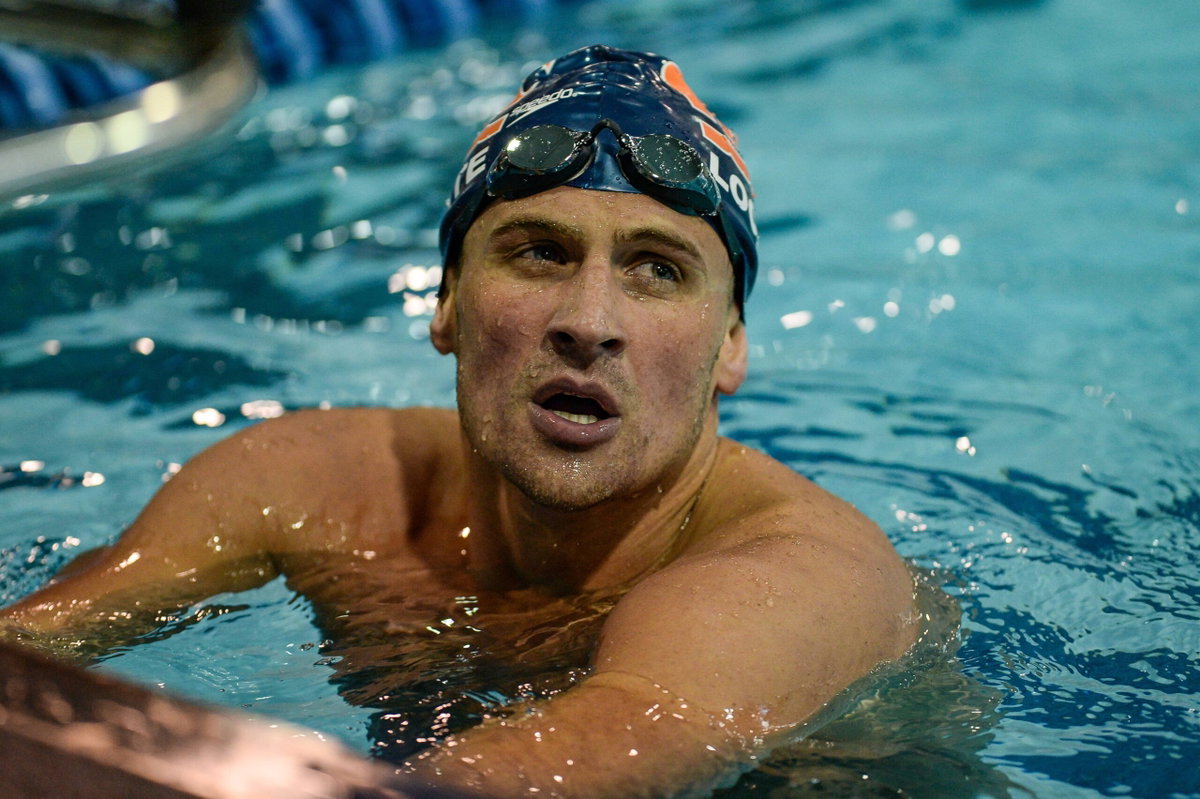
Ryan Lochte sold nine Olympic medals for just over $550,000, ‘hardware’ that once sat collecting dust in a sock drawer. That number tells its own story about what elite sport has historically paid the people who actually show up and compete. Now, watching swimmers pocket $250,000 and more for a single race at the Enhanced Games, Lochte isn’t bitter. He’s just honest about how the athlete undervaluation has changed over time.
Watch What’s Trending Now!
“They’re finally getting to the point where all these top people, they’re making so much money, like the CEOs and all that, but then the actual athletes that show up are getting nothing,” Lochte said in an interview with Casino.org.
“So now it’s the other way around. The swimmers, the people that are actually competing, are getting the most amount of money. That’s how it should be.”
“I could see more and more swimmers, athletes moving over to the Enhanced Games because it’s life-changing financial stability. It’s going to be life-changing.”
All 42 athletes earned from the $25M pool. Winners took $250k; fourth place, $50k; each tier life-changing for different career stages. And that’s not even taking into consideration the additional $1 million bonus prize that was waiting in store for world record breakers. In the end, only Kristian Gkolomeev won the bonus, breaking the 50m freestyle world record in the final event of the Enhanced Games. He ended his event with $1.25 million in prize money, a startling figure compared to what athletes usually get.
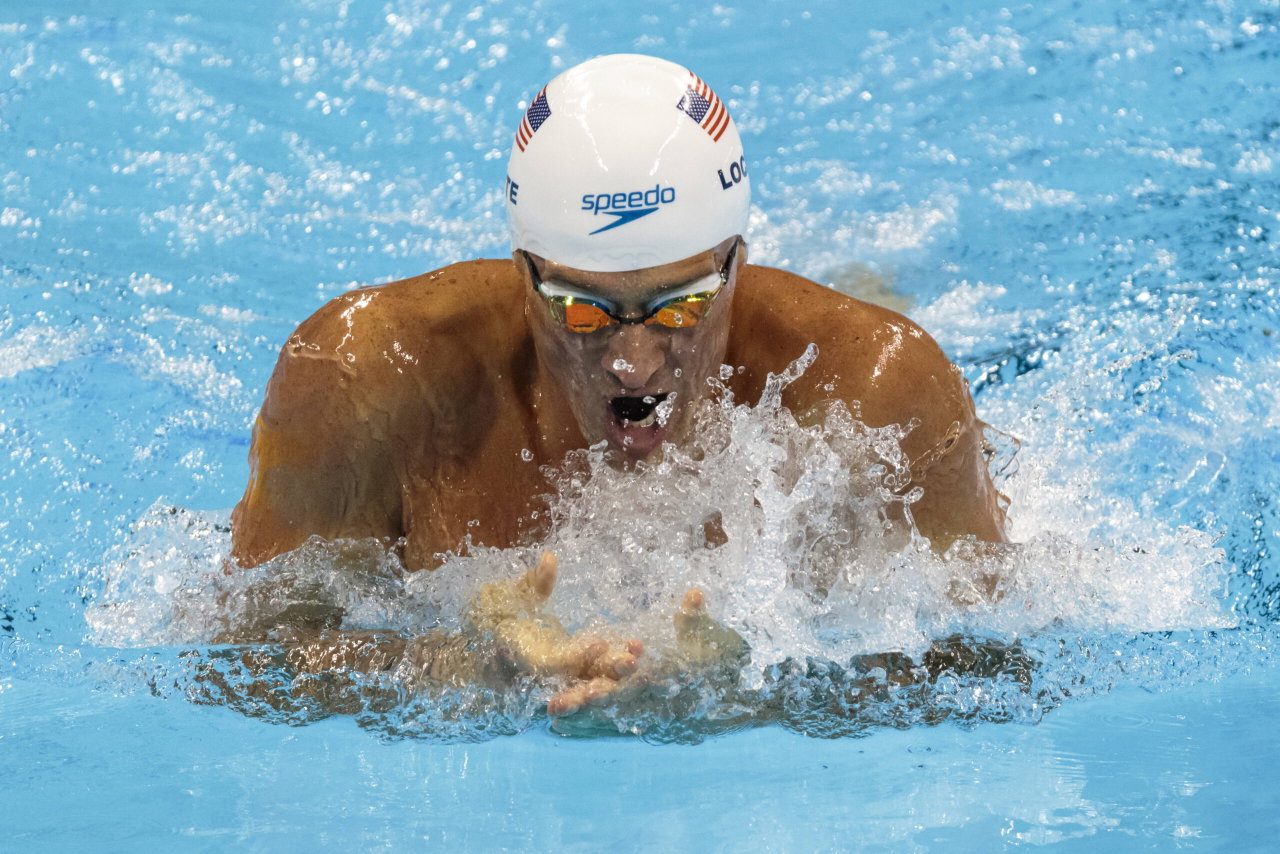
Imago
OLYMPICS RIO 2016 Rio de Janeiro, Brazil. 10 August 2016. Ryan Lochte USA competing in the men’s 200m individual medley heat at the 2016 Olympic Summer Games. Paul J. Sutton/PCN Photography. Rio de Janeiro Olympic Aquatic Stadium, Brazil. Copyright: xPaulxJxSutton/PCNx OL1617SW10-693
To put that in perspective, the United States pays athletes $37,500 for a gold medal, $22,500 for a silver medal, and $15,000 for a bronze medal. That’s what Olympians at the 2022 and 2024 Olympics earned. It’s a figure Ryan Lochte more or less confirmed, although he got slightly more for his Olympic gold medals.
“When I was swimming, I was lucky enough to be paid by multiple sponsors and everything like that,” Lochte added. “But my swimming federation, getting a gold medal at the Olympics, you get 50 grand for a gold medal at the Olympics.
“You’re number one in the entire world, and you only get 50 grand? Like, come on, you can’t support a family like that.”
Lochte joined a list of elite athletes who sold their Olympic medals. The others on the list, though, did sell their medals due to financial desperation. The 2000 Sydney basketball gold medalist, Vin Baker, let his medal go at auction for $67,643 following severe financial and personal setbacks. Mark Pavelich & Mark Wells, members of the “Miracle on Ice” team, parted with their gold medals. Pavelich sold his for $262,900 in 2014 to support his daughter, while Wells sold his for $310,700 in 2010 to pay off mounting medical bills.
For Lochte, the Enhanced Games must have stung especially, given recent high-profile events in his life. That includes a drawn-out divorce with his ex-wife Kayla Rae Reid, which reportedly forced the Olympian to sell his medals. However, Lochte has since denied those claims, instead asserting that he is “financially A-OK” to support his family.
He also added that he sold nine out of his twelve Olympic medals because “I don’t need them. And I’ve done the hard work. I cherish those memories, and if I got money from it, great!”
Yet, Ryan Lochte won’t be the only one feeling hard done. That’s because the USA is, as it turns out, on the lower end of that spectrum. Unlike many nations where governments or Olympic committees fully fund athletes, the United States relies on private donations, corporate sponsorships, and a pay-for-performance model
Italy offered around $213,000 to any athlete who won gold at the 2026 Winter Olympics. That figure dropped to $106,000 for silver and $71,000 for bronze, but it’s still significantly higher than the US. Both Singapore and Hong Kong, though, broke that barrier.
They put aside around $787,000 and $768,000, respectively, for golds. That’s largely because they were looking for their country’s first gold medals. Things have changed slightly, with World Athletics even stepping in to offer $50,000 in prize money to gold medalists. Yet, in comparison, the Enhanced Games gave that out to the athlete in fourth place.
It’s why the lure has become so big for many athletes, especially retired ones. That’s even if they have to take performance-enhancing drugs to be at their best. It’s not a requirement, as many athletes competed clean at the Enhanced Games, including Fred Kerley and Hunter Armstrong.
View this post on Instagram
It’s largely why any world record attempt in Las Vegas would have never been ratified. Yet Lochte believes that shouldn’t be the case, especially given what he was up against.
“If an enhancement person breaks a world record – hey, we have records because they’re meant to be broken,” Lochte explained. “No matter if you’re taking supplements or not, they’re meant to be broken. That’s why we have records.”
“I swam enhancement-free. I went against people that were doping, and I came up on top. So I think a world record, if it gets broken, it’s all in the same category. It doesn’t matter. That’s my opinion.”
Lochte’s opinion, however, is one the sport’s governing bodies have long resisted. And as the Enhanced Games reframes what athletes are worth, the IOC is being forced to answer a question it has avoided for decades.
IOC president Kirsty Coventry takes a stance on paying athletes
Despite the International Olympic Committee earning well over $7 billion in revenue during the 2021-2024 Olympic cycle, only 0.5% went to the athletes. That’s because, unlike other organisations across sports, the IOC adopts a solidarity model. Thus, they don’t hand out any money for either participation or even winning. Instead, they redistribute the money to federations, organising committees, development programs and more.
Thus, by the end of things, athletes receive only 0.5% of the revenue, which is distributed by their respective federations. Yet, with the arrival of the Enhanced Games, the entire situation has changed, forcing Kirsty Coventry to reassert her stance on the matter. And the IOC president did just that as she stood her ground in the face of new opposition.
“I don’t believe in paying athletes. I come from a small country, I came from a sport that doesn’t necessarily pay athletes very well, and I still don’t think we should be paying athletes at the Olympic Games.” Coventry told Sport Nation NZ.
“Now I do think we should find more ways to directly impact athletes..to find ways to directly help them on their journey to becoming Olympians, while they are Olympians, and as they are finding ways into their new career transition.”
Her statement, however, did not go down well with many. That includes German Olympian Marius Kusch, who took to Instagram to voice his concerns. Not only that, but Maximilian Martin also didn’t take Coventry’s comments well either. The Enhanced Games CEO had a lot to say about Coventry’s latest interview and looked almost pleased by her words.
“So, I just landed back in New York from Las Vegas, where we hosted the first Enhanced Games, and while I was on the plane, I saw Kirsty Coventry coming out and saying she doesn’t believe in paying athletes,” Martin said in an Instagram story posted by Enhanced Games.
“I mean, bad enough you don’t pay athletes in the first place while you make billions in sponsorship, billions in media rights sales, but then doubling down on it with a statement like this just after we hosted the first Enhanced Games, where forty-two athletes earned twenty-five million dollars. That’s just crazy.”
Whether people agree with him or not, Lochte’s position is easy to understand. The former Olympian has seen both sides of the equation, from selling medals years after retirement to watching athletes walk away with life-changing sums at the Enhanced Games