Imago
Credits via Facebook, @Ukraine Breaking News
Imago
Credits via Facebook, @Ukraine Breaking News
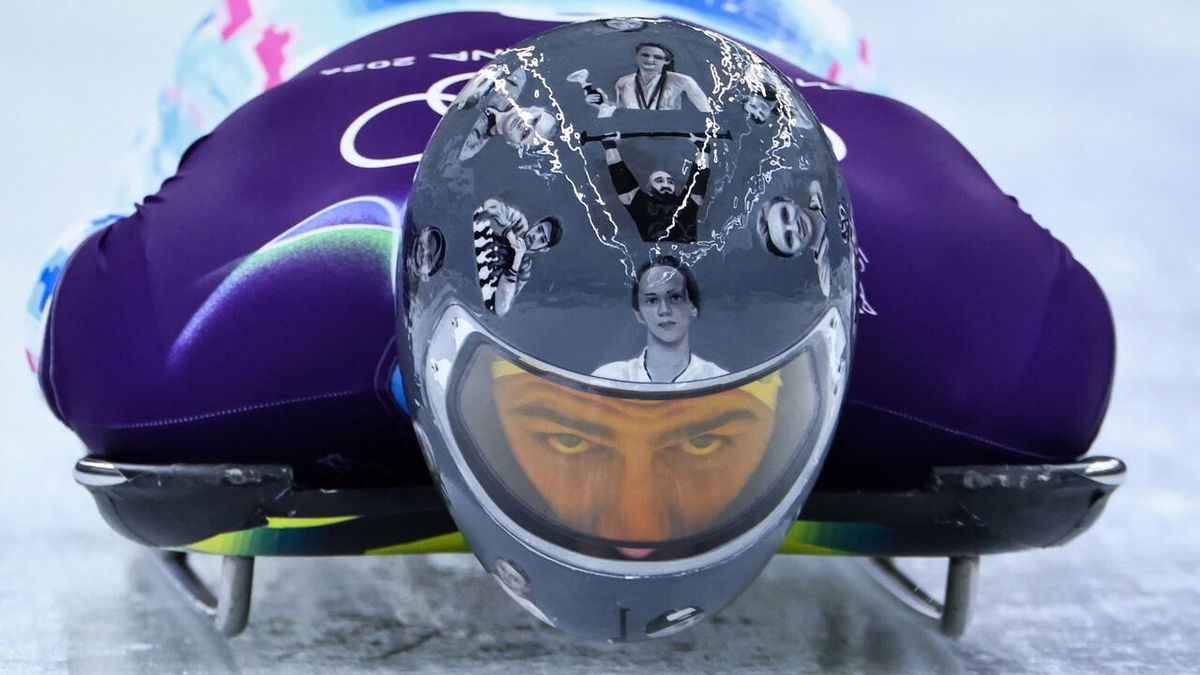
Ukrainian skeleton racer Vladyslav Heraskevych faced heartbreak at the Milano Cortina 2026 Winter Olympics. He was disqualified by the IOC for wearing a helmet that honored more than 20 fallen Ukrainian athletes and coaches. For Heraskevych, it was a personal tribute, but officials deemed it a breach of competition rules. Though he fought hard, the outcome fell short of expectations.


For context, Heraskevych was barred from competing just before his race after he refused to remove a custom “helmet of remembrance.” The helmet featured images of more than 20 fallen Ukrainian athletes and coaches, whom he hoped to represent in competition as a tribute.
Watch What’s Trending Now!
However, the International Olympic Committee (IOC) and the sport’s governing bodies maintained that was not permitted under Olympic regulations. Undeterred, the skeleton athlete took the matter to the Court of Arbitration for Sport (CAS), requesting his disqualification to be revoked or, at the very least, be granted a controlled run.
Vladyslav Heraskevych insisted he had “not violated any rules.” It was just a way to honor memory and respect. On Friday, after an urgent hearing in Milan, CAS dismissed his appeal.
“We confirm that freedom of expression is permitted at the Olympics, but not at the competition venue,” said CAS Secretary-General Matthieu Reeb. “The judge considered both sides and made a decision in line with IOC guidelines.”
BREAKING: Vladyslav Heraskevych has lost his appeal at CAS ❌
The Court of Arbitration for Sport has rejected the Ukrainian‘s appeal against his disqualification from the Winter Olympics over his helmet.#Olympics2026 #WinterOlympics pic.twitter.com/JLpXkTNKvz
— DW Sports (@dw_sports) February 13, 2026
The IOC stated that the helmet violated the Olympic Charter’s requirement for neutrality, which forbids political or other messages during competition. “The court sided with the IOC and upheld the decision that an athlete could be disqualified from the Olympic Games without actual misconduct, without a technical or safety threat, and before the start,” wrote Yevhen Pronin, Heraskevych’s attorney.
Even after the ruling, Vladyslav Heraskevych stood by his decision. “I feel the same as the last four days. I believe I didn’t violate any rules, so therefore I shouldn’t be suspended and I should be today part of the Olympic Games, part of the competition, but not part of the hearing. And yeah, so we continue to fight for our truth,” he said, as reported by Repubblica.
When asked if he was confident about his stance. The Winter Olympics star added, “Of course.”
For him, the issue went beyond personal ambition. It was about honoring the many Ukrainian athletes and sports figures who will never have the chance to compete again. Although he remains barred from competing for now, he has already gained a strong network of supporters ready to defend him.
Heraskevych’s Olympic tribute sparks global backlash against IOC ban
The IOC’s decision drew widespread criticism internationally. Ukrainian President Volodymyr Zelenskyy spoke in favor of Vladyslav Heraskevych, saying, “The truth cannot be inconvenient, inappropriate or called a ‘political demonstration at a sporting event.’”
He added, “And this is what reminds everyone of the global role of sports and the historic mission of the Olympic movement itself – it is all about peace for the sake of like.”
In recognition of his courage, Zelensky later awarded Heraskevych the Order of Freedom. The helmet itself was created by Ukrainian artist Iryna Prots, who described Heraskevych’s tribute as “a great act of heroism.”
Ukraine’s Foreign Minister Andrii Sybiha also condemned the IOC saying it “has banned not the Ukrainian athlete, but its own reputation” and calling the decision “a moment of shame.” He stressed that Vladyslav Heraskevych’s helmet was just a tribute. As he said, “There is nothing wrong with that under any rules or ethics.”
Even the leaders in Lithuania joined the criticism. Lithuanian Foreign Minister Kęstutis Budrys called the IOC’s action “despicable” and argued that paying respect to fallen athletes should be protected.
For now, Vladyslav Heraskevych has yet to give his stance on CAS’s response. However, his fight for the Olympic medal will remain. After coming in as a serious contender to win, it’s a wonder how his comeback will look. What do you think? Share your thoughts in the comments below.