
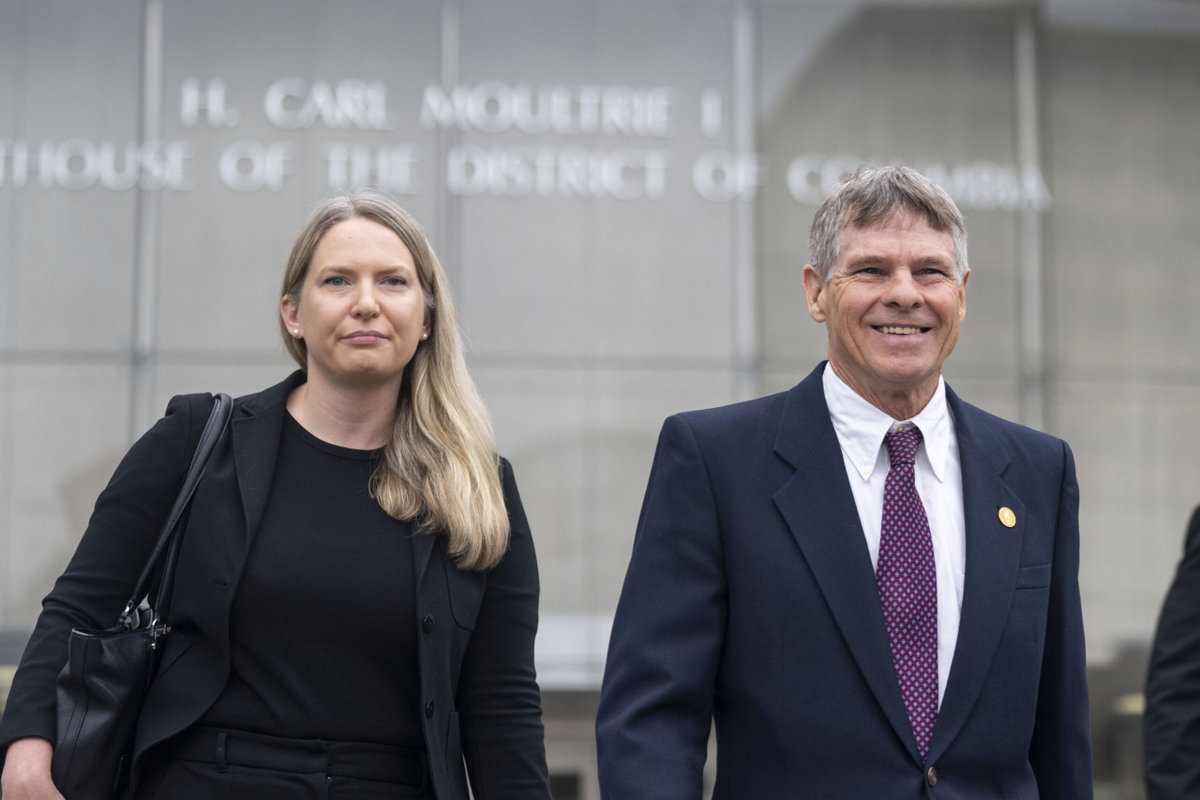
A 3-time US Olympian who stopped by the Lincoln Memorial Reflecting Pool during his 52-mile bike ride probably wouldn’t have thought what was about to strike him. Former canoeist David Hearn was arrested after he was seen reaching down into the pool in early June. Although the charges against him were dropped on August 6, that relief lasted momentarily after a recent update in which the White House has now stepped in.
Watch What’s Trending Now!
According to The Wall Street Journal, in a report published August 11, White House officials recently asked the Justice Department to consider whether Hearn could face a new prosecution, according to people familiar with the discussions.
The report further states that after the White House outreach, officials at the Justice Department are exploring whether a different type of case could even be possible. However, as of now, the discussions remain preliminary and informal, and no new charges have been announced against Hearn.
The Lincoln Memorial Pool comes with a price tag of around $16 million and was supposed to get a facelift to celebrate America’s 250th birthday on July 4th. Instead, it became the center of a mega controversy that began in June when David Hearn visited the Memorial pool.
According to Hearn, he touched a piece of the liner (coating) that was visibly peeling from the bottom of the pool. Next, the US Park Police officials arrested him on a misdemeanor charge of destruction of government property, which was later upgraded to a felony.
Hearn denied intentionally damaging the pool and pleaded not guilty to the felony charge on July 9, maintaining that he had not vandalized the historic site. And then came a major turning point…
On July 17, the Reflecting Pool was drained again for repair work. U.S. Attorney Jeanine Pirro and members of her office visited the site. According to the government’s later filing, they saw extensive damage throughout the pool, raising questions about whether the deterioration could actually be attributed to Hearn’s brief encounter.
Prosecutors then sought information from the Interior Department about how the pool’s liner had been installed and what had happened to it before Hearn’s visit. The investigation uncovered information suggesting that the pool’s problems were connected to flawed installation by the contractor.
Then, on July 31, Pirro’s office filed a motion asking the court to dismiss Hearn’s felony indictment. Prosecutors said the peeling of the pool’s lining was caused by flawed installation by the contractor, rather than damage caused by Hearn. Eventually, Judge Todd Edelman dismissed the case.
However, President Donald Trump strongly criticized Pirro after she dropped the prosecution. Trump argued that Hearn had vandalized the Reflecting Pool and questioned why prosecutors had abandoned the case. Trump publicly urged Pirro to reconsider her decision and posted photographs that he said showed vandalism at the pool.
Meanwhile, another big development came just before the White House’s reported involvement.
On August 9, Trump acknowledged that there had been “some contractor error done by rushing the job” ahead of July 4.
The admission was significant because prosecutors had come to the same conclusion when they dropped Hearn’s case. Trump also admitted on Aug. 10 that there was no video or definitive proof that Hearn was vandalizing the pool, but he repeated the alleged witness testimony. But now, the case has gone on a wild ride.
Now, the Wall Street Journal reports that the next steps involve the presiding judge in the last case holding a hearing next month on whether the dismissal of charges against Hearn should be “with prejudice.” If the dismissal is made with prejudice, prosecutors would generally be barred from bringing Hearn back to court over the same alleged conduct.
However, this in itself is quite a painful controversy for an Olympian who represented the US on the global stage for several years.
David Hearn’s proud legacy with Team USA
Long before being involved in the controversy in Lincoln Memorial Reflecting Pool, David Hearn had already had a successful career representing the United States in canoe slalom. He competed in three Olympics (Barcelona 1992, Atlanta 1996 and Sydney 2000) for Team USA. He had his finest performance at the 1996 Atlanta Olympics when he placed ninth in the men’s C-1 canoe slalom.
Hearn also established himself as a top international competitor outside the Olympics. He became a two-time individual world champion, winning C-1 gold at the 1985 and 1995 World Championships. Across his career, he collected 13 World Championship medals, including eight gold and five silver.
His achievements also included a remarkable run in the C-1 team event. Hearn won six consecutive World Championship gold medals from 1979 through 1989, adding to a career that also included 28 U.S. national titles. His first national championship came when he was just 17 years old.
Hearn later continued his connection to the sport through coaching. He helped establish the Bethesda Center of Excellence in 1992 and worked with young paddlers. His contribution to canoeing was also recognized in 1995 when he was named USA Canoe Kayak Male Athlete of the Year.