Imago
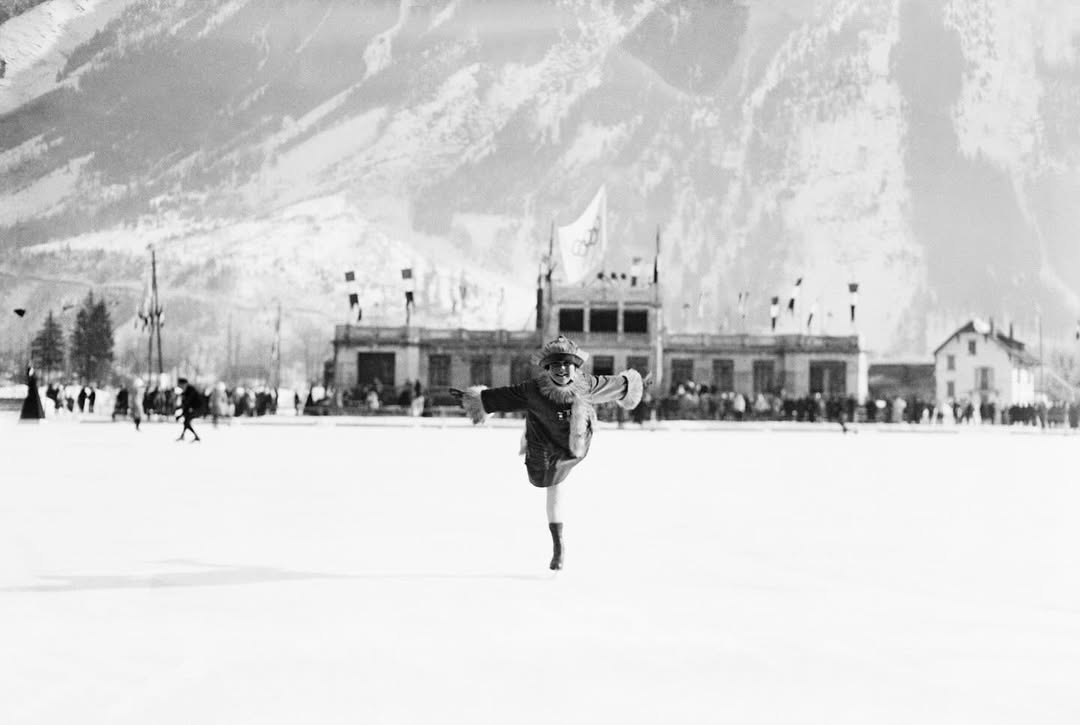
A moment of grace from Norwegian figure skater Sonja Henie captured by Auguste Couttet at the 1924 Chamonix Winter Olympics. The 11-year-old Henie was one of the stars of the first ever winter games, which were held at the foot of Mont Blanc from 25 January to 5 February. Henie came last, but charmed the crowds and later went on to become a three-time Olympic champion and Hollywood star. Medals were awarded in 16 different events, from bobsleigh to ski jumping, many of which were captured by the French photographer Couttet. A century after that inaugural event helped to put winter sports, and Chamonix, on the map, Jonathan Samuels travels to the Alpine resort in search of the sparkle and pioneering spirit of that first Winter Olympics.Mandatory Credits: @guardiantravelsnaps/Instagram
Imago
A moment of grace from Norwegian figure skater Sonja Henie captured by Auguste Couttet at the 1924 Chamonix Winter Olympics. The 11-year-old Henie was one of the stars of the first ever winter games, which were held at the foot of Mont Blanc from 25 January to 5 February. Henie came last, but charmed the crowds and later went on to become a three-time Olympic champion and Hollywood star. Medals were awarded in 16 different events, from bobsleigh to ski jumping, many of which were captured by the French photographer Couttet. A century after that inaugural event helped to put winter sports, and Chamonix, on the map, Jonathan Samuels travels to the Alpine resort in search of the sparkle and pioneering spirit of that first Winter Olympics.Mandatory Credits: @guardiantravelsnaps/Instagram
The Winter Olympics organizers aren’t taking any risks. Just days before the Games, the snowboarding slopestyle world had seen Mark McMorris’ terrifying crash, triggered by a hidden chunk of snow that left him with a concussion and pelvic injuries. Clearly, even minor oversights can have serious repercussions. A similar mindset may have led the organizers to now take a major safety decision at the Olympics, ahead of a weather alert.
Watch What’s Trending Now!
“In anticipation of some adverse weather forecasted for the start of next week and in the aim of maintaining a safe and fair competition, men’s and women’s Milano Cortina 2026 Olympic Winter Games Snowboard Slopestyle qualifications have been rescheduled for Sunday, 15 February,” FIS Park & Pipe World Cup’s official Instagram reported.
This means the event originally scheduled for February 16 will now take place on the 15th.
According to one of the forecast estimates, Livigno is expected to receive over 6 to 7 cm of “heavy snow showers” on the 16th, with minimum temperatures that could drop to -12 degrees Celsius. There’s also a yellow warning for snow and ice on the 16th and 17th, per some forecasters.
This caused the Olympic snowboard slopestyle organizers to pivot their plans. As per the latest update posted on the FIS official website, the men’s qualification round will take place first at Livigno Snow Park, starting at 10:15 CET. This will be followed by the women’s qualification round later in the day at 14:15 CET.
While both the men’s and women’s qualification events were originally planned for 16 February, they have now been brought forward by one day. But why is the management being heavily focused on player safety?
View this post on Instagram
The focus on safety became even more urgent after Lindsey Vonn’s accident earlier this week. The American alpine skiing legend suffered a serious knee injury in a crash at the 2013 World Championships, tearing ligaments that required surgery and raised fears about the end of her career.
Weather troubles have long shadowed the Winter Olympics. Back in 2013, chaotic conditions hit PyeongChang as fierce winds turned the women’s slopestyle final into a test of nerve. Riders battled gusts that threw off balance and rhythm, sparking talk that the course was too dangerous.
“It was pretty bad. I’m happy to land my run and get a good score, but I’m most happy that no one got hurt bad,” recalled bronze medallist Enni Rukajarvi after navigating the stormy chaos.
Defending champion Jamie Anderson of the United States still held her composure to win gold, though every rider took at least one tumble. Britain’s Aimee Fuller finished 17th after a heavy crash on her second run. In slopestyle, athletes launch into a mix of jumps, rails, and boxes, blending technical precision with pure flair
Coming back to the present, following renewed scrutiny over athlete safety in Milan, organizers are now intent on reducing risks, preventing injuries, and ensuring every competitor can perform in the safest conditions possible.
The postponement also cools the anticipation around Canada’s bid for another gold, with Cameron Spalding and veteran Mark McMorris leading the charge. China’s Su Yiming is among the top contenders after a strong run of results, while American rider Red Gerard enters in top form.
Rising talents Oliver Martin and Jake Canter could also make a statement, though how this delay shapes their momentum remains to be seen.
Reports unveil the real reason behind rising difficulties at the Winter Olympics
Reports revealed that climate change and the growing use of artificial snow are making Winter Olympics events risky for athletes. Organisers in the Italian Dolomites will produce around 50,000 cubic metres of artificial snow to prepare the slopes.
Even though Cortina d’Ampezzo receives natural snowfall and sits at a high altitude of 1,816 metres, officials say artificial snow will make up about 85% of the total snow. They explained this is needed to “guarantee athletes the highest-quality surface, ensuring fair and safe competition conditions throughout the entire event”.
However, many athletes, coaches, and researchers are worried about its effects. Artificial snow is different from natural snow. It is harder, more compact, and contains less air. This also brings concerns of vulnerability, as falling on artificial snow can be more dangerous. Sports ecology expert Madeleine Orr explained the difference clearly.
She said, “It’s the difference between falling on the pavement and falling on grass.” She added that although athletes are not falling more often, injuries can be worse when they do fall because the surface is much harder.
Some athletes have also raised concerns about training and competition conditions. Scottish freestyle skier Laura Donaldson warned that when artificial snow is used in poor natural snow seasons, the surfaces can become extremely hard. Noting that, “This is dangerous for athletes, some have died.”
Such conditions increase fear and make it harder for athletes to perform with confidence. While the authorities are taking strict measures to avoid the chances of injuries, it still remains to be seen if it turns out to be a hurdle.
Written by

Edited by

Firdows Matheen