Imago
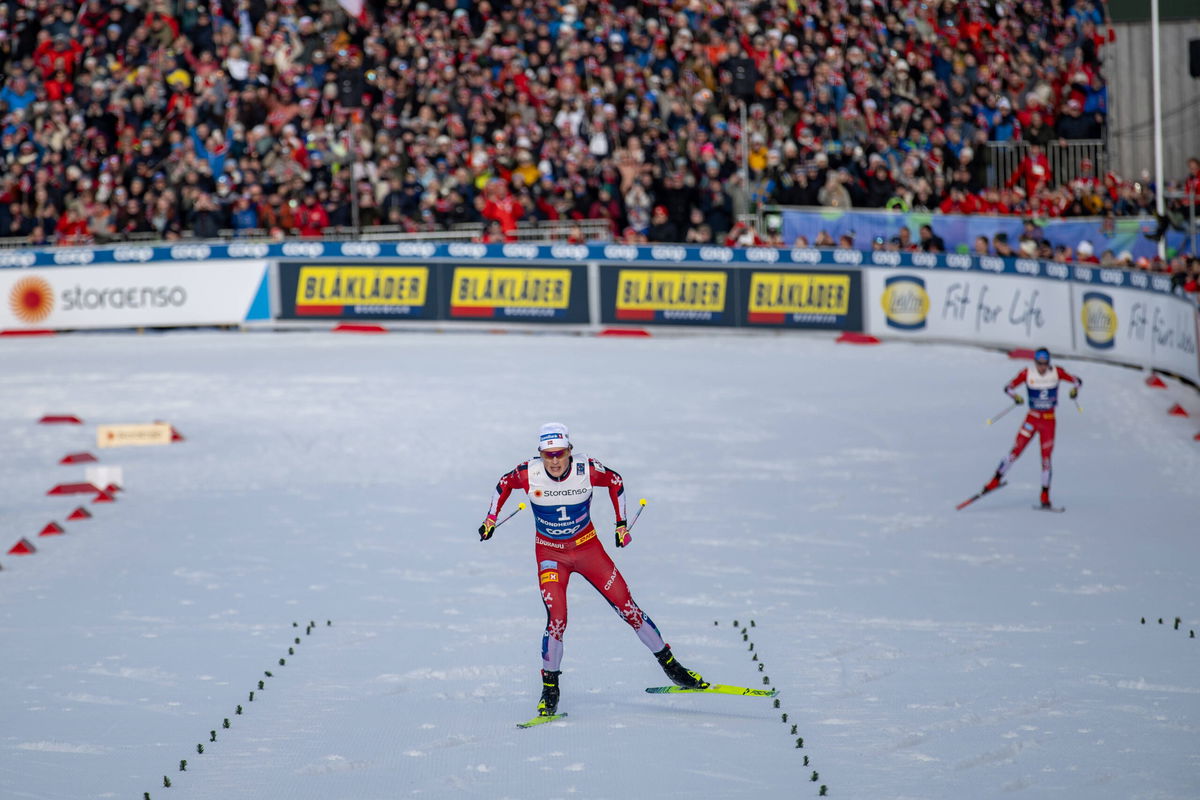
08.03.2025, Trondheim. Coop FIS Cross-Country World Cup. Cross-country: Mass start, Free. 50 km, Men. Photo Eero Vabamägi, Postimees Trondheim Trøndelag Norway 1EV08MAR25B34 PUBLICATIONxNOTxINxESTxLATxLTUxFIN Copyright: xEeroxVabamägix Johannes Høsflot Klæbo
Imago
08.03.2025, Trondheim. Coop FIS Cross-Country World Cup. Cross-country: Mass start, Free. 50 km, Men. Photo Eero Vabamägi, Postimees Trondheim Trøndelag Norway 1EV08MAR25B34 PUBLICATIONxNOTxINxESTxLATxLTUxFIN Copyright: xEeroxVabamägix Johannes Høsflot Klæbo
All was going well at the men’s cross-country sprint at the 2026 Winter Olympics as Norway’s Johannes Høsflot Klaebo took gold, followed by USA’s Ben Ogden, who won silver, and Norway’s Oskar Opstad Vike took bronze. But the celebration was short-lived, as a protest from Finland threatened some of the podium holders, forcing the FIS into a decision.
Watch What’s Trending Now!
On 14 February 2026, FIS confirmed that Finland’s protest would not be processed. The reason was procedural: Finland had submitted the complaint after the official deadlines. Under FIS rules, protests regarding athlete performance or equipment must be submitted within 15 minutes of the unofficial results, and appeals against jury decisions must be submitted within 48 hours of the official results.
Since Finland’s submission came days after the medals were confirmed, Norway and the USA kept their podium finishes. But how did this all start?
The controversy revolves around two key issues from the sprint event on 10 February 2026. Norway’s team used a “sticky roller,” an electric ski-waxing tool that was technically not listed as allowed. Norway had, however, requested and received approval from FIS before the race. But Finland argued that this approval was not communicated clearly to all competitors.
Meanwhile, the USA’s Ben Ogden won silver, a historic achievement for the United States as it ended a 50-year medal drought in men’s Olympic cross-country skiing. The last American man to medal was Bill Koch in 1976. However, the Americans also had a bottle containing a liquid substance in the service area, described as a wax remover.
Such liquids are banned under FIS regulations for sprint events, though the Americans claimed it was used only to clean the hands of their technicians. These issues, combined with Finland’s Lauri Vuorinen, just missing the podium, fueled Finland’s call for action.
Imago
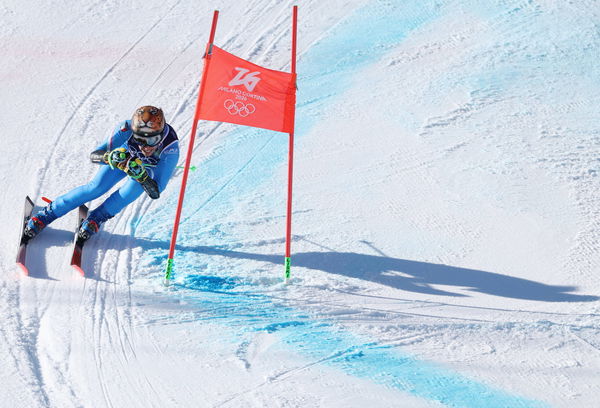
260215 — CORTINA D AMPEZZO, Feb. 15, 2026 — Federica Brignone of Italy competes during the alpine skiing women s giant slalom run 2 at the Milan-Cortina 2026 Olympic Winter games, Winterspiele,Spiele, Summer games in Cortina, Italy, Feb. 15, 2026. MICO2026ITALY-CORTINA D AMPEZZO-OLYMPIC WINTER GAMES-ALPINE SKIING-WOMEN S GIANT SLALOM ZhangxChenlin PUBLICATIONxNOTxINxCHN
However, Finland demanded that the results be recalculated so that no athlete is disadvantaged due to irregularities, as they believed that simply admitting a rules issue was not enough to restore fairness. FIS clarified that while clerical errors can be contested for up to a month, any actions occurring during competition itself must follow strict deadlines. And as for Finland, they missed deadlines.
“FIS has itself admitted making a mistake, and this has led to an unfair competition in which two countries received an undue advantage without others knowing,” said Marleena Valtasola, executive director of the Finnish Ski Association. “Such action is impossible to accept, and a mere admission of error or apology does not correct the damage that has been done.”
The ruling has ignited conversation between athletes, coaches, and fans. There was much discussion on whether the rules had been applied consistently and whether Norway and the USA had really been given an unfair advantage, and how communication could be best handled in the high-pressure world of the Olympics. Still, the outcome stands: the medals awarded on race day remain official! At the same time, this isn’t the first time a situation like this has stirred debate at the Olympics.
2014 Sochi Ski Cross controversy
At the 2014 Winter Olympics in Sochi, Russia, the men’s ski cross final was held on 20 February 2014 at Rosa Khutor Extreme Park. France swept the podium, with Jean‑Frederic Chapuis taking gold, Arnaud Bovolenta silver, and Jonathan Midol bronze. Brady Leman of Canada was in fourth place and right behind the podium!
Following the race, Canada and Slovenia protested, accusing the French team’s support staff of having tampered with the lower-leg part of the ski suits just before the final. They claimed this provided an illegal aerodynamic advantage to the French athletes, contrary to International Freestyle Skiing Competition Rules, and wanted the International Ski Federation to disqualify the French skiers and reallocate the results.
But FIS denied the complaints since they were filed well after the official 15-minute protest deadline. Hence, Canada and Slovenia subsequently submitted their case to the Court of Arbitration of Sport, which on 23 February 2014 rejected this appeal, agreeing that the protests were late under competition rules. As a result, the French skiers kept their medals, and the original results stood.