
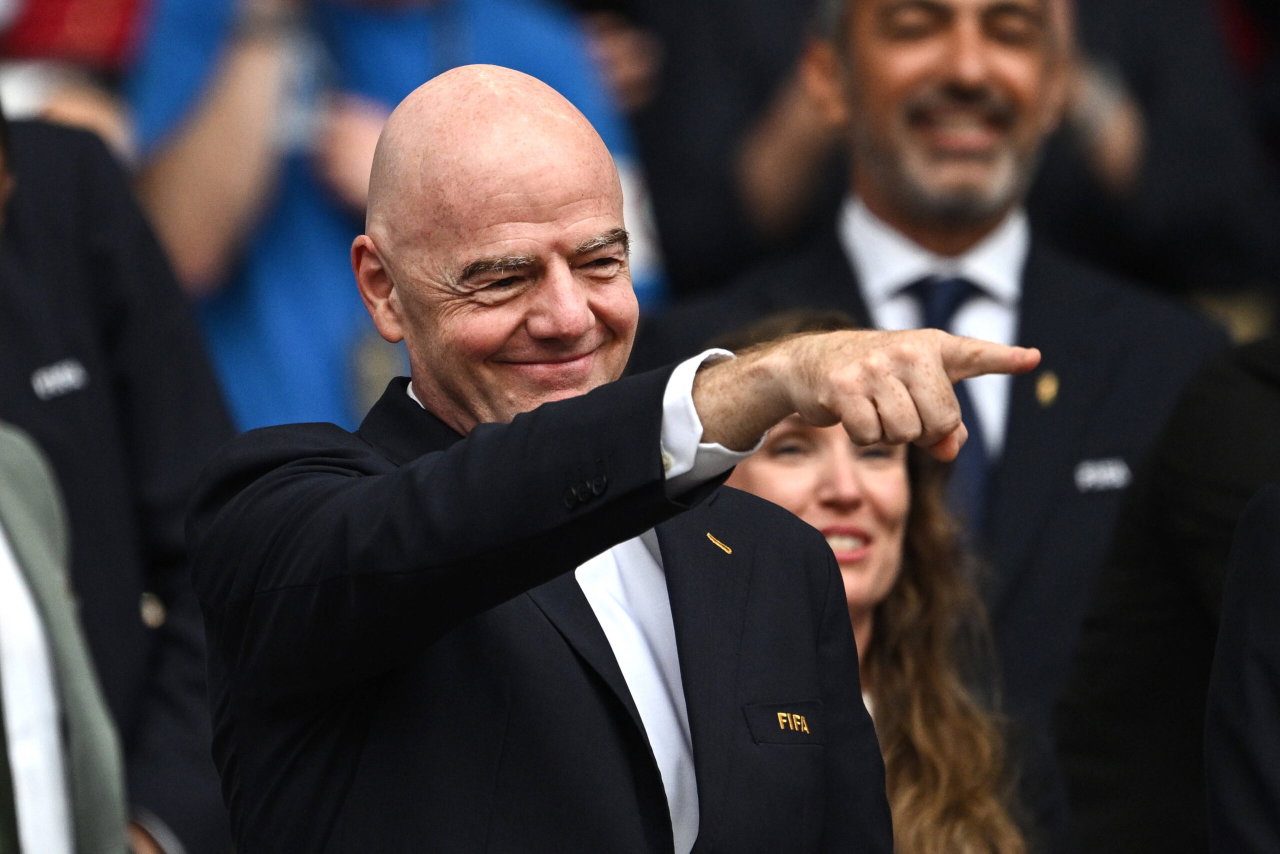
FIFA is in the midst of another leadership crisis, with domestic leagues, various commercial initiatives, and ongoing friction with European powers all adding pressure on the top office. This has led to rumors of an institutional revolt and calls from key figures for FIFA President Gianni Infantino to go. However, he has completely dismissed the pressure and the suggestion that he should step down. He asserted that his mandate is beyond any doubt.
Watch What’s Trending Now!
The public backlash from the FIFA boss came via BBC’s social media broadcast airing his direct response to the questions about his time in office.
“I was elected by 211 member associations from all over the world. I think what is important is that in an organization like FIFA, there can be different views, different points of view,” Infantino laughed off when asked whether he had considered stepping down.
“But if we are serious about democracy, about the democratic process, about believing that everyone has the same vote and the same voice all over the world, that football belongs to everyone, then we need to respect as well the views of the vast, vast majority.”
Infantino pointed to his recent cross-continental tours as definitive proof of his continued grip on power. He cited the universal support he has received outside Europe, where his backing remains strong. “I’m just coming back off Tokyo where the Asian Football Confederation has fully endorsed me. I was in Cape Verde where all African countries have endorsed me. I’m speaking to all associations everywhere in the world.”
His defiance is squarely aimed at a very turbulent period which has been characterized by intense friction between Zurich and a number of the major stakeholders. Sepp Blatter (former FIFA president) and Javier Tebas (LaLiga president) were in no doubt about the damage the recent controversies had done to the sport’s standing.
Tebas was explicit that Infantino should resign, pointing to widespread discontent across European leagues. UEFA and FIFA have also had numerous points of contention over competition scheduling, refereeing logistics, and the application of disciplinary measures.
Much of the recent unrest stemmed from the FIFA Forward Enterprise proposal. The concept was to sell commercial rights to the top tournaments (the World Cup being the most prominent) to private investors. European federations, player associations, and several continental confederations met it with fierce resistance.
It forced FIFA to pull back very quickly. Infantino apologized to the FIFA Council for the missteps within the organization. However, considerable frustration remained in the European camp over the initial secrecy and the direction the process took.
Electoral Realities and the Continental Divide
The FIFA voting system is designed to keep Infantino safe from complaints and lock in his position. FIFA uses a one nation, one vote rule so each national association gets the same vote. Tiny island nations therefore have the same voting power as the big powerhouses. Even if Europe complains, that is just 55 votes out of 211. Infantino can gather voting blocs across Africa, Asia, Oceania and the Americas. This makes it impossible for any challenger to beat Infantino. The Western administrative displeasure is only symbolic. Any prospective challenger faces strict rules and strict eligibility requirements.
To be a candidate you have to have been actively involved in football governance for two of the last five years, you need formal nominations from a number of member associations and you have to pass an extensive integrity check. With the formal nomination deadline being 18th November for the March elective congress in Rabat there are effectively no viable alternatives on the ballot. The names opponents have suggested are not really running any campaign.
This is why vocal public opposition at the highest level of football rarely results in any real governance change. Member associations will have their hands on FIFA development funds. The global development program distributes the massive pool of money equally across the confederations.
Those funds are absolutely critical to grassroots operations in the smaller confederations. So for a federation to take a stand in opposition to the status quo is going to be a very high risk proposition in terms of institutional and financial exposure.
There’s virtually no traction for Infantino’s resignation in the corridors of power that determine the institution’s fate. While European leagues and several former officials continue to express concern about the concentration of power. Yet, Infantino remains in full control of the process as the re-election deadline approaches. He has been open that views differ, but has made it clear that the ballot box is the only one that matters.
Infantino has in effect turned a period of intense administrative review into a very public demonstration of institutional supremacy. Unless some unforeseen challenger comes along and mounts a truly united, multi-confederation campaign prior to the November filing deadline, Infantino is looking set to go on unopposed and continue to run the game on his own terms.