Imago
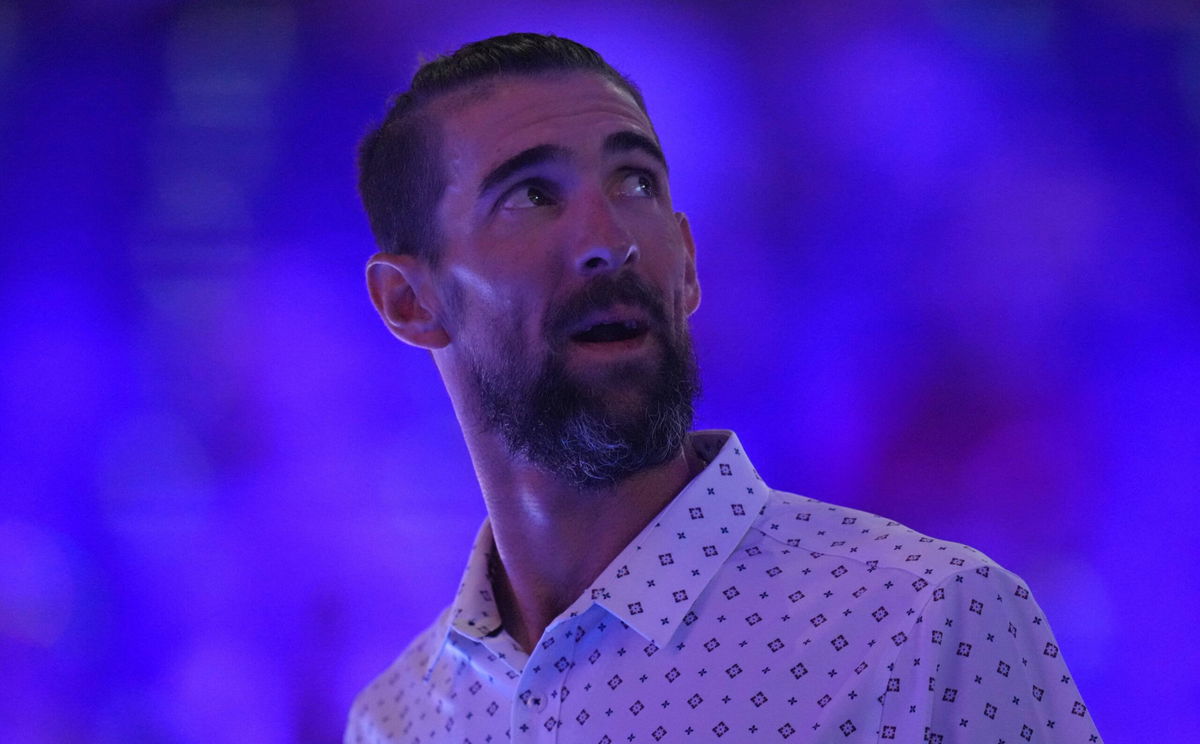
Syndication: Journal-Courier Michael Phelps looks up, Saturday, June 22, 2024, during the eighth day of the U.S. Olympic Team Swimming Trials at Lucas Oil Stadium in Indianapolis. Lafayette IN , EDITORIAL USE ONLY PUBLICATIONxINxGERxSUIxAUTxONLY Copyright: xGracexHollars/IndyStarx USATSI_23603079
Imago
Syndication: Journal-Courier Michael Phelps looks up, Saturday, June 22, 2024, during the eighth day of the U.S. Olympic Team Swimming Trials at Lucas Oil Stadium in Indianapolis. Lafayette IN , EDITORIAL USE ONLY PUBLICATIONxINxGERxSUIxAUTxONLY Copyright: xGracexHollars/IndyStarx USATSI_23603079
When USA Swimming CEO Kevin Ring rolled out a new training policy tied to the 2028 Olympic cycle, it didn’t take long for concerns to surface. The move would restrict U.S. Olympic & Paralympic Committee facility access to American athletes during the Olympic year, a departure from how the sport has traditionally operated. Soon after, Michael Phelps stepped in to publicly question the rationale of it all.
Watch What’s Trending Now!
Taking to Instagram on December 24, Phelps directly challenged USA Swimming’s leadership, “What are our goals? I thrived training all athletes. Never discriminated.” His point is clear. He believes keeping international swimmers out of the United States could choke off the environment that drives American swimmers. Training with world-class competitors from around the world leads to higher levels of performance, and Phelps certainly knows that better than anybody.
Fans, coaches, and commentators swarmed social media to double down on Phelps’ comments, claiming that the policy was “short-sighted.” The concern was also about the damage this new policy could do to international competition. Some also raised concerns about lost revenue and how the restriction clashes with the Olympic spirit of inclusion and fair competition. Now people are wondering, with all the pushback, why this decision was even made.
Top Stories






The roots of the policy were made clearer in a recent SwimSwam podcast, where the Editor-in-Chief, Braden Keith, interviewed Kevin Ring on the future of American swimming. Ring, who stepped into the CEO role in September, framed the decision as a response to growing frustration that American coaches and facilities are increasingly helping produce medalists for rival nations. Ring mentioned the growing trend of international athletes being coached by U.S. coaches, including Léon Marchand and Canadian star Summer McIntosh, who were both trained by Bob Bowman at the University of Texas.

Imago
L to R Leon MARCHAND FRA, Michael Fred Phelps, JULY 26, 2023 – Swimming : World Aquatics Championships Fukuoka 2023 Men s 200m Butterfly Medal Ceremony at Marine Messe Fukuoka Hall A in Fukuoka, Japan. Noxthirdxpartyxsales PUBLICATIONxNOTxINxJPN 224993825
As you may recall, the results of the exciting performance of Marchand at the Paris Olympics in 2024 made the headlines: he won four gold medals, the U.S. men received only one. In total, 14 medals went to international athletes training in the U.S., and at the 2025 World Championships, six non-U.S. male swimmers coached by U.S.-based mentors reached the podium. With the 2028 Olympics returning to U.S. soil for the first time since Atlanta in 1996, national optics and competitive pressure appear to have weighed heavily in the timing of the decision.
USA Swimming subsequently clarified that the restriction will be in effect during the 2028 Olympic year only. After that, international athletes will have access to U.S. facilities under regular access policies, allowing the collaborative, high-performance environment that created legends like Phelps to continue. But this is not the first time Phelps has voiced concern.
Michael Phelps sounds the alarm on leadership gaps
Having spent much of his life inside the sport, Michael Phelps has seen the gaps firsthand. Earlier this year, he even sent a detailed letter to USA Swimming and the U.S. Olympic & Paralympic Committee, co-signed by former Olympians, world record holders, and coaches, outlining key frustrations. Yet, he says, “That letter seemed to fall on deaf ears. No one really wants to talk about how broken USA Swimming has become.” But he didn’t give up!
At the 2025 World Championships, Phelps expressed frustration over the sport’s direction, pointing to systemic issues he says have built up over the past nine years. According to him, the issues have been caused by poor leadership and ineffective supervision of the operations, which is not only affecting the athletes but also the coaches.
The swimmer also highlighted a long-standing culture of silence. “Was told to be grateful for the chance to compete and that it was more important to stay quiet and keep the peace,” he shared. Despite that, he’s determined to push the conversation forward. “Most of the feedback I’ve heard echoes my concerns about the challenges facing USA Swimming today…now is the time to have it.”

Imago
Michael Phelps natation – : Demain Le Sport – Paris – 22/09/2022 FedericoPestellini/Panoramic PUBLICATIONxNOTxINxFRAxITAxBEL
Phelps made it clear that his criticism isn’t aimed at the athletes themselves. “I have the utmost respect for the U.S. swimmers who competed at the World Championships… My criticism is about the system, its leadership, and how it’s failing.”
Looking back at past performances, he pointed out the decline. The U.S. team in Rio 2016 won 57% of the medals they had the chance to capture, widely regarded as one of the strongest showings in history. In contrast, Team USA in Paris 2024 took home only 44%, the lowest since the 1988 Olympics. “This isn’t on the athletes… This is on the leadership of USA Swimming.”
The sport’s current state also weighs heavily on him as a father. “As a Dad to four young boys, it pains me to say that I’m not sure I’d want my sons to be a part of this sport at a competitive level. Yes, swimming changed my life, but it also causes a lot of heartache….”
He gave 3 particular recommendations as a road map for USA Swimming: an independent 360° review of the organization, improved athlete service based on an athlete-first model, and a focus on the renewal of the grassroots model to expand membership and strengthen the foundation of the sport.
With people like him leading the way, U.S. swimming has an opportunity to grow, evolve, and emerge shining on the world stage, once again, in a brighter and more inclusive light.