
Luca Urlando was leading his 100 IM heat in Indianapolis when his race suddenly stopped making sense. He had just turned from backstroke to breaststroke at the 2022 World Cup meet, but barely got through a stroke before stopping and reaching for his shoulder. Lifeguards helped him out of the pool. It was the third time he had dislocated it.
Watch What’s Trending Now!
The injury was especially cruel because the 200m butterfly had made Urlando’s name, and the shoulder was now standing between him and his best event. He missed the rest of the 2022-23 NCAA season and spent months rebuilding after surgery. By 2024, he had made his first Olympic team; a year later, he was a world champion in the 200m butterfly. The swimmer who had once been forced to step away from the pool was back on the blocks in Irvine, ready to see how far that shoulder, and his butterfly, could take him. But…..
“‘It’s gone!’ Phelps said after watching the finish,” reported Peter Baugh, talking about Urlando breaking his 200m butterfly Pan Pacific Championships record.
Luca Urlando broke Michael Phelps’ Pan Pacific Championships record with a 1:53.11. The American beat teammate Carson Foster, who finished second in 1:53.47 at Irvine. Urlando overtook Phelps’ 1:53.80 mark by 0.69 seconds, breaking a record that stood since 2006. That finish had been building toward a showdown long before the final 50 meters.
Urlando and Carson Foster had entered the final as the top two seeds, and both were coming off their fastest swims of the year. Urlando had also won the U.S. national title in the same pool less than three weeks earlier, clocking 1:54.45 without a full taper or shave.
The performance also came in a meet where Americans could not afford to treat the morning session as a warm-up. The Pan Pacific Championships limit each country to two swimmers in a championship final, meaning Urlando and Foster first had to navigate a field where a strong preliminary swim was essential just to secure a lane at night.
Phelps had set the mark on August 17, 2006, in Victoria, British Columbia, Canada. It was his final individual Pan Pacific Championships record, making Urlando’s swim the one that finally removed the last of Phelps’ individual meet marks from the record book.
Urlando and Foster entered the final as the top two qualifiers, setting up another American battle. Urlando reached 50 meters in 25.4 seconds, sitting just behind the early leader. By the 100-meter mark, Urlando had moved ahead, but Foster was only 0.1 seconds behind.
That gap did not disappear immediately. Foster stayed with Urlando into the closing stages, forcing the reigning world champion to keep working rather than simply protect the lead. Urlando eventually found the separation he needed and reached the wall first in 1:53.11, with Foster second in 1:53.47 and Australia’s Harrison Turner third in 1:54.44.
And then Urlando looked up and saw exactly who had been watching.
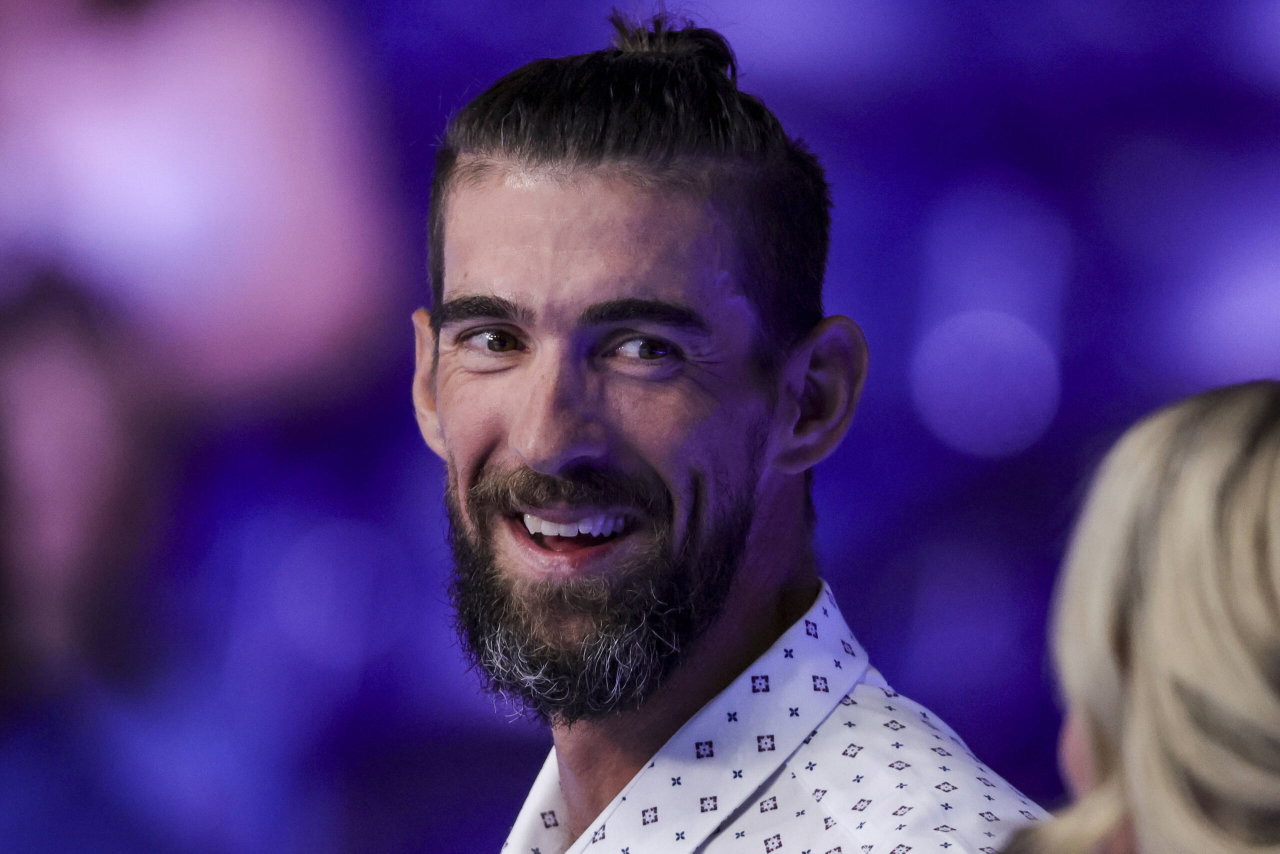
Phelps was in the stands with his family during the final. For Urlando, that made the swim more than another championship win. He had grown up in the 200m butterfly era Phelps had defined, and now the man behind the record was there as Urlando took it away.
After the race, Urlando described the moment as “the dream right there,” adding, “That’s great. It can’t get much better than that.” He also said he had been focused on swimming his own race and holding his stroke together over the final 50 meters.
“I thought I held my stroke together on that last 50,” Urlando said. “I wanted to win that race. But I think more than anything was swimming by race and just really honing in on my details to make me successful.”
There was also a small detail that showed just how close the race had been. Foster had tied his best time in the 200m butterfly, finishing only 0.36 seconds behind Urlando. He had entered the morning session feeling rough, but said coach Bob Bowman had urged him not to read too much into how the swim felt. By night, he had produced one of the best swims of his career.
After the race, Urlando met with Phelps and asked him, “Michael, is that your record?”
Phelps responded, “Yeah, they’re all gone now.”
The exchange lasted only a few words, but the setting made it hard to miss what had changed. Phelps had spent years collecting records in this event. Now he was standing beside the swimmer who had just taken one of them.
Then came the scene that made the record-breaking night even more memorable for Urlando. Phelps stepped forward at the medal ceremony and presented the gold medal to Urlando, while also presenting medals to Foster and third-place finisher Harrison Turner.
But, beyond this, the night carried another kind of longevity, too.
While Phelps’ record fell, Ledecky’s streak rolled on
While Urlando ended a nearly two-decade-old championship record, Katie Ledecky extended an unbeaten run in the women’s 1500m freestyle that now stretches back 16 years.
The American touched the wall in 15:36.09, beating Australia’s Lani Pallister, who finished in 15:38.62. Ledecky was ahead of her own world-record pace early in the race, sending the Irvine crowd to its feet, before Pallister settled into the chase.
Pallister stayed close during the opening stages, but Ledecky gradually built the gap. Once she moved clear, the race became less about whether she would win and more about how much ground Pallister could take back. The Australian finished 2.53 seconds behind.
Ledecky’s winning time was still well outside her world record of 15:20.48, set in 2018. But the time mattered less than the streak: she has now won every 1500m freestyle race she has entered at a major international meet since 2010.
She also returned to the Pan Pacific Championships as the defending champion after winning gold in 2018. This was different in one important way: it was her first international medal on U.S. soil.
So on a night when one American star watched his old record disappear, another added another chapter to a streak that has survived for more than a decade.