
Imago
Shericka Jackson and Shelly-Ann Fraser-Pryce (Image Credit: X)
Imago
Shericka Jackson and Shelly-Ann Fraser-Pryce (Image Credit: X)
2 weeks ago, China and with it the world witnessed a collapse that sent shockwaves through the track world. Jamaica. The name that commands fear in sprinting faltered on the biggest stage with a third-place finish at the 2025 World Relays. That too, behind Great Britain and Spain? For a team boasting Shericka Jackson and Shelly-Ann Fraser-Pryce, it felt like more than just a loss. It was a jarring wake-up call. Within minutes, social media lit up, and fingers pointed squarely at one thing. The decision not to put Shericka on the anchor leg. The critics came fast, loud, and unforgiving.


But then came the counterpunch. A firm, unapologetic defense. Not from the Jamaican camp, but from one of the sport’s most decorated sprinters. Taking to his Ready Set Go podcast, US track legend Justin Gatlin dismantled the popular outcry with precision. Shutting down the idea that Shericka Jackson should have anchored. And this wasn’t just an opinion. It was an insider’s truth from someone who has built relays and championships from the inside out.
Watch What’s Trending Now!
And his message was clear: you don’t fix relays with impulsive switches. Speaking on the matter, Gatlin stated, “The way the relay is constructed is you just can’t plug and play athletes like you think you can and think that it’s going to get the job done every time. It doesn’t work that way.” From the outside, it seemed simple. Gatlin stated that Jackson’s speed, her strength, surely she could’ve closed the gap and led Jamaica to gold. But this wasn’t a video game.
In relays, chemistry matters. Strategy matters. Every leg feeds into the next, and the second leg, the curve runner’s territory, requires raw power and speed to build momentum. Jackson gave everything on that backstretch, and the energy she poured into it was the same she would’ve brought to anchor. But with the early legs failing to create a lead or even hold ground, that momentum dissolved.
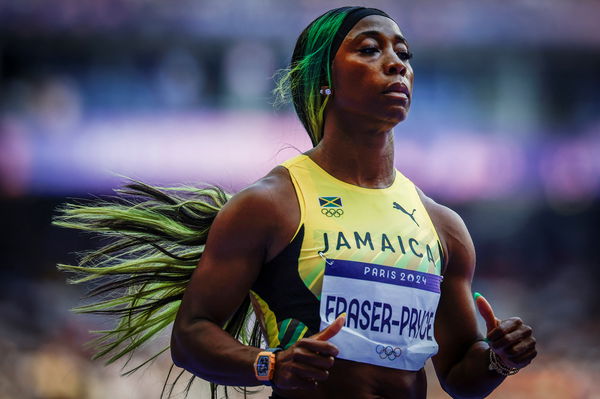
The baton reached Fraser-Pryce with too much to make up, and not enough left in the tank. It wasn’t about who ran last. It was about how the race was set up from the start. Gatlin further opined that the criticism missed the deeper truth. There’s a rhythm to relays, and it’s not just about individual talent. Sprinters know which leg suits them best. They feel it in their bones. They voice it. And they ask for it.
Forcing changes disrupts the whole flow. Athletes don’t just get placed. They choose based on what their bodies and minds tell them. And when you ignore that, you don’t just lose pace. You lose trust, cohesion, and the edge that wins championships. For now, the questions will keep circling. Should Shericka have anchored? Could Jamaica have won? But for those who understand the pulse of the sport, the answer’s already clear.
This wasn’t a mistake of placement. It was a lesson in patience, preparation, and the reality that there are no quick fixes in elite relays. Jamaica may have lost gold in Guangzhou, but the bigger loss would be not learning from it. However, despite being a major upset, there is room for improvement. Coming back to competitive track races, Shericka Jackson had quite an impressive start to the Diamond League.
Shericka Jackson’s spark returns with gritty 200m comeback in Xiamen
The comeback trail is never smooth. But Shericka Jackson’s return to the track hinted at the fire still burning within the fastest 200m woman alive. After a frustrating nine-month absence, Jackson surged out of lane 6 under the lights of Xiamen’s Egret Stadium and marked her presence once again, finishing second in 22.79s behind a resurgent Anavia Battle.

This wasn’t just another race. It was Jackson’s first since July 2024, and her first competitive step after pulling out of the Paris Olympics due to injury. From the gun, the 30-year-old looked sharp, keeping pace with Mujinga Kambundji through the curve. As the Swiss sprinter faded, Jackson steadied her rhythm.
But on her outside, it was Battle who took command with a powerful late surge, breaking away decisively in the final 80 meters to win in a meeting record of 22.41s. Despite the loss, Jackson’s performance spoke volumes. It wasn’t about dominance—it was about resilience. To return from injury and immediately compete at Diamond League level, facing top-tier opposition, and still claim second, showed the grit that’s long defined her career.
The Jamaican held off a fast-closing Jenna Prandini to secure her spot behind Battle, proving she’s still very much a contender. Battle, meanwhile, summed up the intensity of the field and the moment: “It had a really good feel, it was great.” For Jackson, that feeling might just be the start of something stronger.
Written by

Edited by

Deepanjan Mitra