
Imago
2025.08.15 Chorzow Lekkoatletyka Sezon 2025 Konferencja prasowa przed Silesia Memorialem Kamili Skolimowskiej – Diamentowa Liga na Stadionie Slaskim N/z Keely Hodgkinson Foto Marcin Bulanda / PressFocus 2025.08.15 Chorzow Athletics press conference, PK, Pressekonferenz Wanda Diamond League Season 2025 Konferencja prasowa przed Silesia Memorialem Kamili Skolimowskiej – Diamentowa Liga na Stadionie Slaskim Keely Hodgkinson Credit: Marcin Bulanda / PressFocus/NEWSPIX.PL — newspix.pl PUBLICATIONxNOTxINxPOL
Imago
2025.08.15 Chorzow Lekkoatletyka Sezon 2025 Konferencja prasowa przed Silesia Memorialem Kamili Skolimowskiej – Diamentowa Liga na Stadionie Slaskim N/z Keely Hodgkinson Foto Marcin Bulanda / PressFocus 2025.08.15 Chorzow Athletics press conference, PK, Pressekonferenz Wanda Diamond League Season 2025 Konferencja prasowa przed Silesia Memorialem Kamili Skolimowskiej – Diamentowa Liga na Stadionie Slaskim Keely Hodgkinson Credit: Marcin Bulanda / PressFocus/NEWSPIX.PL — newspix.pl PUBLICATIONxNOTxINxPOL
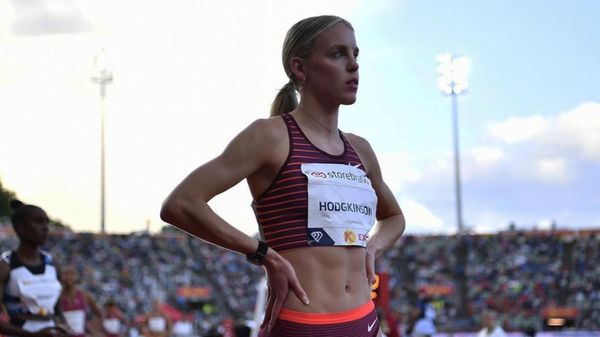
Track and field is a sport with a history of athletes facing a financial crunch. And British track and field is no exception to this harsh reality. Although they spent the summer of 2024 basking in the warmth of their most successful Olympic performance led by the golden girl Keely Hodgkinson’s in the 800m, things are now set to change. The sport’s governing body has levied another burden on the athletes, perhaps adding to the financial insecurity.
Watch What’s Trending Now!
As reported by The Times, UK Athletics (UKA) is asking its female track and field athletes to cover the cost of their own mandatory gender tests if they wish to compete internationally. And the test, demanded by World Athletics, is to verify eligibility in the female category and comes with a £185 ($246) price tag.
While UKA has stated that a “hardship fund” exists for those struggling to meet the cost, with applications assessed on a “case-by-case basis,” the very existence of such a policy is widely considered a symptom of a deeper ailment within the national governing body.
Mandatory testing of the SRY gene was brought in last year, with World Athletics president Sebastian Coe declaring it would “protect and promote the integrity of women’s sport.” This test would ensure only biological women take part in elite women competitions.
While UKA asks female athletes to cover the costs for the same, it comes at a time when the financial squeeze on UKA has been intensifying for years. However, the situation took a dramatic turn for the worse in late 2024 particularly.
Despite the heroics in Paris, UKA’s funding was slashed by approximately £1.75 million, an eight percent cut from £22.2m to £20.5m. UKA’s chief executive, Jack Buckner, was disappointed.
“We felt the progress we have made in the last few years culminating in 10 medals in both the World Championships and the Olympics, not to mention the wholesale improvements in governance and our events and commercial model deserved a higher level of investment. Unfortunately, UK Sport could not be convinced of the merits of our case.”
But UK Sport defended its decision, with its chief executive, Sally Munday.
Imago
Credit: Instagram
“We are well aware that UK Athletics have had some challenging times. Jack and the team are doing everything that they can to get this sport back on the right footing for the future. If they were on the naughty step, we wouldn’t be giving them £30m. We wouldn’t be investing in the events. We wouldn’t be talking to them about bringing the 2029 World Athletics Championships here.”
Keely Hodgkinson has not publicly commented on this situation. But the vast track and field community isn’t completely silent about World Athletics’ mandatory test.
Keely Hodgkinson and British female athletes’ silence says it all
The financial burden placed on British athletes like Keely Hodgkinson and others has not gone unnoticed within the sporting community.
Australian middle-distance runner Linden Hall emerged as one of the few voices to express unease following the policy’s announcement.
The Olympian admitted she harbored “concerns over athlete welfare” in response to the mandatory chromosome testing introduced by World Athletics. Yet, perhaps more telling is the silence from British athletes themselves.
UK Athletics chief executive Jack Buckner conceded he had not discussed the policy in detail with his female athletes.
“I haven’t spoken in detail about it with our female athletes. But the people I have spoken to are the retired people, and there was definitely a strong positive move.”
This truly reflects the disconnect between the active competitors and the governing body. And while Hodgkinson hasn’t commented on UK Athletics’ funding challenges, she once had a suggestion.
“I think they should host more events in the UK because we actually fill up stadiums. We bring people in and I think we need it in this country as well.”
But now, the absence of public criticism may also reflect athletes’ unwillingness to jeopardize their careers by questioning required regulations, forcing them to silently absorb the expenses and cooperate rather than risk being labeled tough or uncooperative.