
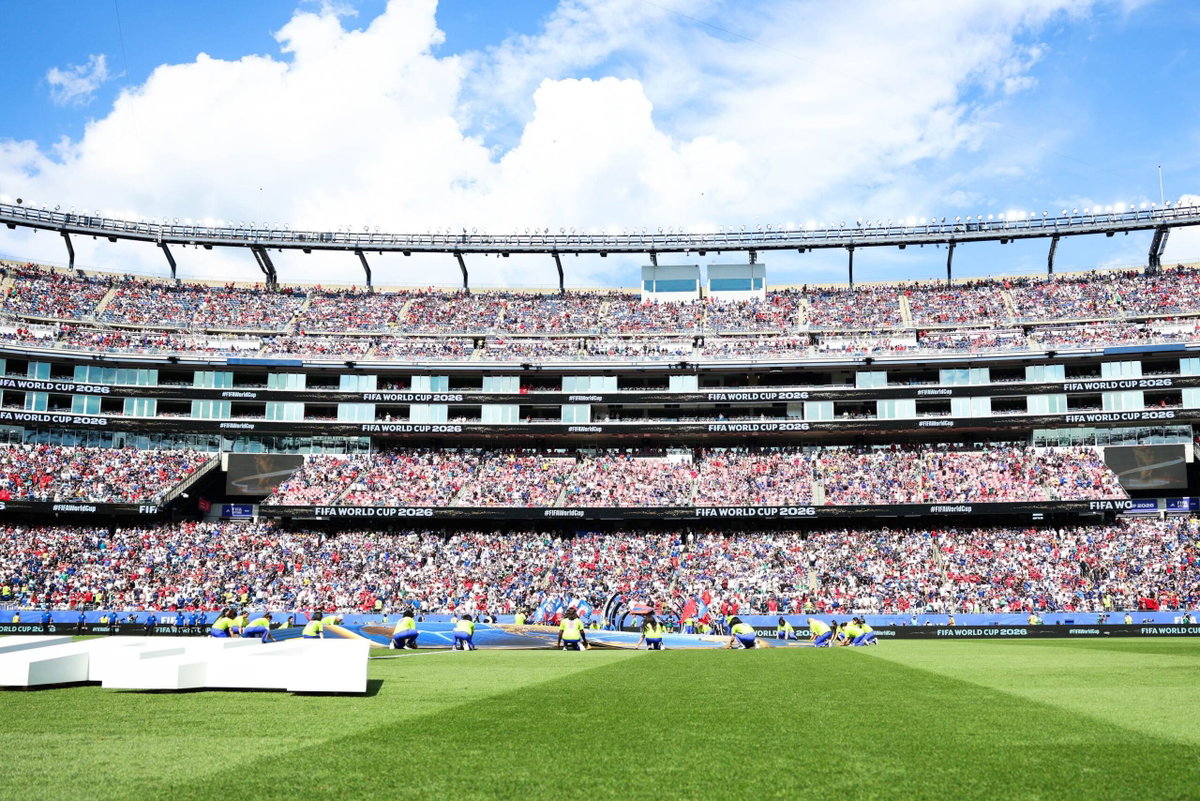
Ninety minutes rarely feel enough when the World Cup trophy is waiting. Every tackle carries extra weight. Every refereeing call invites endless debate. Every substitution suddenly matters. Sunday’s final between Argentina and Spain won’t just decide the champion. It will also be played under a unique set of tournament rules that differ from earlier rounds.
Watch What’s Trending Now!
Some regulations disappear completely. Others become even more important. From the mercy rule vanishing to on-site VAR officials and strict substitution timing, here’s everything that changes before football’s biggest match.
What happens if the World Cup Final is tied after 90 minutes? Extra time and penalty shootout rules explained.
If Argentina and Spain cannot be separated after 90 minutes, the drama continues. The final moves into two 15-minute periods of extra time. There is no golden goal. Both halves must be completed regardless of whether either team scores.
If the deadlock remains, penalties decide the world champions. Each side takes five kicks before sudden death begins if scores remain level. Only the 11 players still on the pitch after extra time may participate. Every eligible player, including the goalkeeper, must take one penalty before anyone can take a second attempt.
World Cup history shows how cruel penalties become. Brazil, Italy and Argentina have all lifted football’s biggest prize after shootouts. Sunday’s finalists know one kick could define an entire generation.
What is the new on-site VAR rule, and why does it only apply from the semifinals onwards?
FIFA has introduced a significant officiating change for the tournament’s biggest matches. Instead of operating exclusively from the International Broadcast Center in Dallas, lead VAR officials and backup VAR officials are now stationed inside the stadium for the semifinals and final.
The change follows heavy criticism surrounding several refereeing decisions during the knockout rounds. The biggest reason, though, is technical reliability. If communication with the Dallas hub fails, the officials inside the stadium can immediately review incidents and instruct the referee without stopping play.
FC Dallas owner and FIFA World Cup Organizing Committee member Dan Hunt welcomed the adjustment. “There’s a lot of drama that unfolds in these games. And look, when you are asking only four officials to manage what’s going on on the field, it’s very difficult on a field that’s much bigger than an American football field.”
He also admitted to being curious about the revised communication system. “I’m glad that there’s gonna be on-site. I don’t know what that communication’s gonna look like.” The organizers designed additional officials as insurance against technical failures during football’s biggest occasion.
Does the no-substitution-after-red-card rule change at the final, and what are the substitution limits?
The final follows the tournament’s standard substitution regulations. Each team receives five substitutions across three substitution windows, excluding the halftime interval.
However, FIFA’s new time-wasting rule remains one of the competition’s toughest measures. Once the fourth official raises the substitution board, the departing player has only 10 seconds to leave the field. Missing that deadline carries an immediate punishment. The replacement must wait at least one minute before entering. During that period, the team temporarily continues with only 10 players.
The rule aims to discourage deliberate delays late in matches, where substitutions often consume valuable seconds. In a World Cup final, that single minute could become one of the longest any manager experiences.