
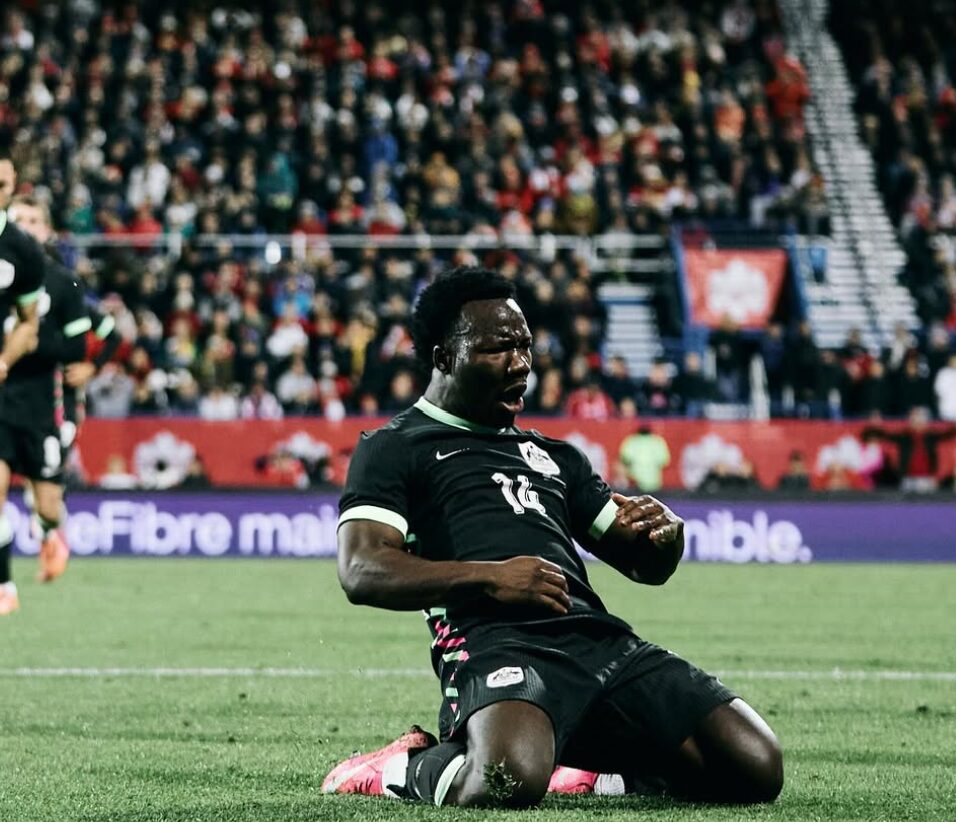
Nestory Irankunda delivered one of the standout moments of Australia’s FIFA World Cup 2026 campaign. Against Turkey, the young forward calmly finished his chance and became the youngest Socceroos player to score at a World Cup. The goal capped another milestone in a career already moving at remarkable speed. While fans admire his goal, many also want to know more about the family behind his success. His parents, in particular, played a crucial role long before football became part of the conversation.
Watch What’s Trending Now!
Who are Nestory Irankunda’s parents?
Nestory Irankunda’s parents are Gideon Irankunda and Dafroza Irankunda. Their story began long before their son became one of Australia’s most exciting football talents. Both are originally from Burundi and were forced to leave their homeland during a period of civil conflict. Seeking safety and stability, they spent time in a refugee camp in Kigoma, Tanzania, where Nestory was born in February 2006.
Later that year, the family relocated to Australia through a humanitarian resettlement program. They initially settled in Perth before eventually making Adelaide their home. There, Gideon and Dafroza focused on building a new life while raising their children.
Nestory grew up in a large, close-knit family with several siblings. However, public information about his parents’ professional careers remains limited. Today, they have become an inspiring example for migrant and refugee communities, showing how resilience and determination can create opportunities for future generations.
What is the ethnicity of Nestory Irankunda’s parents?
Nestory Irankunda’s parents are Burundian by ethnicity and nationality. Burundi is a small East African country with a rich cultural heritage, though decades of political instability have forced many families to seek refuge elsewhere.
Gideon and Dafroza carried their Burundian identity throughout their journey from Burundi to Tanzania and eventually to Australia. Despite adapting to life in a new country, they maintained a strong connection to their roots and passed many cultural values to their children.
View this post on Instagram
Growing up in Australia allowed Nestory to embrace multiple identities at once. He was raised within a Burundian family while also developing as an Australian teenager. Today, he proudly represents Australia on the international stage while remaining connected to his African heritage. That blend of cultures has shaped both his personal outlook and his approach to life beyond football.
Inside Nestory Irankunda’s relationship with his parents
Nestory’s parents have often spoken with quiet pride about his rise. His mother, Dafroza Siyajali, has described emotional moments watching him perform on the biggest stage, saying she “cried like a baby” after seeing him score for Australia at the World Cup, overwhelmed by what the moment meant for their family journey. For her, it was not just about football, but about the long road from displacement and uncertainty to seeing her son represent a nation on the world stage.
In an interview with The Australian, she reflected on the moment, saying:
“I cried like a baby because it’s not easy to score a goal in the World Cup. It’s special for our family and for Australia.”
His father, Gideon Irankunda, has been more reserved in expression but deeply confident in his son’s ability. When asked about Nestory performing under the pressure of a World Cup, he simply said, “He’s a very good player,” a short but telling reflection of the quiet belief he has always had in his son’s potential.
In the same media coverage, he added: “Yep.” (when asked if he expected Nestory to perform well)
Both parents have consistently emphasized discipline, humility, and gratitude as core values in their household. They have often been described as grounding figures in Nestory’s life, ensuring that success does not distract him from the sacrifices that shaped their family’s journey. Even as his career progressed through Adelaide United’s academy and later into European football, they remained present voices in the background.
Nestory himself has frequently acknowledged this influence, crediting his parents for shaping his mentality as much as his football. Their journey from Burundi, through displacement in Tanzania, and finally to Australia remains central to the Irankunda family’s view of success. It is not measured solely in goals or headlines, but in the stability and opportunity they were able to create for their children.