
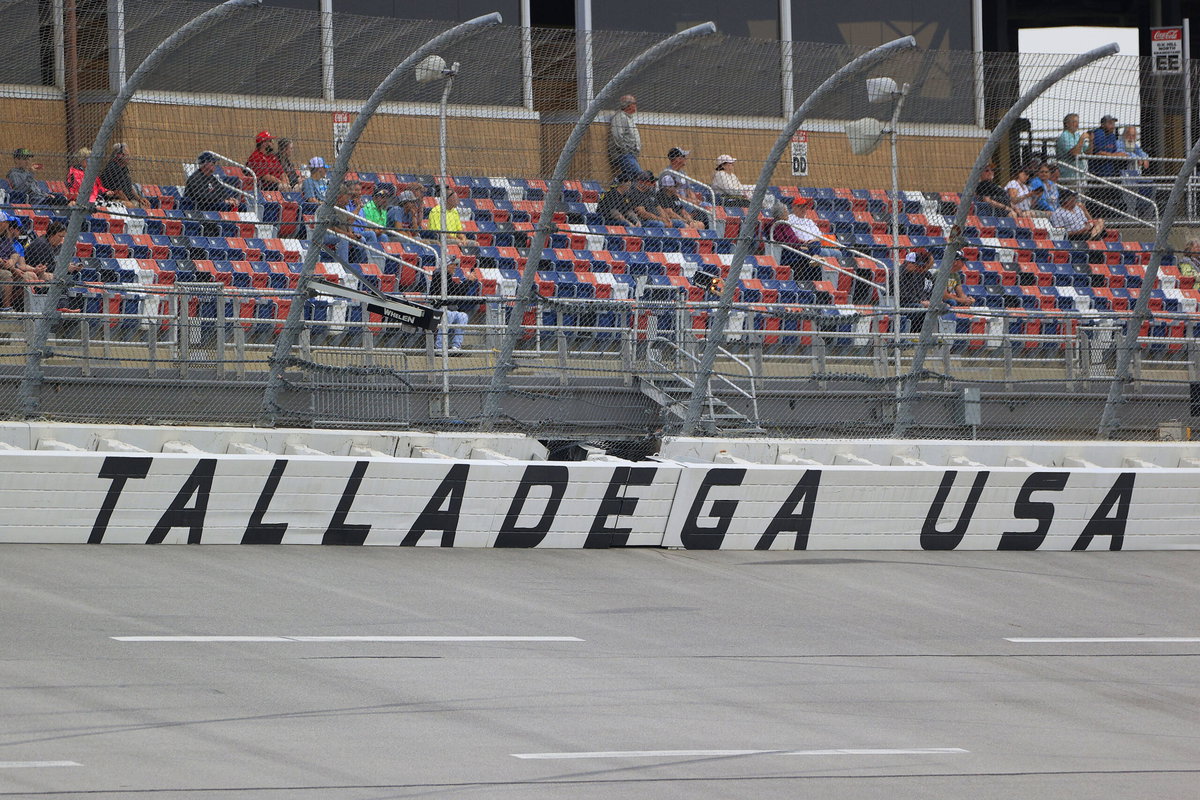
Kyle Larson went from 11th place to winning the YellaWood 500 at Talladega Superspeedway, beating William Byron by just 0.041 seconds. Then Freddie Kraft came in and made his position clear on a particularly pressing question. Had Larson’s No. 5 Chevrolet crossed the double-yellow line during his final-lap charge?
Watch What’s Trending Now!
“Like, I just think that if somebody ends up below the line and there’s no wreck, somebody has to be penalized. Either it’s the guy that pushed them down there or the guy that’s down there.”
As per NASCAR’s ruling, Kyle Larson kept his win. Before coming to his own assessment, though, Kraft had another concern. If officials could not agree on what Larson’s tires had done, how were they judging the other cars that went below the same line?
“There’s no way you could ever see the inside edge of the tire. Like, no way ever in any racetrack that we could see the inside edge of the tire.
“There’s no way you can make a definitive call on that. Like, it’s just impossible. So now, again, I can’t say definitively that he was all the way under the line.” Kraft called out NASCAR’s varying reports on similar incidents.
He was not insisting that Larson deserved a penalty. Instead, he questioned whether NASCAR was applying the rule consistently. While the No. 5 kept its victory, Kraft believed Ross Chastain’s No. 1 Chevrolet and Carson Hocevar’s No. 77 Chevrolet had also gone below the line.
“I don’t know that the 5 should have got penalized. I do know that the 1 and the 77 were definitely under the line. NASCAR said, oh, they were forced down there.”
That explanation is where the disagreement begins. NASCAR’s rules prohibit drivers from passing below the double-yellow line at superspeedways to advance their positions. However, officials can also penalize a driver who forces another competitor below the line to block a pass. A car going underneath does not automatically mean its driver broke the rule.
Kraft’s objection was that NASCAR still needed to decide who was responsible. If one driver forced another below the line, should the driver doing the forcing escape punishment? And if officials believed a car had gone underneath on its own, what evidence supported that decision?
Ryan Blaney raised another question about Austin Hill’s No. 33 Chevrolet.
“If the 33 would have won that race, what would they have done?”
That’s the parallel worth a look. Hill had challenged Larson for the lead at the exit of Turn 2 and moved below the double-yellow line. He eventually finished 14th after losing power near the finish. His incident was questionable on the grounds of how NASCAR would have handled the situation if it had affected the winner.
Kraft then pointed to the difficulty of deciding who deserved a penalty when drivers were reacting to each other.
“Are you penalizing them because he drove down there first? Are you penalizing because Kyle forced them way lower? Like, you just open up all this sh**.”
At Talladega, one move can quickly affect several cars. A driver might move down to defend a position, leaving another competitor with little room. That driver could end up below the line while trying to avoid contact. NASCAR must decide whether the driver went underneath to gain an advantage or was forced there by someone else.
This sounds simple enough until officials have to make the call at racing speed, then review footage that may not clearly show the tires. Still, that difficulty is exactly why Kraft wants NASCAR to explain its decisions. If officials believe a driver was forced below the line, they must also consider whether the other driver committed a violation.
Larson’s finish brought that question into focus. NASCAR said his left-side tires had remained on the double-yellow line rather than crossing beneath it. The series reviewed the available evidence and upheld the result. However, the ruling did not stop the debate, with different camera angles prompting conflicting interpretations of the final pass.
Blaney had one question in response.
“But what’s below the line?”
That is the difficult part of the controversy. NASCAR must determine whether a driver crossed the boundary to pass or was forced underneath by another car. Kraft wants officials to hold someone responsible rather than let the incident go without a penalty.
Larson has his Talladega win, but the debate is not just about whether his tires crossed the line. It is about how NASCAR judges similar incidents when several drivers are involved. Until officials can explain those decisions clearly, the same question will follow the series to the next superspeedway: when somebody goes below the line, who actually broke the rule?