
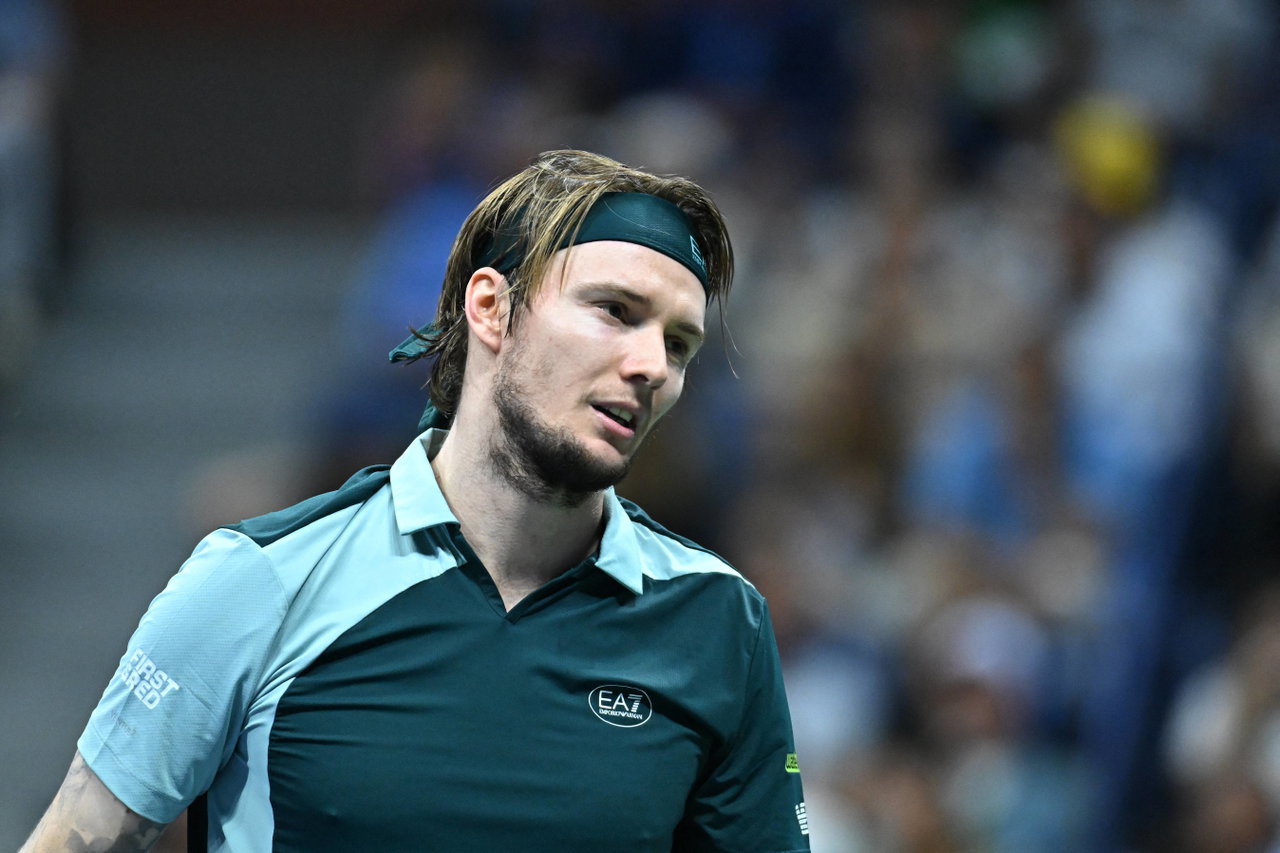
Alexander Bublik was asked a simple question during a fan meeting in Kazakhstan: who is the better player, him or Jannik Sinner? The Kazakhstani star left the decision to the young supporter, but the boy’s answer took an unexpected turn when he brought up Sinner’s doping case.
Watch What’s Trending Now!
“You, because unlike Sinner, you don’t use doping,” the boy told Bublik, according to footage shared on social media. The remark drew laughter from the spectators, turning an ordinary fan interaction into an awkward moment involving one of tennis’s most talked-about controversies.
When the boy asked, “Who’s better, you or Sinner?”, the World No. 19 cheekily replied, “What do you think?” The young fan didn’t hesitate to pick Bublik, but his reasoning had little to do with the Kazakh’s unpredictable shots or his ability to trouble top players. Instead, he took a pointed swipe at Sinner, bringing up the Italian’s positive doping tests in 2024.
Bublik was initially left speechless before offering a brief reply, “Well, that was our conversation.” He did not expand on the boy’s accusation or launch into a discussion of Sinner’s case. The Kazakh appeared careful in how he responded to the sensitive subject.
The fan’s comment was blunt, but it should not be mistaken for an official finding about Sinner. The Italian returned two positive tests for clostebol in March 2024. An independent tribunal later accepted his explanation that the substance entered his system through accidental contamination and found no fault or negligence on his part. In February 2025, Sinner accepted a three-month suspension under a settlement with the World Anti-Doping Agency (WADA), which withdrew its appeal.
WADA accepted that Sinner had not intentionally cheated, but maintained that athletes are responsible under anti-doping rules for the actions of their support personnel. The settlement ended the proceedings without a final ruling from the Court of Arbitration for Sport after a contested hearing. The case nevertheless drew criticism from players and fans over transparency and consistency in how anti-doping rules are enforced.
That history helps explain why the boy’s remark landed as more than a routine joke at a fan event. Sinner’s case remains a familiar talking point in tennis, even though the legal outcome did not establish that he had deliberately doped. Bublik, however, did not make that accusation himself; he simply asked the boy to give his opinion and then brought the exchange to a close.
The exchange gave fans a glimpse of Bublik’s cheeky sense of humor. But there’s more to the Kazakh than his on-court antics and unpredictable shot-making. He’s also spoken candidly about his unconventional approach to tennis and the mindset that sets him apart from many of his peers.
Alexander Bublik Admits He Would Never Teach Young Players to Copy His Game
In an interview with Russian outlet Championat, Bublik pushed back against the idea that his success proves players can reach the top without putting in the same work as their rivals.
“I think there will always be a place on the tour for atypical players like me, but that place remains very limited,” Bublik said. He acknowledged that his style and training habits set him apart, but stressed that they should not be mistaken for a reliable route to the top of the sport.
The world No. 19 also described how younger players sometimes misunderstand his routine. “They all think I show up on court, train half as much as everyone else, and then leave,” he stated referring to the assumptions made by players ranked outside the top 200. Bublik argued that reaching the top 30 or top 50 still requires exceptional work and discipline, regardless of a player’s natural talent or personality.
His explanation was less about avoiding hard work and more about finding a way to cope with the demands of professional tennis. “No, the routine is the same for everyone. I’ve simply found a way to survive that routine while keeping my emotions alive, whether they’re sometimes positive or negative,” he said.
Bublik has reached the top 10, spent time inside the top 20, and won multiple ATP titles, but he does not believe his approach should become a model for aspiring players. He said this when he considered a future in coaching.
“But if I ever were to become a coach, I would never teach anyone to play like me,” Bublik said. “Because when you train hard, stay disciplined, and do everything to perfection, your chances of making it are simply much higher.”
The comments offer a more serious perspective on the player who can make an ordinary fan interaction memorable with a single unexpected answer. Bublik knows his unconventional game has taken him a long way, but he also realizes how difficult it is to replicate. His message to young players is clear: admire the results if they wish, but do not mistake his individual path for a formula for success.