
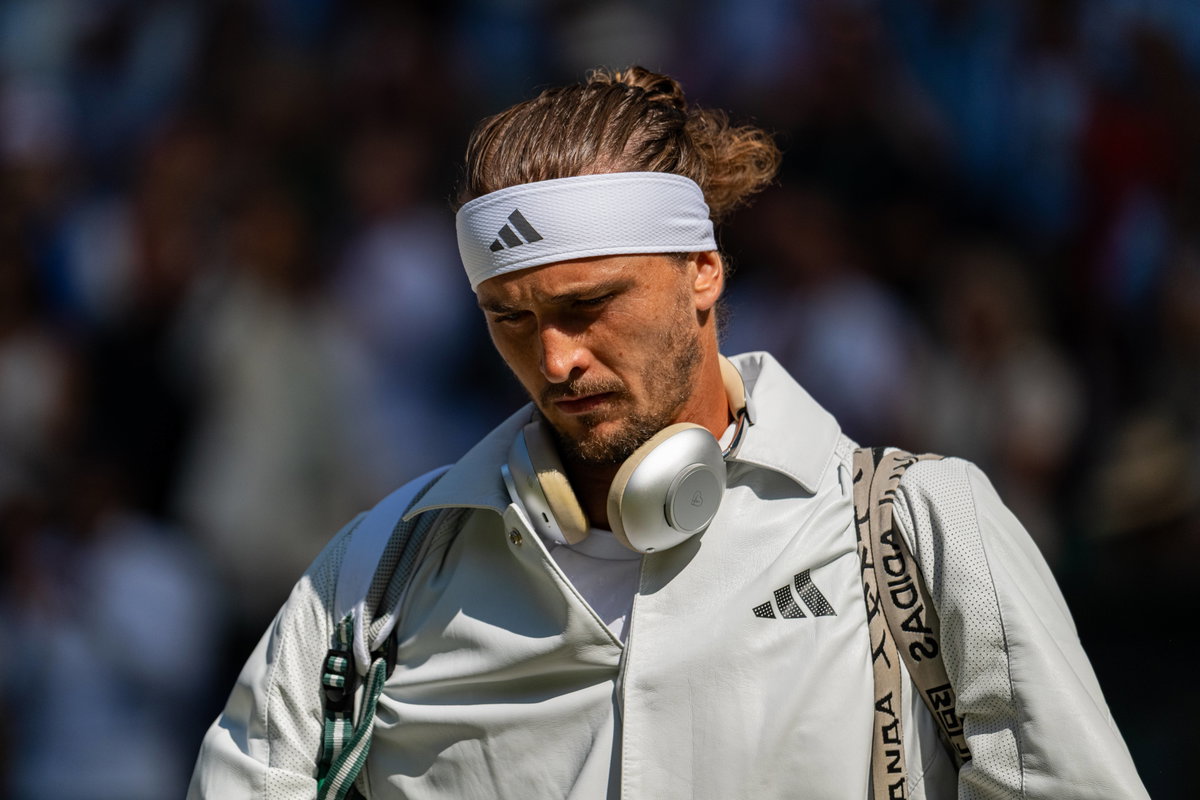
A year ago, Alexander Zverev stood in a Wimbledon press room and said he’d never felt this empty in his life. He’d just lost in the first round to Arthur Rinderknech, and the World No. 2 admitted he was lacking joy in everything he did. That admission sent him to Rafael Nadal’s academy in Mallorca looking for answers. Twelve months later, he’s back at the same academy, except this time he’s arriving as a Grand Slam champion.
Watch What’s Trending Now!
Zverev spent ten days training under Toni Nadal last July, with Rafa himself joining sessions and talking through what had been holding his game back mentally. The academy shared footage of him back on court this week, though the setup looked different this time. He trained under the guidance of his own father, Alexander Zverev Sr., with neither Rafa nor Toni present.
That shift in scenery hasn’t dimmed how much weight Zverev puts on what happened there last summer.
“Last summer, I went to Mallorca to talk to Toni and Rafa Nadal, and they helped me tremendously,” Zverev said in an interview with RTL+. “Rafa told me that he too had gone through a similar stage when he started losing many matches against Djokovic before finding a solution.”
The results took a while to show up. Zverev suffered another painful Slam exit at the Australian Open, losing a semifinal to Carlos Alcaraz after standing on the verge of victory. He kept working, and Roland Garros became the turning point. Alcaraz skipped the tournament entirely, and both Djokovic and Sinner fell early, leaving Zverev as the outright favorite for the first time in his career. He beat Flavio Cobolli in five sets to finally win his first Major, ending years of being labeled the best player never to win one.
He carried that momentum straight onto grass, reaching his first-ever Wimbledon final after never previously getting past the fourth round at the All England Club.
Built in 2016, the Rafa Nadal Academy has helped shape plenty of players beyond Zverev. Casper Ruud trained there on his way to multiple Grand Slam finals and a stint at World No. 2. Iga Swiatek has also used the facility for training blocks, getting the same kind of access to Nadal that Zverev leaned on last summer.
That access is exactly what’s now being credited with something bigger than a technical fix.
Alexander Zverev’s Changed Mindset Will Give Him a Genuine Edge During the US Open Season
Zverev’s game hasn’t fundamentally changed. What’s changed is how willing he is to use it. The clearest shift has been a more aggressive approach off the forehand wing, a shot he used to lean on defensively at pressure points and now attacks with instead.
That aggression showed up clearly in Melbourne, where he hunted forehand winners even as his semifinal slipped away late. It showed up again at Roland Garros, where he had to grind through a five-set final against a determined Cobolli. And it showed up most dramatically at Wimbledon, where his serve and forehand troubled Sinner across the first two sets of the final, a version of Zverev that simply didn’t exist on grass a year ago.
That aggressive identity should translate well to what’s coming next. The hard courts in Canada, Cincinnati, and New York tend to reward exactly the kind of first-strike tennis Zverev has built over the past few months, and he’s had success at both Masters events before. At the US Open specifically, his best result remains a runner-up finish in 2020.
Zverev opens his hard-court swing at the Canadian Open next, the first of two Masters 1000 stops before he returns to New York looking to turn last year’s runner-up finish into his second Grand Slam title.