
It was always going to be difficult to compete with last year’s Roland Garros final in terms of viewership, drama, and sheer quality of tennis, and the numbers confirm that. Carlos Alcaraz and Jannik Sinner played a five-set marathon, where the former player eventually triumphed in five hours and 29 minutes on Phillipe Chatrier. Alcaraz was down a break, a set, facing three match points, and from there he made a comeback for the ages to win his second French Open title. The deciding set tie-breaker alone garnered 2.6 million viewers on TNT Sports. It was always going to be a tall order to follow. No one realized that the next final would result in a 25% drop in viewership.
Watch What’s Trending Now!
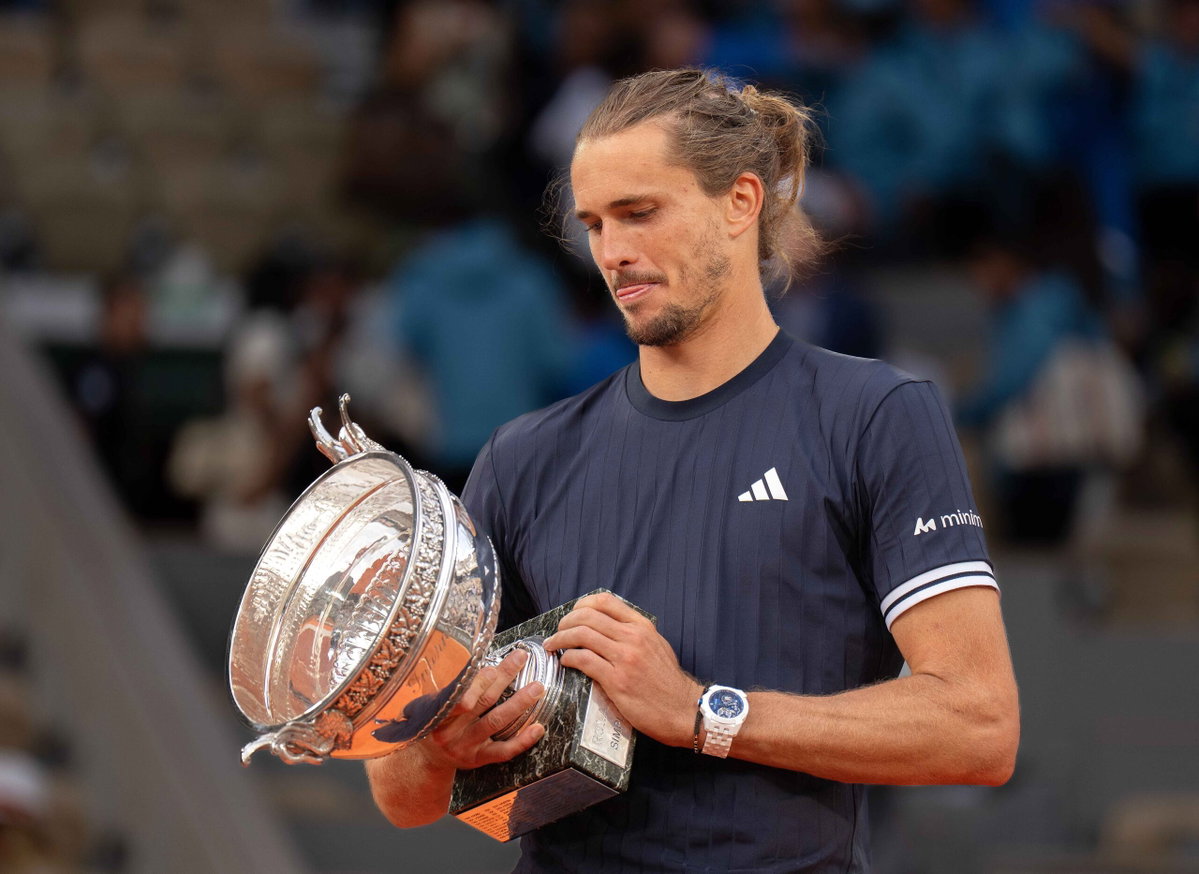
The men’s final between Alexander Zverev and Flavio Cobolli had 1.3 million viewers on TNT Sports, a 25% decline from last year’s Alcaraz-Sinner final, and is the smallest audience for a men’s French Open final in 20 years, according to the report from Front Office Sports. Zverev’s first Grand Slam was historic. But the final couldn’t draw viewers without bigger names.
The decline is not a mere happenstance but rather a structural decline. Sinner lost in the second round to Juan Manuel Cerundolo, and Alcaraz missed the event because of a wrist injury. Both of the two men who helped 2025 achieve record viewership were out before the second week. The 24-time Grand Slam champion, Novak Djokovic, was also eliminated in the third round by Joao Fonseca in a five-setter. Before the tournament began, prominent male players including Holger Rune and Jack Draper pulled out.
Intense heat coupled with a grueling schedule resulted in players dropping out due to injuries and losing matches uncharacteristically.

The French Open men’s final drew just 1.3 million viewers on TNT Sports, down 25% from last year’s Carlos Alcaraz–Jannik Sinner matchup. It was the least-watched men’s French Open final in at least 20 years,
What remained was a final between a deserving yet overwhelming favorite, Zverev, and a first-time finalist, Cobolli. For casual viewers in the United States, the matchup was not exciting enough to sustain interest.
The same situation applied to the women’s draw. All the top seeds, including Aryna Sabalenka, Iga Swiatek, Coco Gauff, Jessica Pegula, Elena Rybakina, Naomi Osaka, and many others, lost before the last four.
Mirra Andreeva’s win over qualifier Maja Chwalinska drew 826,000 viewers across TNT and truTV, down 44% from last year’s match between Coco Gauff and Aryna Sabalenka, which drew 1.47 million viewers. Andreeva’s victory was one of the genuine stories of the fortnight as a 19-year-old Russian made the first Grand Slam win of her career, extraordinarily, but she still doesn’t have the commercial value that Gauff brings to any broadcast she appears on.
The American factor was almost entirely absent from both draws, and the numbers reflect it bluntly. For the first time since 2017, no American reached a singles quarterfinal. Only three Americans made the fourth round across both draws, down from eight last year.
This is not a new phenomenon. The 2020 US Open final between Dominic Thiem and Alexander Zverev was down 48% from the prior year, and the 2015 US Open women’s final between Flavia Pennetta and Roberta Vinci was down 64%. Viewership for finals without star athletes has historically been low, irrespective of the broadcasting network, and Roland Garros 2026 follows this trend.

Imago
Jun 7, 2026; Paris, France; Alexander Zverev of Germany and Flavio Cobolli of Italy pose with their trophies after the men’s singles final on day 15 at Stade Roland Garros. Mandatory Credit: Susan Mullane-Imagn Images
The last nine Grand Slams were won by Alcaraz or Sinner, and it has become a trend. Viewers knew what to expect from the tournament, and they got exactly that. Those two players definitely produced high-quality tennis, which was absent from the rest of the tour, but it can be boring for some people to see them in the finals again and again.
TNT signed a contract just two years ago for a decade-long commitment at a $650 million rights deal with Roland Garros. This year’s numbers would force them to rethink their decision, as it’s not the path the network would have imagined.
The bigger picture behind the numbers
TNT can take solace in early-week gains: first-week coverage was up 25% when the biggest names and most Americans were still in the draw.
The tournament was viewed by 22.9 million viewers across TNT, truTV and HBO Max, which is a 46% increase from 2025. It’s not that the tournament lost its audience completely. The audience simply disappeared in the most critical week for commercials – the last weekend – when advertisers are willing to pay the highest prices and the sport has the broadest attention.

Imago
Jun 7, 2026; Paris, France; Alexander Zverev of Germany celebrates winning the men’s singles final against Flavio Cobolli of Italy on day 15 at Stade Roland Garros. Mandatory Credit: Susan Mullane-Imagn Images
The resemblance to last year is a poor one for Roland Garros. The 2025 men’s final drew an average of 5.5 million viewers in France alone, a record that had not been seen since the Nadal-Federer final in 2011, with 9.5 million viewers tuned in at match point. The similarity between the two games was the generational rivalry in their absolute prime, with everything on the line.
Alexander Zverev winning his first Grand Slam is an extremely emotional and meaningful story. But emotions and marketability do not always go hand in hand. The gap between this year’s and last year’s finals in viewership is the clearest example of that, and it even shows what happens to the biggest sports events when their biggest stars are missing.
Player boycott threats over prize money could devastate Grand Slam viewership. As we just saw a small glimpse of the losses that can be incurred if the top athletes are absent.