Alexander Zverev Slams Italian Open Conditions After Shock Exit: “Worst Court I’ve Ever Played On”

Add us on Google
Alexander Zverev Slams Italian Open Conditions After Shock Exit: “Worst Court I’ve Ever Played On”
Add us on Google
Imago
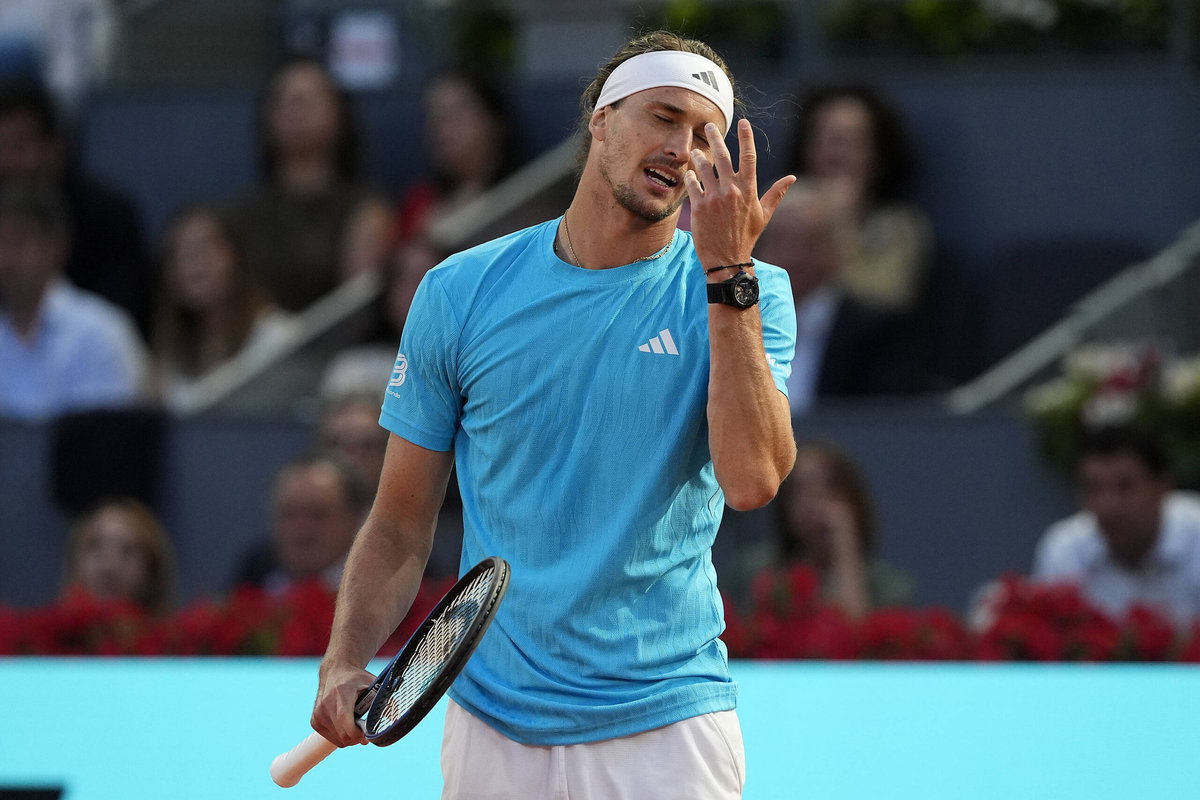
Alexander Zverev, Germany, during Madrid Open Tennis 2025 match. April 27, 2026. 20260427981
Imago
Alexander Zverev, Germany, during Madrid Open Tennis 2025 match. April 27, 2026. 20260427981
Alexander Zverev is out of the Italian Open with one of the more dramatic falls of the clay season. The world No. 3 suffered a 1-6, 7-6(10), 6-0 defeat in the round of 16 to home favourite Luciano Darderi, squandering four match points in the second set tiebreak before being bagelled in the decider. Darderi saved match points on 5/6, 7/8, 8/9, and 9/10 in the tiebreak before leveling on his second set point, but then cruised through the third to secure one of the comebacks of the season.
Watch What’s Trending Now!
In his post-match press conference, Zverev pointed squarely at the court conditions. “To be honest, the court, I think this is the worst court I’ve ever played on. Juniors, professional, futures, practice, I never played on a court where the court quality is that bad,” he said. He was specific about how the surface affected the critical moments. “I have a match point, and the ball jumps over my head. I have a break point, the ball rolls.” The wind made it harder, but Zverev was in no doubt that the court was the problem. He also acknowledged fatigue as a factor, having been ill after Madrid, but did not use it as his primary excuse. “I should have won the match in two sets. That’s just the story from there,” the German said.
Imago
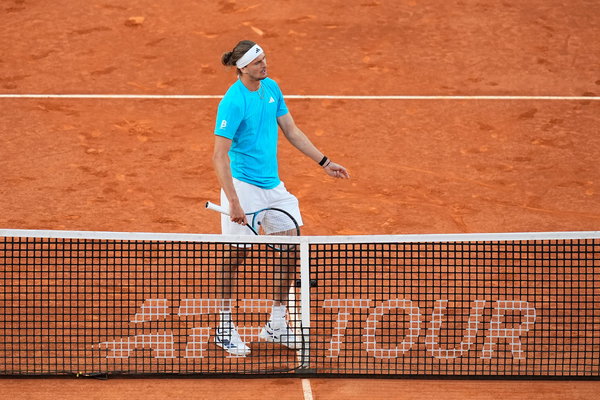
April 27, 2026, Madrid, Madrid, Spain: Alexander Zverev of Germany in action against Terence Atmane of France during the Mutua Madrid Open 2026, ATP, Tennis Herren Masters 1000 and WTA, Tennis Damen 1000, at La Caja Magica on April 27, 2026 in Madrid, Spain. Mutua Madrid Open 2026 – Day 8 PUBLICATIONxINxGERxSUIxAUTxONLY – ZUMAa181 20260427_zaa_a181_851 Copyright: xDennisxAgyemanx
The loss is more bitter when you think about the circumstances. Zverev entered the match intending to reach the quarterfinals of all five Masters 1000 events he has played till now in 2026, a feat achieved only by Rafael Nadal, Novak Djokovic, Roger Federer, Fernando Verdasco, and Tomas Berdych in the past 35 years. Jannik Sinner is still on track for it, but Zverev is not. He has had his fair share of success in Rome, having won the tournament in 2017 and 2024, to lose in the fourth round on a court he deemed unplayable is a very bitter pill to swallow.
With Roland Garros two weeks away, Zverev is choosing to look ahead rather than dwell. “Maybe this is a bit of a blessing in a bad moment for me. I can rest and recharge and be 100% ready for the French Open,” he said.
A question that has haunted him for quite some time now was once again asked by a reporter, whether he believes he can beat Sinner in Paris: “I do have to believe that I’m capable of beating him. Otherwise, we can just give him the trophy without playing the tournament.”
The German has now lost nine straight matches against the world No. 1, four of which came this year in consecutive tournaments. The most important point in this stat is that all those defeats came at the most critical juncture, whether in the semifinals or the finals of the event.
Darderi, who is ranked No. 20 in the world, has advanced to his first Masters 1000 quarterfinal, where he will face the Spaniard sensation Rafa Jodar, setting up an exciting quarter-final clash in Rome.
Luciano Darderi’s finest hour on home soil
The 24-year-old’s feat goes beyond the score. Luciano Darderi, who had a 12-6 clay record this season, had already demonstrated his quality in the previous round, when he overcame 16th seed Tommy Paul in three sets in Rome. Defeating the world No.3 and two-time Rome champion, saving four match points, is a whole different ball game. It marked his first-ever top-10 win on the ATP Tour and sent him into his first Masters 1000 quarterfinal.
The Foro Italico crowd played no small part in it. From the moment Darderi saved the first match point, the atmosphere shifted entirely in his favour, and he fed off it in the third set, winning it 6-0 against a player who had looked unplayable in the opening set.
“I won because of the crowd. You can’t give up here. It’s amazing that the crowd helped me a lot on every point. I have to say thank you to everyone. It’s a dream to be in the quarterfinals. It’s the tournament of my life here. In Italy, we have just one big tournament. To make the quarterfinals here for the first time, it’s crazy,” Darderi said after the match. Four match points later and then a bagel, it takes a certain mental toughness to do that, let alone against someone of Zverev’s calibre.
The other highlight of the draw in Rome has been his quarterfinal opponent, Rafael Jodar. The 19-year-old Spaniard advanced to the Italian Open quarter final, the first teenager to reach the quarterfinals since Novak Djokovic in 2007, defeating Learner Tien 6-1, 6-4 in the round of 16. It’s not a one-time achievement either.
Jodar won the title in Marrakech, advanced to the semi-finals in Barcelona, the quarter-finals in Madrid, and is now in the last eight in Rome. He now leads the tour with 15 wins on clay in 2026. The quarterfinal between two players in the form of their lives is shaping up to be one of the matches of the tournament, with the Foro Italico crowd behind them.
Written by

Edited by

Aatreyi Sarkar