Imago
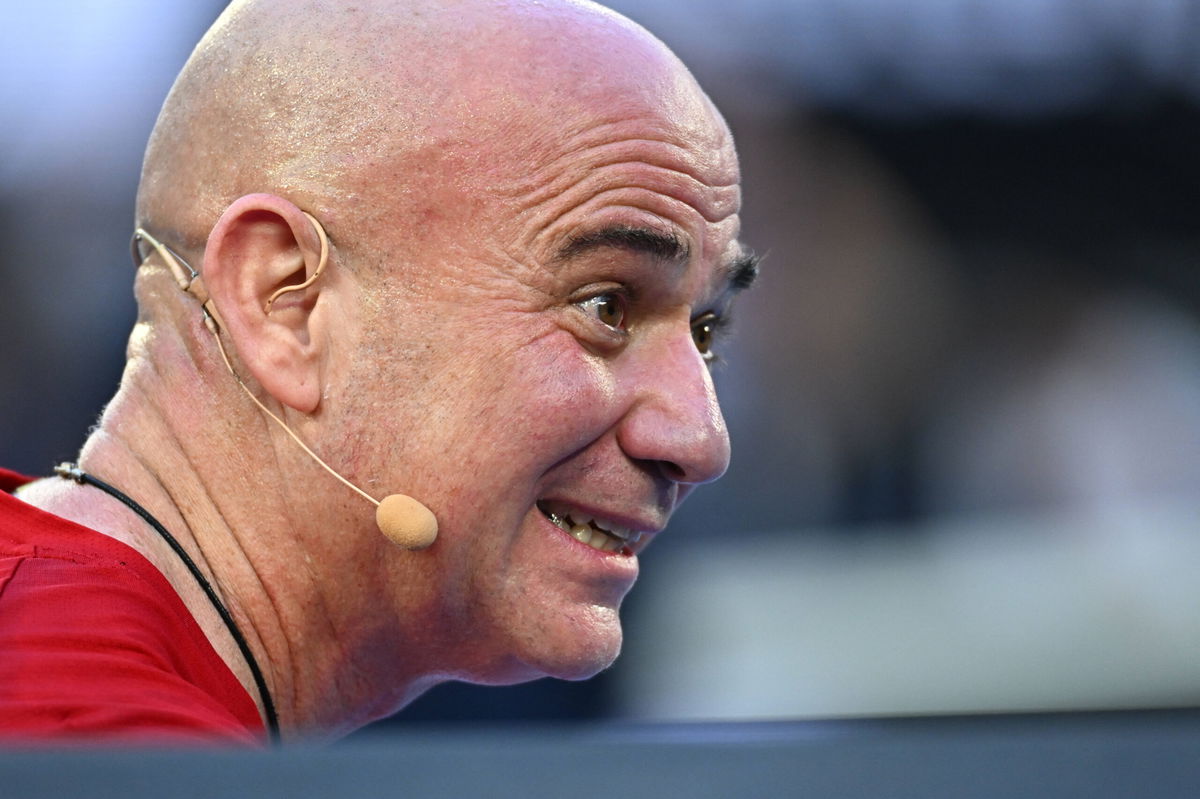
Opening Night at the 2026 Australian Open – Melbourne Andre Agassi USA during the Opening Night at the 2026 Australian Open at Melbourne Park in Melbourne, AUSTRALIA, on January 17, 2026. Photo by Corinne Dubreuil/ABACAPRESS.COM Melbourne Australia PUBLICATIONxNOTxINxFRAxUK Copyright: xDubreuilxCorinne/ABACAx
Imago
Opening Night at the 2026 Australian Open – Melbourne Andre Agassi USA during the Opening Night at the 2026 Australian Open at Melbourne Park in Melbourne, AUSTRALIA, on January 17, 2026. Photo by Corinne Dubreuil/ABACAPRESS.COM Melbourne Australia PUBLICATIONxNOTxINxFRAxUK Copyright: xDubreuilxCorinne/ABACAx
Modern tennis faces mounting criticism over its relentless schedules, growing disparities, and prize structures that heavily favor top stars. Concerns span both the ATP and WTA tours, as the sport’s commercial engine accelerates. Adding his voice to the debate, eight-time Grand Slam champion Andre Agassi has now raised concerns about tennis drifting toward corporatization over the game’s true competitive spirit.
Watch What’s Trending Now!
Andre Agassi recently spoke in the press room at Rio’s Jockey Club ahead of the semis of the Rio Open. The 55-year-old will present the trophy to the winner this Sunday.
“It’s only grown. Some players are treated as corporations now. That’s how much business there is to be had. So, the human condition is undefeated,” he started when talking about changing the South American swing from clay courts to hard courts.
Top Stories





“If you want to know where something’s headed, always follow the money. But with that being said, I have a special place in my heart for being down here for many reasons, from all the fans of sport and tennis down here in South America, and I do like to see the equity of that being shared,” he said.
Imago
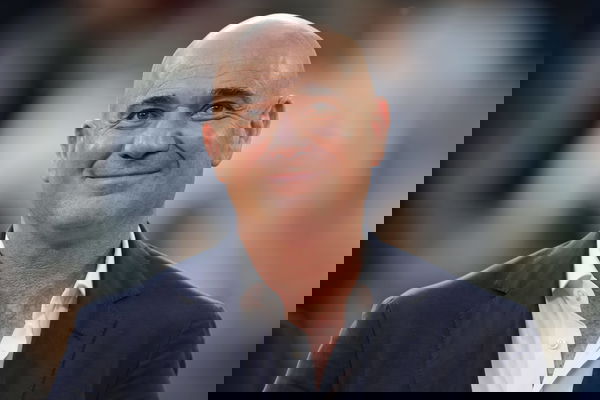
Andre Agassi, USA, after mens final of 2025 French Open at Roland Garros, Paris, 08/06/2025 – *** Andre Agassi, USA, after mens final of 2025 French Open at Roland Garros, Paris, 08 06 2025 PUBLICATIONxNOTxINxCHNxSUI
He explained that the transition between conditions remains a major challenge for players: “Changing surfaces could influence certain players’ decisions to come down here, because it’s a difficult transition to go from this environment straight to the American hard courts. It takes its toll. We saw it last year with Zverev, who came down here and then needed time to find his footing.”
Agassi then described the physical demands of the South American swing. He pointed to the heavy conditions and travel burden:
“It’s not easy to go from hard court to the heaviness of this environment. You can feel it in the air — the humidity, the density of the clay, the weight, the slowness — and then go back to hard courts. It’s not easy on the body, not easy on the mind, not easy with the travel. There are so many factors players have to consider.”
Despite the challenges, Agassi supports the global growth of the sport. He believes expansion brings long-term benefits.
“I like to see the game grow. I like seeing expansions. I like seeing facilities improve. I like seeing new countries get involved. I like seeing competition and the sport benefit from all of that.”
The period after the Australian Open shows clear contrasts across the tour. Different regions offer very different realities for players and tournaments. The ATP 500 in Doha featured a star-studded field. Carlos Alcaraz and Jannik Sinner headlined the event and reportedly received $1.2 million just to appear.
At the same time, US events in Dallas and Delray Beach also attracted several top-20 players. Financial strength continues to draw big names to certain markets. However, star power does not always guarantee full stadiums. Some Northern Hemisphere tournaments have struggled with low attendance.
The picture is very different in South America. The Guillermo Vilas Court in Buenos Aires and the Gustavo Kuerten Court in Rio have been packed with passionate fans.
There is also a ranking contrast between events. None of the Brazil Open quarterfinalists were inside the top 50, while Doha featured the world’s top two, along with players like Tsitsipas, Rublev, and Mensik. Despite the lower-ranked field, South American events sold more tickets.
Agassi’s remarks come as debates grow about tennis becoming more centralized and business-driven, a concern echoed by several players in recent months.
Tennis players repeatedly warn that packed schedules are driving injury crises
Apart from Andre Agassi calling the money-driven direction of modern tennis, concerns about the scheduling crisis have been raised for years. One clear example came in 2023. Andy Murray criticized officials after his five-set win over Thanasi Kokkinakis ended after 4 a.m at the AO.
Imago
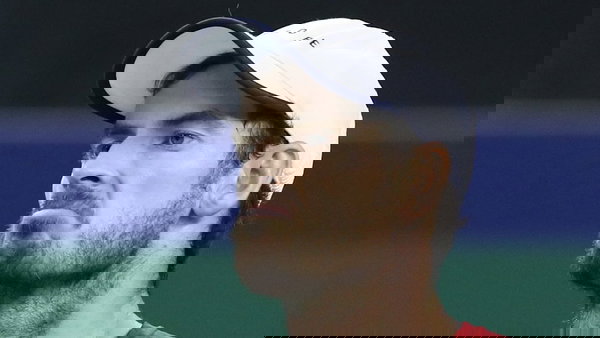
(191007) — SHANGHAI, Oct. 7, 2019 (Xinhua) — Andy Murray of Britain reacts during the men’s singles first round match between Andy Murray of Britain and Juan Ignacio Londero of Argentina at 2019 ATP Shanghai Masters tennis tournament in Shanghai, east China, on Oct. 7, 2019. (Xinhua/Ding Ting)
Novak Djokovic has also spoken about the issue. Last year in Shanghai, he urged players to be more involved in scheduling decisions.
“More than 15 years ago, I was talking about us needing to come together and reorganize the schedule,” said the 38-year-old, a 24-time Grand Slam champion. “It’s an individual sport… at the end of the day, you can still make choices.”
This year, the 2026 Dubai Championships again highlighted the workload problem. The event became a strong example of how demanding the calendar has become. By the quarterfinal stage, 23 players had withdrawn or retired. Four of them were ranked inside the top 10.
Beyond scheduling, money distribution has also drawn criticism. Some players argue that tournaments, especially Grand Slams, do not share enough revenue with competitors.
Even the Professional Tennis Players Association (PTPA) filed an antitrust lawsuit last year. It described tennis governing bodies as a “cartel” and accused them of running a “corrupt, abusive and illegal” system.
A major concern in the lawsuit is revenue share. Players reportedly receive around 15% to 20% of tournament revenue at Grand Slams and similar levels at ATP and WTA events.
In comparison, leagues like the NBA, NFL, MLB, and even golf distribute closer to 50% of revenue to athletes. This gap has fueled frustration among players. Now, with Agassi warning about tennis becoming more business than sport, and players challenging governing bodies, the debate continues.
Should players focus on fan engagement in places like South America before the Sunshine Double, or prioritize high-paying events? The conversation is far from over.
Written by

Edited by

Deepali Verma